North Carolina - mountain biking, NFL and city break in Autumn
Travelling in early autumn, my itinerary for 10-14 nights in North Carolina. Biking, ball, art trails and barbecue…..all in the one place.
Itinerary At A Glance
10-14 night independent itinerary for North Carolina in the Central East of the USA: 3-4 nights in Charlotte, and 7-10 nights in Asheville on the edge of the Great Smoky Mountains National Park.
Based on flying in and out of Charlotte from Manchester with hops either in Munich, JFK or London. Car will also be essential to move between locations, as well as mountain bike hire in Asheville
Highlights include biking the Great Smoky Mountains, NASCAR, authentic BBQ, perhaps some live NFL and plenty ‘o’ beer
Based on a couple travelling, with a focus on leisurely cultural activities and biking, interspersed with time to just relax and soak up the atmosphere
Why here?
A friend ‘accidentally’ spent a day in Asheville on a US road trip and said it was the best stop of the whole two-week holiday — she wished they’d based themselves there. That offhand comment stuck, and kicked off my research.
In mountain biking circles, North Carolina’s gaining a reputation for world-class trails that fly under the radar. My boyfriend loves fast, technical riding, and I don’t mind a bit of singletrack challenge myself — so it looked like a solid fit for both of us. Add in the cultural side: breweries, art trails, city yoga, and maybe even a Nascar or NFL game if the timing works. It started to look like a place with range.
I’ve planned a twin-centre trip: Charlotte for a classic city break with Southern food, urban cycling, and a bit of American sports history; then west to Asheville, on the edge of the Great Smoky Mountains, for a longer stay that blends city buzz with outdoor adventure.
I’ve skipped the North Carolina coast — refinement has taught me I’m not a beach person.
WHEN
Autumn - October or November.
Conversely to the UK weather, October and November are historically two of the driest months of the year, and this time of year will see pleasantly warm days, cool evenings plus the beautiful colour change of autumn leaves. It would be lovely to get away from the UK at this time also - in my opinion, autumn is the worst season for weather in the UK.
Summer is swelteringly hot, humid and the rainiest time of year- it is much drier outside of the summer months
Try to time our visit with an NFL home game for the Carolina Panthers
TRAVEL MEANS
Getting to Charlotte will involve stops, almost irrespective of where I fly from.
With Lufthansa, Manchester to Charlotte with a 2hr layover in Munich
With British Airways, Manchester to Charlotte with a 1.5hr layover in London Heathrow
With Aer Lingus, Manchester to Charlotte with a 2hr layover in JFK
NEIGHBOURHOODS & ACCOMMODATION
Asheville neighbourhoods
Montford, north of downtown - heritage buildings, more suburban than touristy downtown
West Asheville - funky, up-and-coming, laid-back vibes and a vintage feel - a hive of activity for the music scene.
River Arts district - Restored, renovated industrial estate, home to cool warehouses and artists from all kinds of industries and niches
Black Mountain - 20-minutes drive east of downtown Asheville, in the shadow of the mountains, gateway to Pisgah National Forest and Mt Mitchell.
Self catering options, in order of preference:
Top-floor quirky and characterful apartment with fantastic views from the deck
Modern Airbnb bungalow with some great outdoor seating
Historic Carolinian home with outdoor veranda
Charlotte neighbourhoods
Uptown - the central business & retail centre
NoDa - the arty alternative area
South End - the cool renovated-industrial area
Myers Park - the greenest and grandest area
Dilworth - the charming and cute historic area
For this trip, and such a short buzzy stay in Charlotte, I’m fancying a hotel, and a good one - one that represents Charlotte’s historic past and modern future. It will have to be either:
SCHEDULE
Charlotte - Day 1 to 4
Day 1
Arrive; settle in & wander the neighbourhood
Day 2
Brunch: book at at The Stanley
Bike hire: Hire a bike and follow one of these self-guided bike routes in and around the city
Visit: the Nascar Hall of Fame
Day 3
Walking tour: Book onto one of these Charlotte tours - on foot, one to learn more about the history of the city
Visit: the Mint Museum for contemporary art, craft and design
Dinner: North Carolina is, after all, part of the ‘South’ and BBQ is important in this part of the world - pick any one of these BBQ locales for dinner
Day 4
Lunch: Enjoy some classic Southern cuisine at The Haberdish
NFL game: Book to see an NFL game at the Bank of America stadium
Day 5 - Drive between Charlotte & Asheville
About 130 miles, 2hr 20mins driving
Asheville & surrounds - Day 5 to 12
One of the main aspects of the stay will be regular mountain biking in the surrounds of Asheville. Options that strike my fancy are:
Pisgah Mountain Bike Adventures specializes in professionally guided trips in Pisgah National Forest and Dupont State Recreation Forest
The Tsali Trails in Nantahala National Forest are a series of mountain biking trails that offer a great combination of challenging but not overly technical trails, spectacular lake-and-mountain views, and convenient access
Big Avery Loop - gruelling 12.9-mile route in Pisgah National Forest. With difficult climbs and breakneck descents, this is not a route for beginners, but experienced mountain bikers will find many thrills here.
Take a day-trip south to Chimney Rock or go east to funky Boone
Asheville Trails offers lots of information on trails in and around the area - including a free self-guided walking tour that explores the city’s history, notable residents, architecture & local art with 30 stop-offs in places of cultural significance.
Namaste in Nature offers mountaintop yoga, waterfall hikes and a Sunset and Full Moon Yoga Hike (full moons March through October) on a scenic mountaintop with guided yoga and meditation.
The Wedge – two locations in the River Arts District it was founded by a metal artist and is adorned with eccentric and delightfully creepy art.
Smoky Park Supper Club, a riverside, casual, lively eatery set in a strategically arranged shipping containers and the kitchen specializes in all sorts of wood-smoked morsels, from char-grilled oysters to wood-fired mussels
Ginger’s Revenge - they serve alcoholic ginger beer that they brew onsite
Make a visit to Funkatorium, Wicked Weed’s industrial-chic taproom. In addition to being one of the most fantastically named beer joints in America, they are devoted exclusively to sour beers
Other Twin-Centre Itineraries
The Swedish West Coast - a twin-centre itinerary with biking, hiking, sculpture and excellent baking
Travelling in early summer, how we enjoyed 12 nights on the West Coast of Sweden. Hiking, biking and outdoor dining all feature.
Why the Swedish West Coast?
The entirety of Sweden’s coastline is both vast and varied - there are rocky granite coasts, deep sand-dune backed beaches of fine golden sand, vast island archipelagos of islands, islets and skerries connected to the mainland by bridges or chain ferries, forests right up to the coast, high cliffs, even inland lakes the size of inland seas. Just off the coast there are deep forests and meandering lanes amid a patchwork of meadows and farms.
The West Coast of Sweden has Gothenburg (Sweden’s second largest city, and home of Volvo) as the major urban base, but outside of that there is plenty of nature, both wild and tamed, for outdoor exploring, either on two wheels or on two feet. This is the summer playground of many a-Swede but not often visited by folks from the UK, so naturally, I feel like a jammy bugger, excited to be discovering something so authentically Swedish.
We based ourselves in Halland, just south of Gothenburg. It’s beachy, breezy, and brilliant for bikes. Halmstad, the main town, kicks off Sweden’s first national cycle trail and has a laid-back, surfy vibe.
Head north and you hit Bohuslän, a dreamy stretch of smooth granite islands and tiny fishing villages. It’s all red cottages, salty air, and kayaks weaving through the islets. It feels like a postcard.
We spent 12 sun-soaked days here—27°C and blue skies the whole way. Apparently, that’s rare. But we’ll take it.
Itinerary At A Glance
12 night independent itinerary for Halmstad in Halland province and Orust island on Bohuslän coast
Based on flying from Leeds into Gothenburg, with a hop in Amsterdam
Highlights include DIY outdoor dining in one of the Edible Country tables, Bronze Age rock carvings, biking the famous Kattegattelden coastal trail, hiking and outdoor cooking in the forest on Midsummer’s Eve, and plenty of fresh baked goods at cafes with seaviews
Based on a couple travelling, with a focus on leisurely cultural activities and biking, interspersed with time to just relax and soak up the atmosphere
WHEN
Late June/early July
Driest, warmest and lightest months, plan for mixed weather.
Note also that, outside the major urban centres, many of the summer homes, tourist attractions, ferry routes and eateries are only operational May to September, so visiting outside of these times is a very different (and probably trickier) prospect.
TRAVEL MEANS
Leeds to Gothenburg with a hop in Amsterdam, flying with KLM
Car also be essential to move between locations, as well as road or hybrid bike hire for the entirety of the stay in Halmstad
ACCOMMODATION
Halmstad/Halland province
We stayed in this Cosy and luxurious villa on the outskirts of Halmstad.
Quiet. Large outdoor space including pool and cooking area. Proper family home with all the mod-cons. Recommended.
Bohuslän Coast
We stayed in this Gorgeous and modern coastal home with incredible views out to sea from the deck.
Recommended, especially if you particularly prize a peaceful and out-of-the-way location.
SCHEDULE
Halmstad in Halland province - Day 1 to 7
Day 1
Arrive: drove to Halmstad from Gothenburg
Collect Bike Rental from Rent-A-Bike Halmstad
Day 2
Bike: Pick a section of the Kattegattelden cycle trail using this extremely handy and comprehensive website to the trail, with an option to download the GPX files.
Cafe: Stopped at neighbourhood cafe Borjes Harplige Konditori for a pitstop and has my very first try of a chokoladbollar. Flipping marvellous and a wide selection for such a small village bakery.
Dinner: at the house
Day 3
Lund: This was one of our only rainy days, on which we headed out to Lund, the ‘Oxford of Sweden’, 1h 30m drive to the south.
Wandered the town, and stopped for coffee and baked goods before heading home - specifically Ramklints Konditorei for traditional Swedish patisserie and Lund Gateau Saluhallen
Day 4
Hike: Went on this Gourmet Hike tour with Anders. Cooked outdoors and checked constantly for ticks…..found some as a matter of fact…
Day 5
Bike: Pick a section of the Kattegattelden cycle trail which includes Falkenberg and explore the town as part of the route
Dinner: Booked in at Köketin Falkenberg, recommended by the White Guide - an excellent choice. The food and the service was superb, proudly Scandi, and just on the right side of ‘fine dining’. Not so progressive that it felt ‘try hard’ but still special enough to have felt like a proper treat. This wasn’t food I can make at home.
Day 6
Relax: enjoyed the hot weather in the garden
Dinner: BBQ outside
Day 7
Fika: Anders (our tour guide) and his wife, Viktoria, invited us for fika at their home in Halmstad. Viktoria baked a variety of teeny little bakes, from chokoladbiskvier to slices of Prinsesstårta. We sat outside in the shade of a tree with coffee and delicious baked goods and told each other some stories.
Deeply grateful for their invite to join us at their home. A highlight of our trip, for sure.
-
Spend an evening at Rotundan in Norre Katts Park in central Halmstad, with street food options with a musical performance from their cultural program
Take a guided tour of Tjolöholms Slott (Tjoloholm’s Castle)
Visit the Bath House at Varberg (Kalbadhuset Varberg) for a sauna and fika
Take a wander around Helsingborg
Take a trip out to Varberg to dine at Spiseriet (for tables of less than 6 people, it is drop-ins only)
Spend an afternoon in Halmstad, using this self-guided history walk as my rough guide - its only in Swedish but nice to have a paper copy for a bit of slow-ways pathfinding
Stop in for lunch or fika at Söderfamiljen in central Halmstad for a view over the river
Visit the Halland Art Museum or Mjellby Art Museum, to get to know a little more about artists in the region
Book in to ÄNG restaurant on the Ästad Vingård in Halland County. Recently awarded both 1 Michelin Star and a Michelin Green Star - first introduced in 2020, the Michelin Green Star is an annual award which highlights restaurants at the forefront of the industry when it comes to their sustainable practices
Do a local beer tasting on Friday or Saturday nights at Halmstad Brygghus
Day 8 - drive between Halmstad & Bohuslän
Made a pitstop at the café town of Alingsås, the Swedish Capital of Fika, for a wander around the town and its many cafes. Cute, not astounding.
About 300km, 3hrs 30mins driving
Bohuslän Coast - Day 8 to 13
Day 8
Settle in, buy supplies
Day 9
Sculpture Park: Went to the Pilane outdoor sculpture park on Tjorn, open May to September from 9am to 7pm. Gorgeous.
Lunch: Dined in the courtyard under the blazing sun, at Margareta's Koko Skafferi, Sunsby Sateri. Set in a historic manor estate, the café blends old-world charm with cozy vibes. You can sit indoors among vintage furnishings or outside surrounded by gardens.
Walk: there are walking trails at Sundsby Sateri. We took to one after lunch, to work off the kladdkaka…….which was utterly excellent - a crisp shell with a gooey interior - but also extremely indulgent.
Dinner: at the house
Day 10
Museum: Visited Nordic Watercolour Museum on Tjorn Island
Lunch: Lottas Bak & Farm (Lotta’s Sourdough Bakery & Cafe). Open Wed-Fri 9am to 5pm, Sat 8am to 3pm, Sun 10am to 3pm. A delighful neighbourhood cafe with a back terrace that looks out over a teensy little inlet. Tranquil and relaxed, with great food and an on-site bakery. An ideal spot for a sit-down.
Day 11
Visited the Vitklycke Museum and rock carvings in Tanum, member part of the World Heritage list as an outstanding example of Bronze Age art. Visitors can either join a guided tour or follow the well-marked six kilometre path for an exploration of the many rock carvings at this site. Open 10am to 5pm June to August (more limited opening times April, May, Sept, Oct and Nov).
We chose the independent option.
Pretty breathtaking. The carvings are highly visible, having been repainted to really stand out, and its rather mindbending the quantity that there on the site.One in particualr is a huge depiction of a man, way bigger than human size.
Highly highly recommended.
Day 12
Forgaging & outdoor dining: Booked on one of the Edible Country tables at Ramsvik. Stunning stunning location, perched on a cliff looking out over The Skagerrak—a strait that connects the North Sea to the Kattegat and separates Sweden from Norway and Denmark.
The foraging though, was very very difficult, having only been provided with a stylised line drawing
Day 13
Have one final breakfast of coffee and kanelbulle (cinnamon bun)
Try to leave in the afternoon
-
Wander around Marstrand on Kungälv island
Make day trips to visit a couple of the prize spots on the island of Orust - Gullholmen and Mollösund
Hike Dyron Island boardwalk trail, ending with a stop at the public sauna
Dinner at Brygghuset, Fiskebäckskil- multiple winner of the Whiskey Restaurant of the Year Award, and reputedly knowledgeable in all things seafood
Sewing and Wearing
Other Active Holiday Itineraries
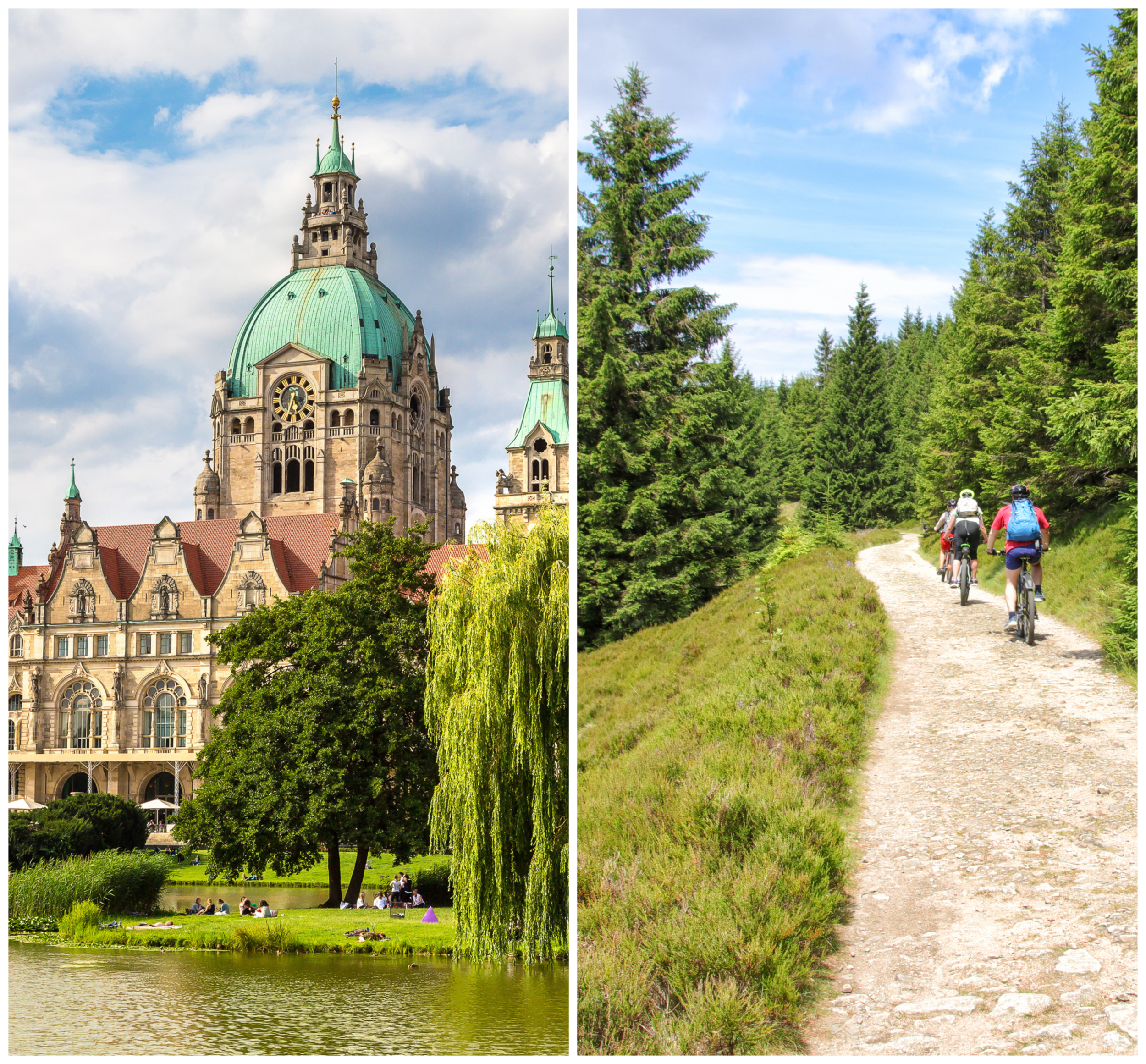
Hanover and The Harz Mountains - a Spring travel plan for mountain biking and city break
Travelling in spring, departing from Leeds, my imagined itinerary for 7 nights of exploring in Lower Saxony.
Why Hanover & The Harz Mountains?
The start of my research into The Harz Mountains was inspired by this article from Culture Trip; I did a bit more digging and found what looks to be a perfect region to explore on a bike.
The main focus of the trip will be the Harz Mountains and I’ve plumbed for one of the most obvious towns as the base - Quedlinburg. This little city is a UNESCO World Heritage site owing to it being the burial site for the first German King, and it was Germany's first capital and an important city during the Middle Ages. Now, it is a well-known tourist destination and is usually the favoured spot for a visit to the region. Looks to be a great base for a bit of biking around the Harz, while also offering up options for historical activities and dining.
Hanover (spelt Hannover in German) is very simply the nearest city and the most obvious airport - so I decided to make it a part of the itinerary. Much of their visitor marketing is geared towards the city as a business destination but reading between the lines, I found more than enough history, culture and uniquely Hanoverian experiences for us to enjoy a few days getting to know this city. The Aldstadt (German for ‘Old Town’) is full of those gorgeous half-timbered structures and it is home to the Eilenriede, Europe's largest municipal forest. It is very bike friendly, both in the city and its surrounds, with hundreds of kilometres of signposted routes and city bike lanes. Its reputation as a business hub also makes it incredibly easily logistics-wise, so superb for the independent traveller. Most unique of all is that the city has an international firework competition each year………weird, and cool. In short, many many reasons for a visit.
I have visited Germany once before - Bavaria and Baden-Wuttemburg - and ever since, I’ve been telling anyone who will listen that the best baked goods are in Germany - not in France, not in Italy - Germany. So add superb cake and daily pretzels to the list of attractions.
Itinerary At A Glance
7 day independent itinerary; 4 nights in Quedlinburg, then 3 nights in Hanover, travelling in Spring - April, May or June.
Based on flying in and out of Hanover from Leeds with a hop in Amsterdam.
Highlights include a two-wheeled day trip to Marienburg Castle, international firework competition displays, enjoying modern German fine dining in a 2-star Michelin restaurant, understanding more of Germany’s medieval history, and biking around the Harz Mountains.
Based on a couple travelling, with a focus on leisurely cultural activities and biking, interspersed with time to just relax and soak up the atmosphere.
WHEN
Spring - April or May
The weather is very similar to the UK so highly unpredictable, though I’m of the opinion that Spring is the absolute best time to visit Northern Europe. That being said, I’ll still expect a variety of warm, cool, wet and generally changeable weather for this trip.
TRAVEL MEANS
KLM, from Leeds into Hanover, with a 2hr change in Amsterdam
I will also hire a car for the entirety of the trip, and a mountain bike for the stay in the Harz Mountains
Note the following:
the city centre is an environmental zone - access is only permitted for cars with a green sticker
there are over 360 kilometres of cycle paths alongside the city’s roads and 170 kilometres of cycle paths through Hannover's green spaces
you can take your bike on the tram or S-Bahn (Stadtbahn), sometimes at no extra charge
ACCOMMODATION
Quedlinburg (in order of preference):
This delightful little Airbnb feels very inkeeping with the town and its vibe
Similarly adorable is this little 2 bed apartment
Hanover (in order of preference):
GORGEOUS and atmospherically designed apartment smack bang in the centre
A very funky and modern design hotel, Me and All - I’d go superior double for the extra space and the view
Arthotel ANA Prestige - I’d plum for a Junior Suite
Funky and quintessentially German loft apartment right up in the eaves
SCHEDULE
Quedlinburg - Day 1 to 4
Take a guided mountain bike tour in the Solling-Vogler Nature Park & Mountain Biking network
Visit Volksbank Arena Harz mountain bike trail centre with a choice of 74 routes
Visit Bikepark Bodetal
Take any of these off-road routes to take in the scenery around the Bodetal
Eat some traditional German ‘pub-grub’ washed down with German beer at Brauerei Ludde Quedlinburg
Get some coffee and cake at Cafe Zum Roland
Hanover - Day 5 to 7
Visit the Sprengel Museum, to see their collection of 20th century cubist art
Book into a brewery tour at Herrenhauser Brauerei
Attend Velo City Night - at Velo City Night, thousands of cyclists conquer the streets of Hannover, forming a huge collective tour of the city. Similarly, at Skate by Night, around 4,000 inline skaters cruise around the city. Both initiatives are designed to promote alternative travel options and encourage the creation of the infrastructure needed
Attend one of the international firework competition displays at the Herrenhausen Gardens
Day trip to Marienburg Castle - 1 hr 30 m each way on a bike. Perhaps book for one of the guided tours or simply stop in at the restaurant
Hanover has a 2-star Michelin restaurant, Jante. I’d book in here for a treat
Stop by Lindenblatt Burger-Bar. All the ingredients are from the Hannover region, with the steaks coming from ecologically reared animals.
Stadtmauer Hannover - modern restaurant with a view of the Leine river
Have breakfast at Fraulein Schlicht (closed Monday & Tuesday)
ABOUT HANOVER’S NEIGHBOURHOODS
Aldstadt (Old Town) - the central historic hub. This is where all the major sites can be found and the half-timbered architecture
List - the cultured and refined residential district. To the northeast of the Aldstadt, it is just north of the Eilenreide Forest also, so very well located for both culture and the urban outdoors
Calenburger Neustadt - the student district. Bound on all sides by water - River Leine to the east and north, River Ihme to the west
Südstadt - the up-and-coming district for young professionals. This neighbourhood is quiet, residential and is considered a bit of a haven for outdoor activity (with both the Eilenreide and Machensee Lake in close proximity) and is home to a lot of design-focused modern boutiques and a variety of modern restaurants. It is also home to the Sprengel Art Gallery.
Linden - the edgy, funky alternative district. It only became part of Hanover in 1920 and often considers itself having a separate identity
FOOD AND DRINK - SPECIALITIES & CUSTOMS
In Lower Saxony (German: Niedersachsen), the cuisine is features many of the ingredients common to Northern Europe - buckwheat, apples, butter, potatoes, cherries, pears, plums, asparagus, cabbage, dill, beer and rye. Some of the more unusual specialities include:
Apple Soup made from cooked apples and raisins and seasoned with a generous helping of cinnamon and vanilla
During the spring season, asparagus served with schnitzel, potatoes and brown butter
Welf Pudding is a traditional dessert from Hanover, which is a two-layer posset-like concoction made from egg, milk, vanilla, sugar, cornstarch, dry white wine and lemon
Pinkel is Lower Saxony's national sausage
Sour milk cheeses such as Harzer, Gelbkäse and Bauernhandkäse
They also love Arme Ritter (French Toast) and Buckwheat pancakes
Other 7-10 night Itineraries
Turin and Monferrato, Piedmont - a twin-centre autumnal trip
An autumn itinerary with Arbarth factory tours, martinis, and day rides in the Monferrato hills.
Itinerary At A Glance
Twin-centre independent itinerary for Piedmont; 3 nights in Turin, 7 nights in the Monferrato Hills in Alessandria province.
Based on travelling in late summer or early autumn, flying in and out of Milan from Leeds with a hop in Amsterdam.
Highlights include a tour of the Abarth Factory, a cocktail experience at the home of Martini, indulging in the famed white truffle, staying in a high-spec design accommodation, day bike tours around the rolling green hills of the Monferrato, and an exciting gourmet experience at one of the regions many Michelin-starred restaurants.
Based on a couple travelling, with a focus on leisurely cultural activities and biking, interspersed with time to just relax and soak up the atmosphere.
Why here?
Piedmont (Piemonte in Italian) is in the north-western corner of Italy and both the Italian and French name for the region roughly translates as ‘foot of the mountain’ which is very apt, as the region’s physical background and border along its western edge, is the Alps.
Piedmont is known for its lakes, hills, rivers and its food: white truffle, gianduja, Gavi, Barolo, and Asti. It’s also well set up for independent cycling, with mapped routes for everything from road touring to proper downhill trail centres.
This itinerary started with a visit to the Fiat Lingotto Factory and the Abarth Works Museum in Turin (my boyfriend’s a serious petrolhead). Turin itself has a reputation for royalty, industry, and grand café culture. It was the first capital of unified Italy, home to the kings of Savoy, Fiat, and Juventus. We’re expecting a quietly confident city with boulevards, motorsport, and a splash of Martini — vermouth was invented here.
Rather than heading to the lakes, we’re staying rural in the Monferrato Hills near Casale Monferrato. The accommodation felt fresher, better value, and less over-touristed. This part of the trip is for relaxing and cycling through vineyard country.
WHEN
Early Autumn - either September or October.
A little unexpectedly, October is actually high season in the Monferrato-Langhe due to the harvest and the importance of gastrotourism to this area.
It is a relatively wet place all year round so I’ll be expecting mixed weather. Averages indicate that it is at its driest in the Winter.
TRAVEL MEANS
Flights into Turin are possible, though I found them much more expensive than flights into Milan, which is just a 2hr drive from Turin. Flight options are either of the below:
KLM, from Leeds into Milan, with a 2hr change in Amsterdam
Easyjet, from Manchester direct into Milan
I will hire a car for the entirety of the trip, and a bike for the second part of the trip in the Monferrato Hills
ACCOMMODATION
Turin
I found lots and lots of ‘oldy worldy’ accommodation in Turin, which isn’t really my bag, but something else I noticed in abundant availability were modern conversions of big old industrial spaces. These would be my pick in priority order:
Edit Lofts - this is a former Fiat factory made into funky loft apartments. They also have a restaurant on site recommended by the Michelin Green Travel Guide. Only downside is that it is a 40 minute walk from the centre
Funky loft space smack-bang in the centre
Modern, minimalist and space-maximising design loft a little outside of the historical centre
Monferrato Hills in Alessandria/Asti province
I found many many beautiful places to stay in this whole region, but once I found this Glass House in Terruggia, about 6km from the small historical river city of Casale Monferrato, I knew we had to stay here. The rest of my trip is designed around staying here
SCHEDULE
Turin - Day 1 to 3
Take a guided tour of the Abarth Factory Workshop
Visit the FCA Heritage Hub which opens soon in the Fiat Mirafiori industrial complex, with an exhibition of Fiat, Abarth, Lancia and Alfa Romeo
Go have a look around La Venaria Reale, one of Turin’s famous Savoy residences and one that stood out to me
Visit Castello di Rivoli contemporary art museum
Have coffee and cake at Caffe Mulassano - a grand and traditional cafe
Do as the locals do, with a pre-dinner aperitif and snack at La Drogheria in Piazza Vittorio square.
I’d book into any one of these restaurant recommendations from the Michelin Green Travel Guide
Take an an aperitivo ‘crawl’ in San Salvario - Enò | Via Galliari, 1, Affine | Via Belfiore, 16, Gorilla | Via Galliari, 20, Crumb | Piazza Madama Cristina, 2, Eria San Salvario | Via S. Pio V, 11, La Cuite | Via Baretti, 11
Take a 40 min drive outside the centre to get to know more about vermouth and Martini on this Ultimate Martini Experience at Casa Martini, the historical home of the well-known alcohol producer
Day 4 - driving between Turin & Casale Monferrato
About 75-100km (depending on the route), 1 hr 15 mins driving
Monferrato hills in Alessandria/Asti province - Day 4 to 10
The majority of our time will be spent on the bike, and the following routes and destinations strike my fancy:
Take this circular route from Casale Monferrato to Valenza, the famed City of Gold, which boasts the highest concentration of gold and artisan jewellery businesses in the country - I think we’ll pay a visit to the Museo del Gioello (jewellery museum) while we’re there too (65km route - an all day excursion. Start point is 25 min bike ride from Terruggia)
Take this route or this route for a tour around the Infernot Hills and a stop in Treville for a view of the Alps. (25km route - about 2-3 hours. Start point is 25 min bike ride from Terruggia)
Take this short multi-looping route in and around San Salvatore Monferrato (25km route - about 2-3 hours. Start point is 1 hour bike ride from Terruggia)
Cycle this loop in the lands of San Giovanni Bosco (62km route - an all day excursion)
Drive or bike out to Asti (4 hr bike ride round trip from Terruggia) just for a little wander around the city and a sip of the famous sparkling wine Asti Spumante
Cycle out to the walled medieval miniature city of Moncalvo (2.5 hr round trip from Terruggia) to walk the ramparts, visit the Marc Chagall paintings held in the Civic Museum of Moncalvo and have dinner at sunset
Drive or bike out to Montegrosso d’Asti (4-5 hour round trip from Terruggia)
For a wide variety of cycle routes across the whole of Piedmont that can be downloaded as GPX files, I found PiemontEscape to be superb
Book for dinner at Il Cavallo Scosso in Asti - a young and modern restaurant as recommended by the Michelin Green Guide
Faletto 1881 - a modern restaurant in a farmhouse-come-hotel-and-venue just outside of Casale Monferrato
Accademia Ristorante in Casale Monferrato - local and seasonal Piemontese cuisine, as recommended by the Michelin Green Guide
FOOD AND DRINK - SPECIALITIES & CUSTOMS
Piedmont is extraordinarily rich in food and drink both grown and invented here:
drinks wise, there is Barolo and Gavi wine, bicerin (a coffee mixed with cream), and vermouth.
pasta-wise, there is agnolotti, plin and tajerin.
cheese-wise, there is stracchino (creamy, soft white cheese), toma (a light, semi-hard cow’s milk cheese), robiola (delicate and sweet, often preserved in oil), raschera (made with a combination of cow, goat and sheep’s milk coming from the high pastures of the Monferrato).
other food items include gianduja (chocolate-hazelnut spread), truffles (most famous ones come from Alba), bagna cauda, bonèt pudding, baci di dama, Savoy biscuits, grissini breadsticks and panna cotta.
Traditionally, aperitivo is meant to whet the appetite before dinner and is accompanied by a variety of appetizers (stuzzichini) such as cold cuts, cheeses, salads, olives, bite-sized pizzas and other savouries. However, such is the popularity of this time honoured tradition, a new concept of apericena has been introduced in recent years that closes the gap between aperitivo and dinner and acts as a less formal alternative to eating out in a restaurant. Now, sumptuous buffet tables in bars and cafes all over Turin groan with a mix of the traditional bites plus pasta and rice dishes, grilled and freshly chopped vegetables, couscous and quinoa salads, cakes and more. The buffets usually start at around 7pm and can go on until 9pm/10pm
Tastes of Italy
Andalusia by Wheel
Travelling in winter, journal and itinerary of our 7 night stay in Andalusia - starting with a Seville city break followed by biking around Vejer de la Frontera in Cadiz province.
Andalusia by Wheel
Exploring Seville and Vejer by bike and cuisine - off the main tourist track, in the hush of late winter when the crowds crowds fade to a murmur and orange blossom scents the air.
Itinerary At A Glance
7 day independent itinerary for Andalusia, 3 nights in Seville and 4 nights in Vejer de la Frontera
Based on flying from Leeds into Malaga, in March
Highlights include authentic tapas walking tour and live flamenco show in a very small theatre, meandering through the tiny lanes of Seville’s barrios, hiring scooters for an independent scoot around the city, and e-biking around Cadiz province.
Based on a couple travelling, with a focus on leisurely cultural activities and biking, interspersed with time to just relax and soak up the atmosphere
Honest verdict
Does the place live up to expectations?
Yes, yes, yes and yes.
Seville is probably on the hitlist of many a traveller and now that I have been, I’d say it deserves such a coveting. Probably the most architecturally beautiful and sensorially-stimulating city I have ever been to - the buildings were a visual delight, it smelled of orange blossom and it is literally filled with the lingering sounds of flamenco guitar.
We found history and culture aplenty, with marvellous food (as long as you stay away from the tourist spots) and great drink.
Vejer de la Frontera is one of the white hilltop towns (Pueblos Blancos in Spanish) of the Serranía de Ronda region. The most famous of these towns is Ronda, but there are many to choose from and I chose Vejer for it being one of the slightly lesser-known ones while still being one of the more sizeable and visitor-orientated. We found it to be beautiful, welcoming, and an ideal base for e-biking its surrounds. The biggest surprise was how verdant the area around Vejer was; we expected arid and instead was rewarded with scenes not dissimilar to the green and rolling hills of the Yorkshire Dales so it is a surprise that this isn’t a more known cycling destination. It’s an ideal location for being on two wheels. My boyfriend stated that Vejer was the best place we have ever been cycling – and it was absolutely superb. For anyone vaguely interested in cycling while on holiday, leisurely or hardcore, there is much to enjoy hereabouts.
Did the itinerary work for the trip?
Definitely. This city does winter very very well - mild and sunny with blue skies, pleasant but not hot. Don’t make the mistake of thinking you should go in shorts and flip flops - you’ll not only look like a tourist, you’ll also be shivering in the shade.
An ideal spot for a March city break with minimal crowds and beautifully sunny and mild skies; the ideal counterpoint to the cold and grey of Northern England at this time.
3+4 also worked extremely well, with the right amount of time in each location and an opportunity to extend a city break into a week long trip with the second, more countryside location. As a framework, I will look to replicate this again.
Two points of note: Doing two tours in Seville meant the guides repeated similar historical anecdotes and facts – probably best to do just one tour otherwise it can start sounding repetitious. Duplex Asilah wasn’t the ideal type of accom for bikes as it was tiny so we had to ask the reception to store them for us. Not at all the fault of the accom, but rather something I need to consider when booking a place to stay when we need room to store bikes.
Would I make another visit?
Rare is the place that touches me so much that I want to visit again, to get deeper under its skin; Cadiz province is one of those rare places. We had the most fantastic trip from start to finish.
If we went to Seville again, we’d stay in Triana for a slightly more authentic experience, though we felt we got a good flavour of the city in our 2.5 days so I suspect a revisit is a while away.
I very much want to return to Cadiz province to see and experience some more of its loveliness. Sanlúcar de Barrameda, Tarifa, Cádiz, Castellar de la Frontera in the Alcornocales, and Jerez de la Frontera are now on my hitlist.
WHEN
Early March
Shoulder season with mild weather, fewer crowds, orange blossom in Seville
We got blue skies, still winds, sunny. Warm in the sunshine, but you needed coats, long sleeves, socks and covered toes for the cooler mornings, evenings and shade.
LIGHT
Moderate Days
Sunrise: 7:45am to 7:20am
Sunset: 7:10pm to 7:17pm
Approx. 11–12 hours of daylight
TRAVEL MEANS
Direct flight from Leeds into Malaga, with Jet 2
We hired a car for the entirety of our trip, and it would be difficult, (though not impossible) to do without it.
Seville is a 2.5 hour drive from Malaga airport; Vejer is about a 1h 40m drive from Seville, then Malaga airport is about 2h 15m from Vejer.
We hired an e-bike for the entirety of our stay in Vejer from Bicicletas Francisco who also handily provided us with some local maps and biking routes.
ACCOMMODATION
Seville - Suites Murillo Alcazar (in Barrio Santa Cruz)
superb location right next door to the Alcazar
ideally walkable for pretty much everything
comfy bed
plenty of space for two people
felt a teensy bit rundown and the breakfast was ‘meh’.
Vejer de la Frontera - La Casa del Califa in the self-catering Duplex Asilah
a collection of real townhouses that have been brought together to make a hotel
gorgeous location with fab service
an excellent restaurant
lacked any soundproofing so we found it was a bit noisy into the evening and in the early morning.
SCHEDULE
Alcázar entrance
Seville - Day 1 to 4
Day 1
Fly: into Malaga airport (convenient flight schedule, running all year from most UK airports, even regional ones)
Collect hire car
Drive: to Seville, 2h 11m driving, 210km
Check-in, settle in, collect a few groceries
Day 2
Stroll: through Barrio Santa Cruz
Lunch: Torres y Garcia, Calle Harinas, 2, 41001 Sevilla
Very modern and hip café right in central Seville but not a single tourist in it. Surprisingly large, and the food was both healthy and cooked with care.
Tour: Sunset City bike tour with Sevilla Bike Tours
Very authentic tour around the city including the outer neighbourhoods that you would be unlikely to see on a short city break. Sunset felt like a good choice as the Spaniards seem to come alive in the early evening and the streets were buzzing. Excellent and passionate guide too.
Note that Seville is almost pancake flat, so this is easy for anyone to do.
Dinner with Drinks: Taberna Alvaro Peregil, Mateos Gago, 22, 41004 Sevilla
Teensy little tapas bar on a street of restaurants made for tourists. Ignore the rest and go here for a taste of that classic Seville experience. Menu is classic, simple, straightforward and tasty.
Day 3
Lunch: Crustum Panem, Calle Puente y Pellón, 24, 41004 Sevilla.
Properly good bakery selling all manner of authentic baked goods. We had empanadas and bread. Top marks for a lunchtime snack.
Evening: Tapas y Flamenco tour with MIMO.
This was superb and probably the best thing we did during our stay in Seville. We visited a small flamenco school in Triana for an authentic and intimate flamenco 45 minute performance of two dancers, one singer and one guitarist. I have chills even now, months after the trip, just thinking about how the performance made me feel.
This was no tourist thing; this felt like the real deal.
These performers exhibited their craft and training with feeling and passion, and the audience was a mixture of locals and tourists in the know. We were then taken off to 3 tapas establishments in Triana and our knowledgeable guide ordered for us - food and drink. Everything was delicious and we left a bit tipsy and fully full like a full thing on full day. 11 out of 10 for this tour.
Day 4
Tour: Alcazar tour with Feel the City tours.
Good tour of the Alcazar, that filled in the historical detail and importance of the building that we would miss if we just went in solo (which you can do if you want to). The only thing about this is that it was very ‘classically touristy’ and the guide’s script sounded memorised and a bit rote. Good, just not outstanding.
Lunch: Gocho Neo Charcuteria, Calle Puente y Pellón, 19, 41004 Sevilla
Teeny little shop for a fresh ham sandwich, with the jamon sliced right in front of you. We had one with a bag of crisps and it was delish.
Drive to Vejer: 160km, 1h 45m driving
Afternoon: Arrive and settle into accommodation, explore Vejer’s cobbled streets and craft shops.
Views from La Breña y Marismas del Barbate Natural Park
Vejer de la frontera & surrounds - Day 4 to 8
Day 5
Ride: Vejer to Barbate loop, 40km
Combined on-road and off-road circular cycle route, Vejer to Barbate, about 40km round trip. Out to the coast, with a stop for coffee in Barbate, this took in one of the smallest nature parks in Andalusia - the Breña y Marismas del Barbate Nature Park. It contains five different ecosystems: marine, cliff, pine grove, marshland and dunes. Only suitable for off-road bikes.
Dinner: Restaurante El Califa
Restaurant within our hotel and about 6 steps from our door.
This place has quite the reputation, and deservedly so. We ate here on two out of four evenings; the menu selection was superb, the service outstanding, the setting elegant and the food sublime. The best food we ate on the whole trip. You can also book in to eat here even if you aren’t a resident of the hotel.
Day 6
Ride & Lunch: Vejer to Medina-Sidonia, about 70km round trip
Combined on-road and off-road circular cycle route, Vejer to Medina-Sidonia, about 70km round trip which even on an e-bike was a full day journey for the round trip. Medina-Sidonia is another one of the white hilltop towns; the journey to and from it was a beautiful rolling sojourn and the climb into town a punisher. We stopped for lunch in Medina before heading back.
Dinner: El Campero, Avda. de la Constitución local 5C, 11160 Barbate.
Restaurant specialising in the red tuna fished right off shore. The service and the food here was excellent. Most importantly, the waiters were all very knowledgeable and make recommendations about the menu which is useful as many of the tuna cuts and dish descriptions will seem entirely foreign
Day 7
Ride: Vejer to El Palmar de Vejer, about 30km round trip
Combined on-road and off-road circular cycle route, Vejer to El Palmar de Vejer, about 30km round trip. Most leisurely of the three routes
Drinks on the beach: El Palmar
the day was a stunner so we hung out at one of the surfer-type bars that line the beach at El Palmar. The place was absolutely buzzing with all kinds of folk - motorcyclists, families, surfers, groups of friends, groups of families. We had a few bevvies and soaked up the sunshine. Bliss.
Dinner: Restaurante El Califa
Day 8
Drive: to Malaga, 2h 30m driving, 200km
Fly home
Other Twin Centre Itineraries
Morbihan, Brittany - a twin-centre trip with road biking and city break
Travelling in early summer, my plan for 10-11 nights in Nantes and the Gulf of Morbihan. An itinerary for biking, art trails, a bit of Jules Verne, eating crepes, visiting medieval towns and castles, and admiring the sunset in pretty port towns.
Why Brittany?
With it’s own language and gastronomy that is heavily influenced by Celtic culture (indeed Brittany counts as one of the six Celtic nations along with Cornwall, Wales, Isle of Man, Ireland and Scotland), visitors are principally drawn to Brittany’s for coastal views, well-preserved historical towns and sites, food treats like salted caramel and crepes, and its unique cultural tradition that is quite distinct from the rest of France.
Tourism is well-established here with a wealth of online information to inform my independent itinerary. Its definitely a region geared up to receive visitors; many of them British, but also many of them French so it looks to have retained authenticity in its touristic offering. It is also well-serviced with transport options from the UK. This is not necessarily the place to discover that feels like I’m the only one to have done so, but I can take advantage of the expansive tourism infrastructure and online resources to get to some of the lesser-known places and design myself a unique itinerary quite easily.
Across the whole region, there seems to be a number of locales that strike my fancy and meet my brief of culturally rich, a little under the mainstream UK travel radar, and with opportunities for biking - Nantes, Quimper and Bénodet, St Malo, the Cote Eméraude, Noirmoutier-en-Île, Dinan, ruins at Carnac…this looks to be the kind of place that I will need several different holidays to see everything I’d like to see.
For this itinerary, I have settled on a design for southern Brittany, starting with a city break in Nantes, followed up with enjoying the coast in the Gulf of Morbihan, in easy reach of medieval town Vannes.
Nantes is the former “City of Dukes”, and was once the administrative capital of Brittany but is now part of the Pays de la Loire. This city looks to be a beauty - art features heavily, history is everywhere, and it looks to be a classy kind of place that isn’t too big to really see on a city break. There is also industry and an important port, and as per the Copenhagenize Index 2017, was marked as the 16th most “bicycle-friendly” city in the world.
The Gulf of Morbihan is a natural harbour; indeed ‘mor bihan’ in Breton means ‘little sea’. It is scattered with little islands, isles and islets; the mainland is lined with pretty little coastal villages; and being on the west coast, it is a beautiful theatre for incredible sunsets. The whole area looks perfect for exploring on a bike; quiet rural roads, excellent views, and for the historical and cultural hit, several castles and the medieval city of Vannes are within easy distance for day trips on two wheels.
Itinerary At A Glance
10 day independent itinerary for Brittany & the Loire Valley in Northwestern France: 3 nights in Nantes, and 7 nights in the Gulf of Morbihan near Vannes
Based on travelling in summer, flying in and out of Nantes from Leeds with a hop in Amsterdam. Car will also be essential to move between locations
Highlights include getting to know more about Jules Verne, biking around Nantes, taking a brunch tour on the River Erdre, indulging in buttery crepes, hanging out in the vibrant fortified medieval city of Vannes, and e-biking around the craggy coast of the Gulf of Morbihan.
Based on a couple travelling, with a focus on leisurely cultural activities and biking, interspersed with time to just relax and soak up the atmosphere
WHEN
Late June or early July.
Brittany has an extremely pleasant summer from June through to September with mid-20s temperature and fairly low rain during this time also. I will expect changeable weather even in the summer, though typically a few degrees warmer than the UK. The rest of the year is cool (not really very cold) but can be very wet (wetter than Northern England)
TRAVEL MEANS
KLM, from Leeds Bradford to Nantes, with a 2hr stop in Amsterdam
Hire a car to collect from the airport for the entirety of the trip and a road bike.
ACCOMMODATION
Gulf of Morbihan (in my order of preference)
La Villa du Guern - I’d like any one of those suites overlooking the water
I’m not sure I have ever encountered a more original place to stay than this house on the water
La Ferm’h - elegantly furnished eco-gites in Baden
Right outside of Vannes, but with views overlooking the Gulf of Morbihan - great looking Airbnb
Nantes (in my order of preference)
Maisons du Monde Hotel & Suites - my pick would be the Copenhague apartment
Luxurious 2 bed apartment with a grand and opulent personality
Stunner of a split-level duplex
Tasteful & modern 2 bed apartment with welcoming decor and nicely laid out space, about 1 mile from the centre of Nantes
SCHEDULE
Nantes - Day 1 to 4
Visit Chateaux des Ducs – 15th century castle tracing the history of Nantes
Take brunch cruise, a lunch cruise or a dinner cruise aboard the Bateaux Nantais up the River Erdre
This city is so bicycle friendly – I’d try some of these bike routes suggested by France Vélo Tourisme for in and around Nantes
Reputedly, the Quai des Antilles on the western side of the Ile de Nantes is the place to be for an early evening aperitif or beer. The riverside is supposedly lined with bars and cafés, and it bursts into action after sunset.
-
See an art exhibition at the industrial shed unit that is HAB Galérie, located on Île de Nantes
Book a performance at Le Lieu Unique - The last remaining vestiges of the LU biscuit factory established here in 1885 by Louis Lefèvre-Utile have been rehabilitated in 2000 by the architect Patrick Bouchain to give rise to this national centre for drama, dance and music. There is also a Turkish bath, a restaurant and a DJ in the bar on weekends
Follow the Green line through the city past nearly forty public art works and check out the Nymphea artwork at night drifting over the River Erdre
History of printworks at the Printing Museum
Jules Verne Museum, to learn about the city’s most famous artistic son
Wander by the Machines de l’Ile and the Great Elephant – this Jules Verne creation is the emblem of Nantes
Drive to Noirmoutier-en-Île - a flat island littered with cycling trails just off the Atlantic coast and about 1.5 hours from Nantes
Vannes & surrounds - Day 4 to 10
Spend at least half a day walking around half-timbered, fortified medieval town of Vannes. Eat in its cafes, admire it’s marina and walk the ramparts
Take an oyster mini-cruise to Ile aux Moines, to taste the oysters and learn more about their farming and the fragile ecosystem
Take a trip to Quiberon to visit the confectioner’s shop of Henri la Roux, inventor of the famous salted caramel
Bike out to the Fortresse de Largoët, the highest keep in France (2hr bike ride round trip from Vannes)
Bike out to the Chateau de Tredion for a walk around their sculpted gardens and sculpture park (3hr bike ride round trip from Vannes)
Cycle out to Auray-Saint-Goustan for a wander around this pretty port town (2hr bike ride round trip from Vannes)
Cycle out to see Rochefort-en-Terre and the Moulin Neuf for a walk around this reputedly beautiful floral village (4 to 5 hr bike ride round trip from Vannes)
Cycle out to Carnac to see the ancient standing stones
FOOD AND DRINK - SPECIALITIES & CUSTOMS
Oysters, cider, white wine, galettes/crepes and buttery Breton biscuits are just a few of the famed local treats.
Fish in a beurre blanc sauce, also known as beurre Nantais is a classic dish for Nantes.
Muscadet is a dry, crisp white wine, the most common wine produced in the Loire region.
Nantes Tourisme gives lots of recommendations for restaurants, creperies and wineries in Nantes. There are even some recipes on there for the classic foods of Nantes
Michelin Travel guide offers up several good food options in and around Vannes, Aubay and Baden - I’d probably book a couple of these in advance. There are even a couple of places with a Michelin star

