
A Journal

A personal journal that invites readers to design their own journeys through the world - with travel, dress and taste.

Search Posts:

Jump to

Travel

Jump to

Wardrobe

Jump to

Eat

Wardrobe, Thought Frances Lawrence Wardrobe, Thought Frances Lawrence

Knowing your colours

One of the greatest things about knowing your colours is knowing the things like

'I can wear green, as long as it's not too yellow'

or

'I can wear pink but only in small touches like a button or a collar'...

Or even stuff like:

'My wardrobe needs red as a balancer to the rest of my usual palette'...

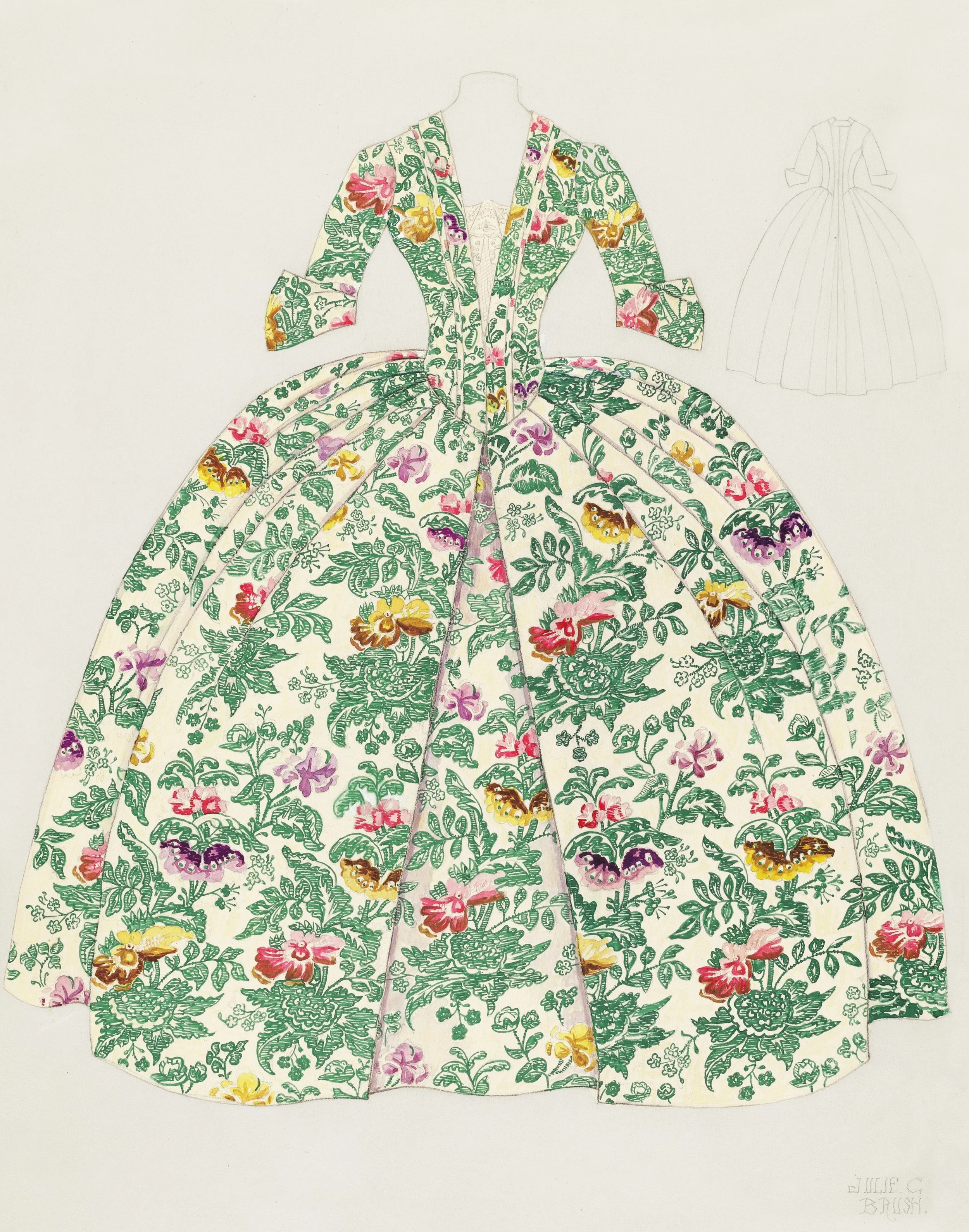
Knowing your colours is a multi-dimensional foundation of style and style refinement. Its more nuanced than just knowing which colours you favour or which colours flatter your skin tone.
Read More
Wardrobe, Thought Frances Lawrence Wardrobe, Thought Frances Lawrence

Wardrobe as storecupboard: Utility + Creativity

I think I have moved into a new phase with my wardrobe.

My overarching goal at the moment seems to be developing my wardrobe to be an incredibly useful storecupboard, that's ready for anything...like my kitchen stock cupboard is stocked with a very useful array of quality ingredients ready for making almost anything, so I am evolving my wardrobe towards the same function.

Still trying to keep all that creativity, but buying more according to where the usefulness gaps lie, not just where my creative nose wants to go... I am wanting my wardrobe to be ready for action, fully stocked, AND creative together, so that I myself am essentially always ready for what life's occasions, weather, whims and future goals, demand.

Read More
Wardrobe, Thought Frances Lawrence Wardrobe, Thought Frances Lawrence

Youthfulness in style

As we age, we may feel compelled to leave behind ‘youthfulness’ in our style, if we are no longer, on paper, young.

But I think much of the time, it's how you frame these things in your own mind right?

Hence, I have been thinking, what exactly is youthfulness? It's not just being physically young. It's a hopeful outlook, it's experimenting, it's not taking things super seriously... So as you transition your style, youthfulness can transmute into words like playfulness, unexpectedness and unpredictability, surprise and irreverence.

Read More
Wardrobe, Thought Frances Lawrence Wardrobe, Thought Frances Lawrence

The Age of The Small Adjustment

I have a new fashion theory – after the age of about 35, you enter, what I am now calling The Age of The Small Adjustment.

Wild changes of style direction no longer serve you, no longer interest you, frankly, are no longer possible. But you still want changes, updates, to feel like you're new and different from before, making style progress and not being stagnant.

This is where subtle changes on a known theme become REALLY important... Instead of drastic new choices, variations of detail like a different type of collar, a wider or slimmer sleeve, a visible decorative button or all buttons hidden under a placket, a darker shade than the last time etc. etc. become the way your style changes and keeps you feeling fresh and attentive.

Read More
Thought, Wardrobe Frances Lawrence Thought, Wardrobe Frances Lawrence

Trusting each other to decipher our code of dress

Getting dressed isn’t arbitary. There is code, language, meaning, symbols. We trust each other to be fluent in this hidden language.
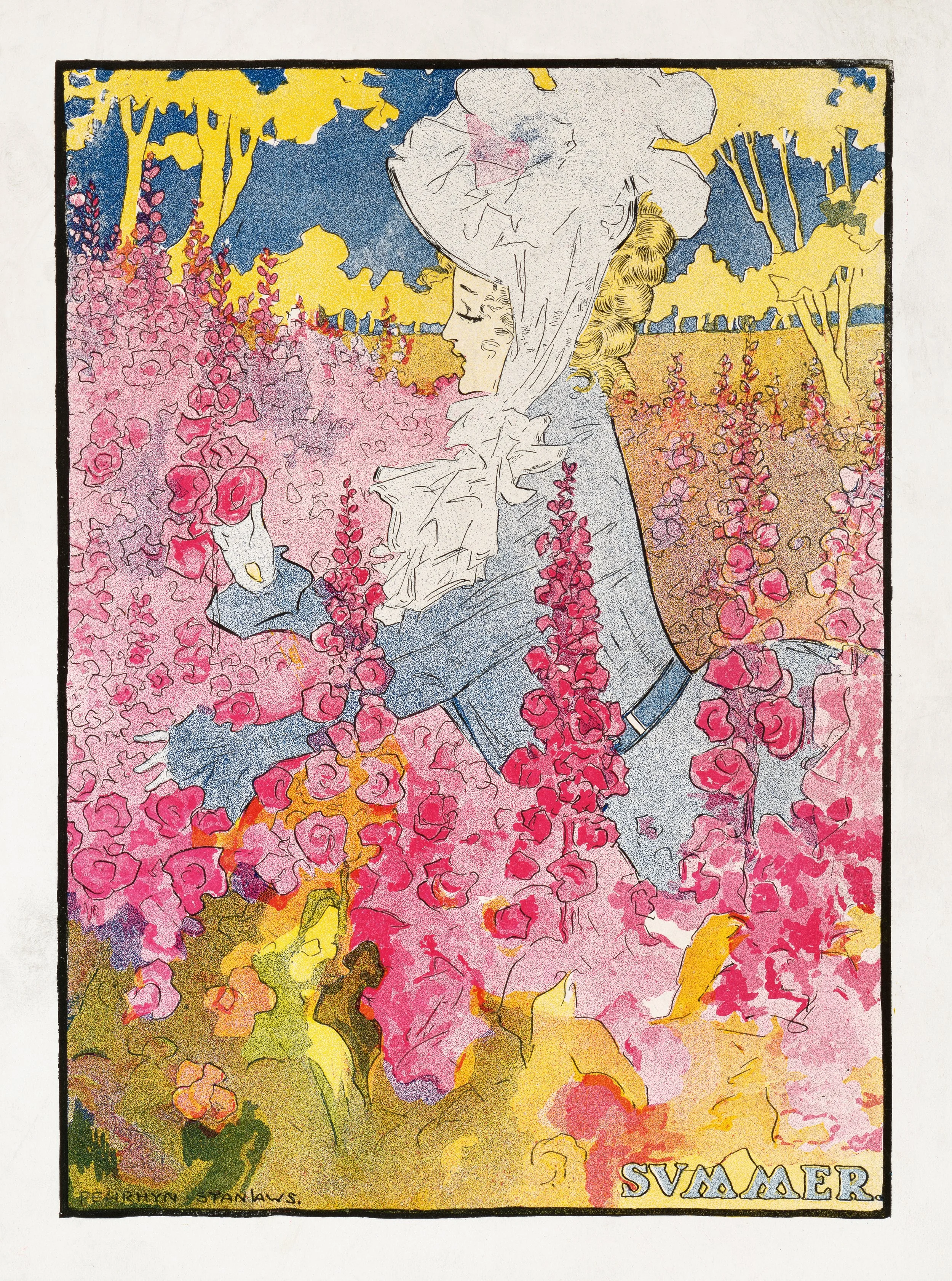
“Recognition, as individuals or as groups, and surface decoration has aided the swift division between those wishing to lead and those ready to be led while establishing unity between the like-minded.

…Humans compete and impress in order to propel or maintain their position, and embellishment can be a tool to bedazzle others for own gain.

The quality of the workmanship and preciousness of the textures communicates our status and intent so we trust in each others ability to decipher our code of dress.

…Changing how we dress can mean we are perceived differently. Subconsciously we scan each other looking for clues as to the potential viability of a new relationship, or to gauge the emotional state of a friend. We dress to impress, to further our ambitions to win money, power and love.”

- from How to Make a Dress, by Jenny Packham, published 2021


Reference

  • Packham, J. (2021). How to Make a Dress. London: Quadrille Publishing.

Read More
Thought, Wardrobe Frances Lawrence Thought, Wardrobe Frances Lawrence

Wearing colour well can become walking in art

Colour is foundational to the dressmaker’s art and the wearer’s style. Finding the right route, and a nuanced and depthful approach to colour takes time, but pays dividends.

“I enjoy women who wear colour well, those who can combine unexpected tones, artful prints and bold accessories. Those who take the time to indulge in self presentation and to consider how they wish to be received by the world, understanding both the power and pleasure it can transfer.

However it is a skill, and it takes time to find your colours, match up flattering hues and have the willingness to experiment.

But those who get it right become walking art…

…For me, to understand the nuances of each colour helps me to design, and to create styles that can both empower and inspire.

I design for women who want to become an unforgettable version of themselves and therefore the shade I choose will be intrinsic to the success of the style.”

- from How to Make a Dress, by Jenny Packham, published 2021


Reference

  • Packham, J. (2021). How to Make a Dress. London: Quadrille Publishing.

Read More
Thought, Wardrobe Frances Lawrence Thought, Wardrobe Frances Lawrence

The amalgamation of good ideas generously donated by history with innovative creativity

Allowing ones work to be influenced by the work of others is smart, innovative and creates depth.
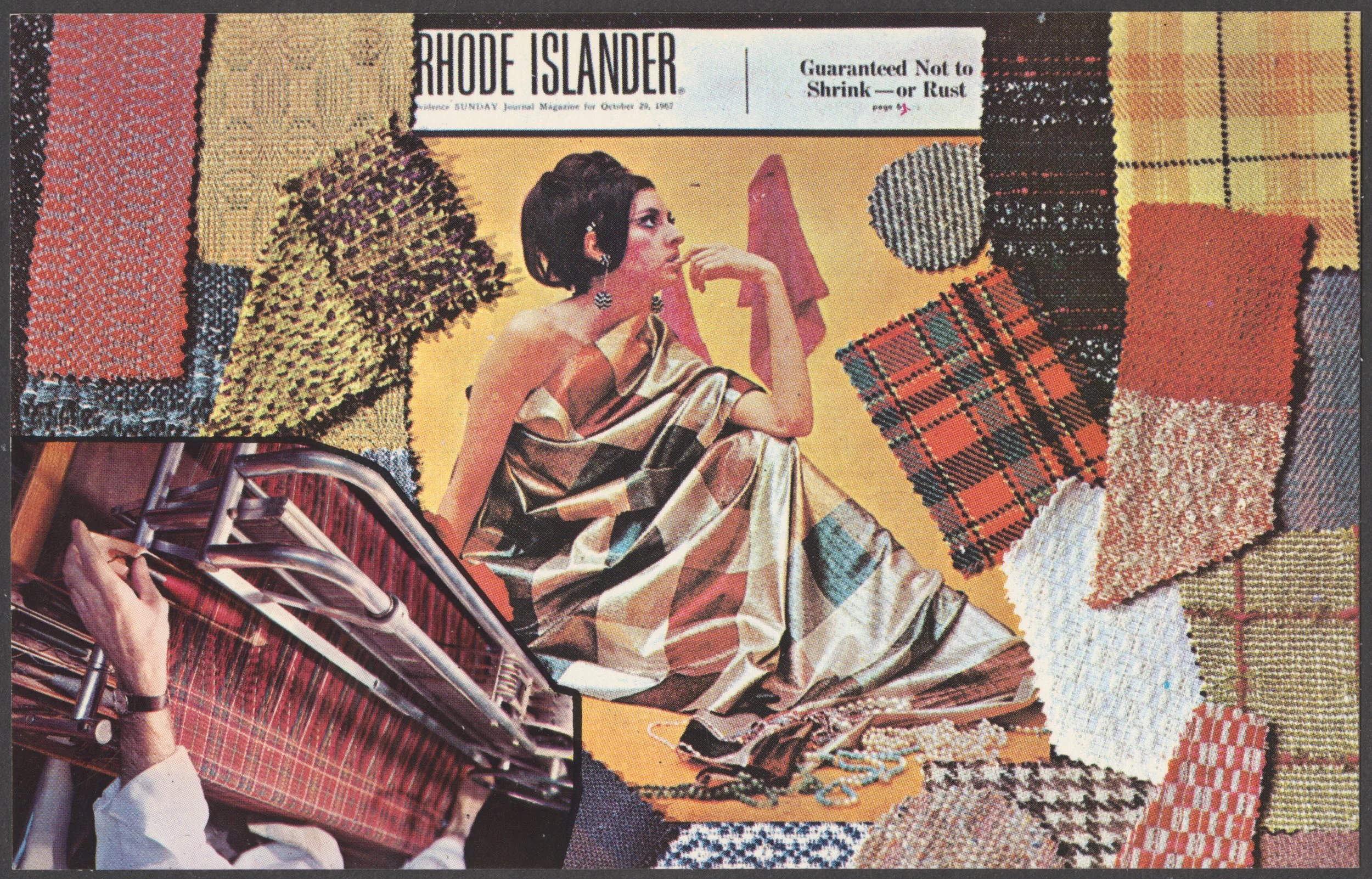
“Sometimes the onset of inspiration can't really be explained…after all, inspiration shouldn't be too obvious in the final product.

…Van Gogh collected prints by Japanese artists, notably those by Hokusai and Hiroshige….[and] used the inspiration within his own style, adding depth and balance amid his wild brushstrokes.

Nothing is truly original so the aim is to create the appearance of originality through the amalgamation of good ideas generously donated by history with innovative creativity. ”

- from How to Make a Dress, by Jenny Packham, published 2021


Reference

  • Packham, J. (2021). How to Make a Dress. London: Quadrille Publishing.

Read More
Thought, Wardrobe Frances Lawrence Thought, Wardrobe Frances Lawrence

Anni Albers on the weaving craft

Craft and art. Art and craft. Steps on the same spectrum.

“Like any craft [weaving] may end in producing useful objects, or it may rise to the level of art.”

- Anni Albers, German textile artist

Read More
Thought, Wardrobe Frances Lawrence Thought, Wardrobe Frances Lawrence

Recycling the past - and from them creating something that lives again

Creativity is not a synonym for originality. We can recycle the past to inspire future directions, and there ain’t nothing wrong in that.

“This small room was alive with women chatting and laughing, even dancing, all begging me for acknowledgment. This was a catacomb of women's lives to inspire me.

For years I had forbidden myself to ‘copy’ others, preferring to think in my youthful arrogance that my ideas would always be my own.

But suddenly, recycling the past - connecting with fantasy moments and from them creating something that lived again - seemed a magical prospect.

Ever since that day I've been inspired by vintage clothes – it’s like having my own fashion wormhole.

…When I try the vintage stores, I am looking for a beauty to recycle and make my own. I'm searching for a new colour, an extinct shape, the Golden Fleece of fashion.”

-[speaking about her experience perusing a vintage shop]

from How to Make a Dress, by Jenny Packham, published 2021


Reference

  • Packham, J. (2021). How to Make a Dress. London: Quadrille Publishing.

Read More
Thought, Wardrobe Frances Lawrence Thought, Wardrobe Frances Lawrence

The occasional lies behind the creative journey

A good reminder that making something great matters more than having the perfect explanation.

“I presume that she [the journalist] will ask me about the inspiration for particular styles, and my answers will be mostly accurate.

However, sometimes I'm forced to lie a little, because the truth behind the creative journey is not always as glamorous as others anticipate.

My intention is to inspire people with my own inspiration - and, like many artists, I am sometimes better at creating than describing my work. ”

- from How to Make a Dress, by Jenny Packham, published 2021


Reference

  • Packham, J. (2021). How to Make a Dress. London: Quadrille Publishing.

Read More
Thought Frances Lawrence Thought Frances Lawrence

Hannah Arendt on totalitarian rule

“The ideal subject of totalitarian rule is not the convinced Nazi or the dedicated communist, but people for whom the distinction between fact and fiction … no longer exists.”

- Hannah Arendt, The Origins of Totalitarianism, 1951

Hannah Arendt (1906–1975) was a German-born American political theorist and philosopher, widely regarded as one of the most influential thinkers of the 20th century. She was Jewish and fled Nazi Germany in 1933, eventually settling in the United States in 1941.

What Arendt is saying

  • Totalitarianism thrives not on ideological conviction, but on confusion and disorientation.

  • The most susceptible individuals are those who can no longer tell what is true and what is false, or what is real and what is fabricated.

  • This erosion of the boundary between fact and fiction makes people vulnerable to propaganda, manipulation, and authoritarian control.

  • When truth becomes relative or irrelevant, people stop resisting lies, and power can reshape reality without opposition.

Why it matters

Arendt’s insight is especially relevant in contexts where:

  • Disinformation is widespread (e.g., through media, social platforms, or state propaganda).

  • Truth is politicized or undermined, leading to public distrust in institutions.

  • People disengage from critical thinking, preferring narratives that feel emotionally satisfying over those that are factually accurate.

Arendt’s Notable ideas & Major Works:

  • The Banality of Evil: Arendt argued that evil can be committed by ordinary people who accept the premises of their state and participate without critical thought.

  • Totalitarianism: She analyzed how modern regimes use ideology and terror to dominate every aspect of life.

  • Vita Activa vs. Vita Contemplativa: A distinction between active life (labor, work, action) and contemplative life (thinking, judging).

  • Natality: The concept that human beings are capable of new beginnings, central to her view of political action.

  • The Origins of Totalitarianism (1951) – a foundational analysis of Nazism and Stalinism.

  • The Human Condition (1958) – explores the nature of human activity and political life.

  • Eichmann in Jerusalem: A Report on the Banality of Evil (1963) – a controversial account of the trial of Nazi official Adolf Eichmann.

  • On Revolution (1963) and Between Past and Future (1961) – further explorations of political theory.

Read More
Thought, Wardrobe Frances Lawrence Thought, Wardrobe Frances Lawrence

Cutting is higher risk than sewing

A reminding quote that scissors in-hand is as much a part of successful garment construction as time at the machine. There are few ways to correct a faulty cut.

“Guilds regulated the various steps in garment production minutely. For instance, the statutes of the 13th century Parisian tailors’ guild reserved cutting cloth for established masters, leaving sewing to subordinate workers called valets cousturiers.

Cloth was so expensive that cutting it was a high-risk operation. A faulty stitch can be removed, but a faulty cut can ruin an entire piece of fabric.

Couturier, which comes from coudre, to sew, was thus enshrined as a lower-status occupation than tailleur, or tailor, which derives from tailler, to cut.”

- from Worn by Sofi Thanhauser, published 2022

Read More
Thought Frances Lawrence Thought Frances Lawrence

Fortune fares þer as ho fraynez

A mystery medieval author on how Lady Luck shows up.

Cotton Nero A. X, art.2, f.42, England [N.W. Midlands]; circa 1375-1400 [text]. circa 1400-1410 [miniatures], From the British Library archive

“Fortune fares þer as ho fraynez.”

- Pearl l. 129, [Composed ?c1380], unknown author

Written by an unknown author, in the 14th century, it’s part of his allegorical poem Pearl, which is believed to be about a father’s grief over loss of a daughter (‘Perle’)

In modern English, the line means: "Fortune goes where she asks." - or more interpretively - "Fortune follows where she inquires."

  • Fortune = personified as a female figure, as was common in medieval literature.

  • fares = travels, moves, proceeds.

  • þer as = where, in the place where.

  • ho fraynez = she asks, she questions.

Read More
Thought, Wardrobe Frances Lawrence Thought, Wardrobe Frances Lawrence

Just one emblem of the possibility of better clothes

“You yourself may make clothes.

Even if it becomes just one emblem of the possibility of better clothes, this one emblem can make dressing heartening.”

- from Worn by Sofi Thanhauser, published 2022

Read More
Thought, Wardrobe Frances Lawrence Thought, Wardrobe Frances Lawrence

How France became the home of fashion

“Beginning in 1660, the king [Louis XIV], alongside his finance minister Jean-Baptiste Colbert, took charge of the minute details of French clothing, just as he had of all else…

When Louis came to power [aged 5] in 1643, Spain, not France, dictated European fashion.

In the early 17th century; aristocratic style, with its starched ruffs, rigidity, and overwhelming use of black, was a Spanish export. Black gowns were very expensive, made from Mexican logwood, and displayed the extent of Spanish wealth and empire. Louis XIV made France the fashion capital of Europe; the king wielded clothing to enhance the prestige of the monarchy and the French court. Colbert, meanwhile, monetised the king's considerable genius as a fashion director by ensuring that the thirst for French fashion and lifestyle spread, with the profits benefiting local French artisans. The revenue gained from the burgeoning French luxury goods industries would then be reinvested in the military, funding Louis XIV's many wars….

Together, Louis XIV and Colbert reinvented the luxury goods industry. France's luxury industry was not yet capable of producing items of comparable quality to lace and mirrors in Venice, silk in Milan, or tapestries in Brussels, but heavy import duties were imposed on foreign items, while foreign cloth and trimmings were banned outright.

In another policy intended to support French artisans, Colbert mandated that new textiles appear seasonally, twice a year, so that on 1 November, the court was required to put aside lightweight silks and don velvet instead. Thus, the fashion season was born. Colbert's calendar provided a predictable cycle for the textile industry and laypeople alike. To ensure that people bought plenty of cloth, Colbert mandated that textile patterns change each year, so that it would be obvious if anyone was wearing last year's fabric. In 1668, Louis demanded by edict that his courtiers “remain fashionable”, and instituted a strict dress code.”

- from Worn by Sofi Thanhauser, published 2022

Read More
Thought, Wardrobe Frances Lawrence Thought, Wardrobe Frances Lawrence

Virginia Woolf on clothes and identity

We literally are what we wear.

“Vain trifles as they seem, clothes have, they say, more important offices than to merely keep us warm. They change our view of the world and the world’s view of us.”

- from her novel Orlando: A Biography, published in 1928

Orlando: A Biography is a semi-satirical, fantastical novel that spans over 300 years of English history. It follows Orlando, a nobleman who mysteriously transforms into a woman and lives through centuries without aging significantly.

This quote appears during a moment of reflection on how Orlando’s change in gender affects not only her internal experience but also how she is perceived by the world. Woolf uses clothing as a symbol of gender performance - highlighting how societal expectations are often tied to external appearances.

Even in 1928, Woolf challenges binary notions of gender, showing how identity can transcend physical form.

The novel critiques how society imposes roles and expectations based on superficial markers like clothing.

Orlando’s long life allows Woolf to explore how identity evolves across eras and cultures.

Read More
Thought Frances Lawrence Thought Frances Lawrence

Fredome mays man to haiff liking

A fight for independence.

“Fredome mays man to haiff liking.”

- John Barbour

Written by Scottish poet John Barbour, in the 14th century, it’s part of his epic poem The Brus, which tells the story of Robert the Bruce and Scotland's fight for independence.

In modern English, it means: "Freedom allows a person to have happiness (or contentment)."

  • Fredome = Freedom

  • Mays = Makes / Allows

  • Man = A person

  • To haiff liking = To have pleasure, satisfaction, or happiness

Barbour was celebrating the idea that liberty is essential to human joy and fulfillment.

Read More
Wardrobe, Thought Frances Lawrence Wardrobe, Thought Frances Lawrence

Outfit-making for new neural pathways

You know how they say that neurologically, we have these neural pathways which determine our behaviour? Once we have a neural pathway that's fixed in our brain, it's essentially an easy road to travel.

So when we faced with a situation we just keep on going back down that neural pathway. Thoughts, perspective, behaviours–all on repeat.

Well–I think the same can be said if you don't take the trouble to make outfits. When you're just faced with your wardrobe in the morning, you fall back on the same old tried and tested neural pathways, over and over again. You have to purposely create an outfit, make it come into being; in essence, form a new neural pathway. Outfit-making lets you break up some of those patterns and create new neural pathways. To not get stuck in style habits, one of the key tools in the box is outfit-making.

Read More
Thought Frances Lawrence Thought Frances Lawrence

Closet Core Patterns : “Just. Make. It.”

Just Make It. Cut into that expensive fabric and be done with it. Get on with making and wearing the thing.

I read this article by Closet Core Patterns, and it was what I needed to crack on and make the pieces in the expensive Liberty fabric that I had been procrastinating on, for fear of f***ing it up.

Reading it made me realise: so what if I get it all wrong and waste the fabric?! I’m here to make, I’m here to learn. Get out the scissors and give it my best try.

My favourite sections of that article are below.

Start sewing. Pick that “scary” project you’re longing to make and just. Make. It. Pull out that fabric you’ve been fondling but are too nervous to use and just cut into it......

Worried about ruining that “special” fabric? Is it woven from unicorn eyelashes? No? Life is short. It’s just fabric........

”But what if it doesn’t fit perfectly?” Again, no one really cares but you. You are asking way more of your me-made garments than you would of ready-to-wear, and if that pressure is preventing you from getting started or simply stopping you in your tracks, you need to learn how to shake it off. A drag line is not the end of the world. Learn what you can for the next time. ......

Reference

Lou, H. (2016, January 2). Just Make it Already! How to Boost Your Sewing Confidence. Closet Core Patterns. Retrieved April 10, 2025, from https://blog.closetcorepatterns.com/just-make-it-already-how-to-boost-your-sewing-confidance/

Read More
Thought Frances Lawrence Thought Frances Lawrence

Cherry Jeffs : “Repeating a process can teach us important lessons about subtle variation and refinement.”

This excellent article about what an artist’s body of work is also perfectly encapsulated why I refine - for longevity, strength and coherence of my inner voice.

Just found something absolutely brilliant, on the site of Cherry Jeffs, about what a body of work is. In this Cherry also talks about what repetition teaches us about refinement. Brilliant.

In the early stages of discovering who we are as artists, it’s natural to want to try out lots of different techniques, media and subject matter. But for many of us, this kind of exploration can go on far too long! The result? Extreme frustration that we haven’t ‘found our voice’.

Constantly exploring different ways of working is exciting. But it’s also exhausting - and that makes it difficult to maintain over the long term.

This is one of the reasons why it can feel like an uphill struggle to make art regularly. When we don’t have a clear direction, it’s easy to get charged up to begin. But after a while, our enthusiasm peters out and we dry up. Eventually we restart in a different direction.

Repeating a process can teach us important lessons about subtle variation and refinement. But when we charge all over the map like this, we don’t get to learn these lessons.

It was only when I focussed on building a body of work, that I finally started to make art that spoke with a strong, personal and unique creative voice.

So, above any other considerations, the single, most important reason for building a body of work lies at the heart of your creative work: It helps you refine your voice, and the direction of your practice, so you can keep going over the long haul.
— Cherry Jeffs, fine artist

Reference

Jeffs, C. (n.d.). What is a body of work? Cherry Jeffs. Retrieved March 18, 2025, from https://www.cherryjeffs.com/whatisabodyofwork

Read More