A Journal

A personal journal that invites readers to design their own journeys through the world - with travel, dress and taste.

Search Posts:

Jump to

Travel

Jump to

Wardrobe

Jump to

Eat

Eat, Summer, USA Frances Lawrence Eat, Summer, USA Frances Lawrence

Blueberry Crumble

A very simple two-portion recipe for blueberry crumble with a touch of walnut. Memories of Maine, New England.
This recipe comes from the Good Housekeeping Complete Book of Desserts, published in 1990. I absolutely love an old recipe book; there are such gems in there. Things that perhaps have fallen out of favour. Take this one - a simple blueberry crumble recipe.

You can swap the berry quantity for anything you happen to have, single fruit or a mixture. Its an excellent option for USU - Using Stuff Up. Wrinkly fruit, scrap ends, bumper seasonal crop, fruit on yellow sticker - the only thing you may want to do is also swap the spice for another more complimentary to your fruit choice.

What I would urge, is trying a single fruit crumble. What I learnt discovering this recipe was that using the delicate-tasting blueberries on their own really means you can taste them without them being overpowered by a more robust flavor such as apple, raspberry or rhubarb.

A note on my stance for storing crumble. Some people happily store a leftover baked crumble in the fridge, and enjoy it chilled over the next few days, stealing a spoonful each time they open the fridge……..I am not one of these people. I prefer my crumble fresh and warm, and purposefully designed this recipe as a small portion for two as an option to do just that.


PORTION SIZE

My estimates are based on a portion of about 120g per person. 

This recipe will make 2 portions.

TOOLS

Other than the typical kitchen equipment, you will need:

  • a small ovenproof dish, about 110cm diameter, 4-5cm deep

INGREDIENTS

Filling

100g blueberries

1 tbsp soft brown or Light Muscovado sugar

1/2 tbsp plain flour

juice of 1/2 lime

Crumble

35g salted butter

35g flour (wholemeal, spelt, rye, or plain, or any mix)

35g soft brown or Light Muscovado sugar

20g porridge oast

20g walnuts (pecans work fine if this is what you have)

freshly grated nutmeg

To serve

It doesn’t need anything but yoghurt, creme fraiche or custard all go equally well with it


METHOD

Prep oven - Preheat the oven to 170°C fan, 190°C regular.

Mix berries - Weigh the berries, sugar, flour and lime juice directly into a small overproof dish; mix thoroughly.

Mix crumble & assemble - Weigh the crumble ingredients into a blender or food processer. Pulse to blitz into a sandy crumb. Spread the crumble on the top of the berries and lightly press down.

NOTE! If you are getting ahead, you can store the assembled crumble in the fridge at this point, for about 24 hours give or take, and bake when you are ready. A handy option to prep in the morning, and then you only need to bake in the evening for dessert.

Bake - Bake in the middle of the oven for about 15 minutes. The top should be gently bronzed once ready.

Cool & Finish with extras - Remove from the oven and allow to cool for at least 5 minutes, otherwise it will be too hot to eat and enjoy. Serve! Adding cooling dairy is an optional extra.


STORAGE

I don’t personally find baked crumble keeps, but equally, it isn’t really a very fussy dish and leftovers can easily be reheated (covered with foil, to prevent further browning of the crumble), or stored in the fridge to eat chilled.

To freeze before baking, wrap in foil and store the whole thing, dish and all, in the freezer.

Read More
Eat, England, Spring, Winter Frances Lawrence Eat, England, Spring, Winter Frances Lawrence

Rhubarb & Rose Compôte

Recipe for a fragrant rhubarb and rosewater compote. An utterly delightful flavour combo and a taste of The British Isles.

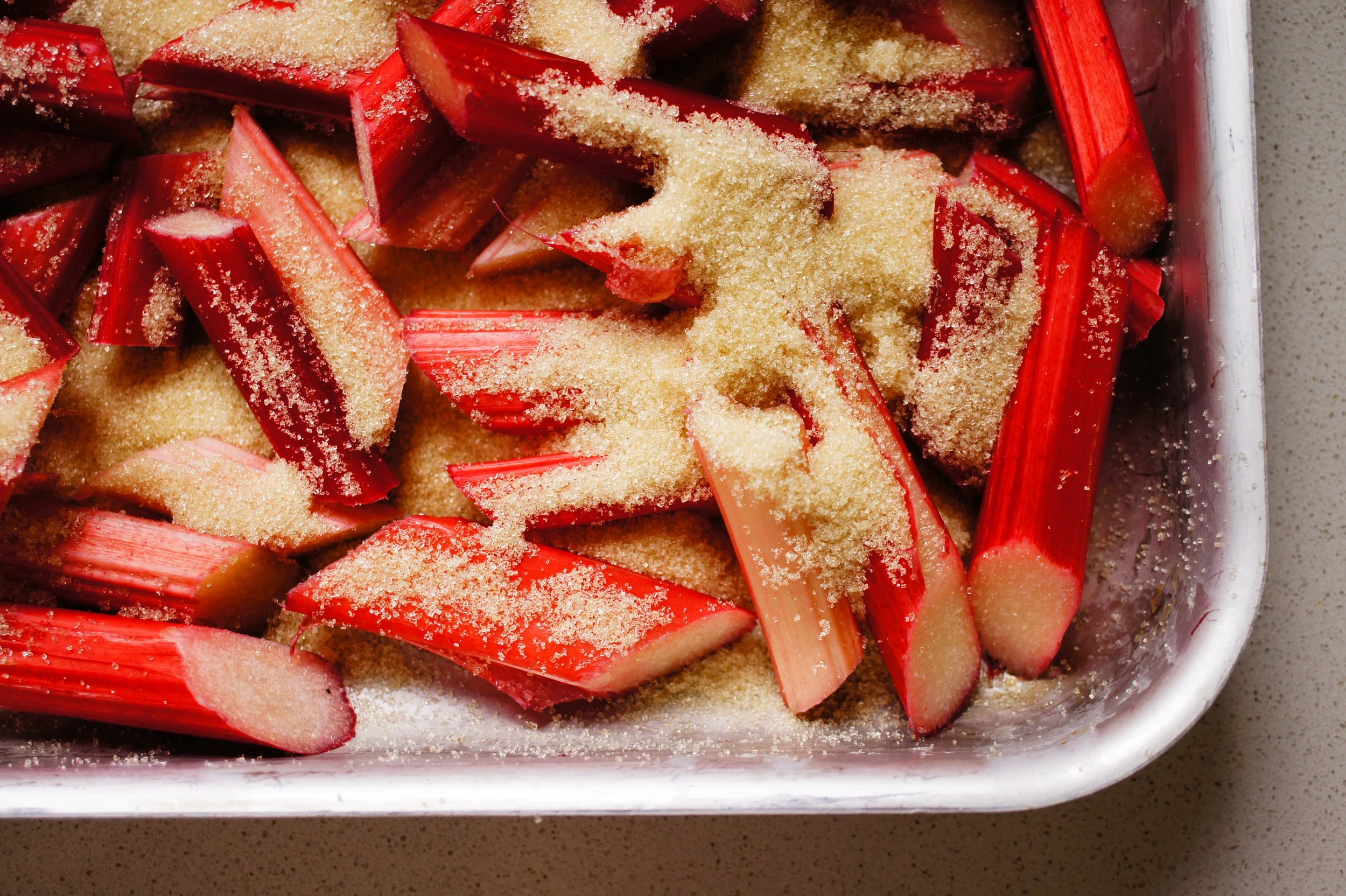
pink rhubarb chopping in a shallow baking tin with caster sugar

There are two rhubarb seasons - one is late winter, early spring, when the crops of pink, forced rhubarb are available, and one is the summer, when the abundant crops of green rhubarb are endlessly sprouting stalks in veg patches and borders up and down the land.

This recipe is designed for the former, the pink kind, particularly if you intend to serve the compote appetisingly atop a crepe, yoghurt or cake. While the green summer kind will taste exactly the same, it will not have the aesthetic appeal of the pink winter version, especially if you want to turn the puree into some other topping like on a cheesecake.

If you only want it for the flavour and don’t need any of the colour, this recipe will produce the same result either which way.

My recipe below is my own.


PORTION SIZE

Makes about 700ml – roughly the amount of 2 large mugs.

TOOLS

Other than the typical kitchen equipment, you will need:

  • a roasting tin with sides, about 4-5cm deep

INGREDIENTS

600g rhubarb (about 10 stalks) **forced, pink ones will make a pink compote; the green summer rhubarb will be a sludgy green colour

100g golden caster sugar

1 to 1 ½ tsp rose water

1-2 drops pink food colouring (optional)

Ratios

  • 100% fruit, 15% sugar

  • Approx. ½ tsp rose extract per 300g fruit

Variations

  • with orange or lime zest – omit the rose water and zest the citrus fruit onto the compôte just after it comes out the oven. Stir to combine.

  • with strawberries — swap half the rhubarb for strawberries

  • With vanilla – stir 2 tsp vanilla paste onto the compôte just after it comes out the oven. Stir to combine.

  • With rosé wine or liqueurs – add 2 tbsp rose wine, elderflower liqueur, Grand Marnier, Chambord etc. to the roasting tin with the raw rhubarb and sugar. Roast together.

  • With cardamom – grind the seeds of 4 cardamom pods and add to the roasting tin with the raw rhubarb and sugar. Roast together. Omit the rose water.


METHOD

Heat oven. Preheat the oven to 180°C fan

Prep rhubarb and any extras. Cut the rhubarb into large chunks and place in a roasting tin with the sugar. If any of your extras need to go in before roasting, add here.

Roast. Cover with foil and cook for 15‐20 minutes or until the rhubarb is tender and the sugar has dissolved into a lovely pink syrup. Expect it to be pretty wet.

Finish. Stir in the rosewater (or any other optional extras, and a drop or two of pink food colouring if you want to amp up the colour), then spoon into a bowl and set aside to cool completely.


USES

  • Dollop onto rice pudding, porridge or crepes

  • Blend into a smoothie

  • Use as a fruit puree for cheesecake topping

  • Serve alongside a cake (particularly a dense type of cake such as a Madeira cake or olive oil cake)

Read More
Eat, Summer, England Frances Lawrence Eat, Summer, England Frances Lawrence

Low-and-Slow Pecan & Pumpkin Seed Granola

Very simple two-step recipe for homemade pecan and pumpkin seed granola. Memories of Suffolk.

I once spent a summer weekend, with a friend, on the Suffolk coast. We walked, we chatted, we basked in the the high summer sun, we ate great food.

Part of the joy was the breakfast at our guesthouse, Corner Farm. We were seated in the glass vestibule just off the kitchen, and laid out on the table with our brewing tea were individual little Kilner jars of granola, clearly homemade granola at that. It was utterly delicious.

Buttery, crispy, oaty and gently spiced. Nothing like the rubbish you can get from the supermarket. I tentatively enquired as to whether the owner of the guesthouse might share her secrets with me. Lucky for me, she did, and making it is now a regular feature in my own kitchen.

Three things to know. First, this is not a ‘clumpy’ granola, but rather a ‘flaky’ one, where all the ingredients remain as separate little crispy morsels. Second, the darker the honey, the darker the bake will be. Third, don’t be tempted to speed up the baking - the low-and-slow approach is what gets you these golden, toasty, oaty nutty flakes where the rich and delicate flavour of the butter has been coaxed out over the long bake time, and none of the nuts or seeds have burnt.


PORTION SIZE

My estimates are based on an 80g portion of granola per person. 

This recipe will make about 1kg, which is about 12 portions.

TOOLS

Other than the typical kitchen equipment, you will need:

  • a baking sheet or a shallow roasting tin, 3-4cm deep

  • a large Kilner jar or tupperware for storage

INGREDIENTS

130g unsalted butter

130g honey (or mix of light muscovado & vanilla caster)

350g oats, rye or spelt flakes – half jumbo, half porridge

180g pecans (or swap in walnuts or almonds)

70g pumpkin seeds

1 tsp fine salt

1 tsp vanilla paste or extract

½ tsp ground cinnamon

½ tsp mixed spice or allspice

Extras after baking (optional)

80g chocolate chips or coconut shavings

50g chopped dried fruit

Ratios

  • 1:1 fat : sweetener

  • 100% dry ingredients : 43% liquid ingredients


METHOD

Melt liquids - Weigh the butter and honey directly into a saucepan; melt over a medium heat. Do not allow to bubble.

Prep oven & baking sheet - Preheat the oven to 110°C fan, 130°C regular and line a large roasting tin (one with sides) with reusable baking paper

Mix everything together - Weigh the dry ingredients into a large bowl. Pour the melted ingredients over the dry and mix well.

Bake - Spread the mixture on the baking tray and bake in the middle of the oven for 90 minutes, stirring every 30 minutes, until nicely golden. Keep an eye on it and do not let it burn – you may want to turn to encourage even browning.

Cool & Finish with extras - Remove from the oven and allow to cool completely. It will dry and crisp up significantly. Once cooled completely, add your extras if you are using them. Decant into storage jar.


STORAGE

Store in an airtight jar; it keeps easily for a few months

Read More
Poland, Eat, Autumn Frances Lawrence Poland, Eat, Autumn Frances Lawrence

Chocolate, Rose & Beetroot Loaf Cake

Fragrant and decadent, and an excellent keeper. Adapted from a Paul Hollywood recipe.

Adapted from Paul Hollywood’s recipe, my partners absolute favourite slice of treaty heaven. Also, an easy keeper too.


PORTION SIZE

Makes a cake to serve 6-8

TOOLS

Other than the typical kitchen equipment, to make these, you need:

  • a 450g (1lb) loaf tin

  • A blender or food processor

INGREDIENTS

For the cake

50ml flavourless oil (grapeseed, groundnut or sunflower)

100g steamed beetroot

100g dark soft brown sugar or dark Muscovado

100g self-raising flour (or 100g plain with 1 tsp baking powder)

¼ tsp baking powder

¼ tsp bicarb of soda

12g cocoa powder

½ tsp vanilla extract

100ml soured cream

¼ tsp rose extract

65g Callebaut small dark chocolate chips (50-60% cocoa solids)


For the cream cheese frosting

50g caster sugar

1 tbsp milk

150g cream cheese

50g unsalted butter, softened


Rose petals to decorate


METHOD

Steam beetroot - If you have none prepared, get the beetroot on to steam – top and tail (no need to peel) and steam for 40-45 mins until soft. Let go completely cold.

*************** WAIT 2 HOURS **************

Prep oven and baking tin - Preheat the oven to 160°C fan, 180°C regular. Grease and line a loaf tin in a ‘U’ shape, leaving plenty of overhang to ease removal.

Make beetfoot purée - Weigh the beetroot with the oil and brown sugar into a blender or food processer; blend to a loose purée. Transfer to a mixing bowl.

Add dry ingredients - Weigh and sieve the flour, baking powder, bicarb of soda and cocoa into the bowl. Fold these into the beetroot-oil mix. Add the vanilla, soured cream, rose extract and chocolate chips and mix gently to combine.

Fill baking tin - Pour the cake mixture into the tin, level the top and tap once to release air bubbles. It should be about half full.

Bake - Bake in the middle of the oven for 30-35 mins for a 450g tin. It is done when a skewer inserted comes out clean. Bring out the oven and leave to cool completely before frosting.

*************** WAIT 2 HOURS **************

Make frosting - Weigh the sugar and milk into a bowl; let stand for about 15 mins for the sugar to start dissolving. In a separate bowl, beat the cream cheese and butter, then add the sugar slurry a bit at a time and mix until you have a smooth frosting. Top the cake with the frosting.


STORAGE

This cake is very moist; stored correctly in an air-tight container in the fridge, it should keep well for about 5-7 days.

I really like this chilled, and served cold from the fridge

You can easily freeze the cake without the topping, but once topped, it is not suitable for freezing.

Read More
Italy, Eat, Autumn Frances Lawrence Italy, Eat, Autumn Frances Lawrence

Mushroom Risotto

Recipe for an autumnal oven-baked mushroom risotto, portioned for a moderate 2 person meal, saving space for a dessert.

I like to save all my risotto eating for autumn, when it feels right. This one makes the most of another autumn flavour - mushroom - which can be further enhanced with a bit of truffle oil (shaved truffle if you’re fancy) and a non-traditional addition of a bit of mustard used as a seasoning. I add this to almost all my risotto recipes for a bit of piquancy, and it is always in the fridge, so an easy addition.

My recipe below is derived and modified from an original by Betty’s of Yorkshire.


PORTION SIZE

Makes 2 moderate portions (about 375g per person)
 

INGREDIENTS

Risotto

8-10g dried mushrooms (wild, porcini, morelles etc.)

280ml boiling water

1 shallot or small onion

1 garlic clove

140g mushrooms

30g unsalted butter

100g Arborio rice

75ml Madeira (or Marsala)

50g finely grated Parmesan

Handful fresh parsley, finely chopped

1-2 tbsp toasted pine nuts or sunflower seeds

Salt & pepper for seasoning

1 tsp Dijon (or any) mustard


To Garnish

A drizzle of truffle oil (optional)

Ratios

  • 50g risotto rice per person

  • 1:3 risotto rice to liquid


METHOD

Heat oven & hydrate the dried mushrooms. Preheat the oven to 150° Fan, 170° Regular. Soak the mushrooms in the boiling water for 15 minutes.

Prep the vegetables. While the mushrooms are soaking, finely dice the shallot/onion, the garlic and cut the mushrooms into 1cm chunks.

Sweat the veg. Melt the butter in an ovenproof pan (that has a lid, can go in the oven and will fit all your ingredients) over a moderate heat. Add the shallot/onion and cook until they are soft but not forming any colour. Add the garlic and fresh mushrooms and cook for a few more minutes.

Add dried mushrooms & rice. Drain the porcini mushrooms through a sieve, reserving the liquor. Finely dice the porcini and add to the pan. Add the rice and stir until all the grains are coated in butter. Pour in the alcohol and the mushroom liquor and stir. Season with salt & pepper. Careful! Go easy on the salt. You are adding Parmesan later, so this can end up being too salty.

Bake. Cover the pan with the lid and place in the oven for 20 minutes.

Season & finish. Remove and stir in the parsley, pine nuts, parmesan, mustard and seasoning. TASTE HERE! Add any seasoning you think it needs to suit your tastes. Drizzle over the truffle oil if using.

SERVE!


STORAGE & REHEATING

I find risotto does not keep – make just enough to serve and eat it all.

Read More
USA, Eat Frances Lawrence USA, Eat Frances Lawrence

Choc-Chip Cookies

Recipe for choc-chip cookies, using a blend of dark and milk choc chips, and three types of sugar for optimum mix of crunch and chew.


BATCH SIZE

Makes about 15 cookies. You can bake all right away, or keep some dough in the fridge for baking a few at at time

TOOLS

Other than the typical kitchen equipment, to make these, you need:

  • a flat baking sheet for baking

INGREDIENTS

180g strong white bread flour

½ tsp baking powder (not bicarb of soda)

¼ tsp fine salt

115g unsalted butter, softened

75g caster sugar

40g light soft brown or light Muscovado sugar

35g demerara sugar

1 large egg (about 65g)

Seeds of 1/2 vanilla pod or ½ tsp vanilla extract/paste

170g Guittard chocolate chips (half dark, half milk is nice)

Zest of 1 large orange (optional)


SUBSTITUTING!

Flour - you can easily substitute plain flour for bread flour here. The bread flour just has a higher protein content, adding that touch more ‘chew’ to the finished result, but you will still get a great cookie with plain flour too.

Butter - I often replace the unsalted butter with salted butter, and when I do, I omit the salt. To make it dairy-free, Stork or any other vegan block fat can work too, though it does change the flavour a bit.

Sugar - the combination of different sugars is the result of my experimenting, giving a result between crunchy shell and gooey interior, but its not a big deal if you only have one or two of them. Just keep to the overall quantity of sugar in the recipe, and substitute for other sugars to use what you have.


METHOD

Weigh out dry ingredients - Weigh and sift the flour, baking powder and salt into a bowl.

Cream butter & sugar - Cream the butter and all sugars together until light and fluffy – this will take about 5 minutes with an electric whisk on high speed.

Add wet ingredients and flavourings - With the whisk on slow, add the egg and vanilla extract. Zest the orange directly over the mixture if you are using it. Fold in the flour and chocolate chips with a metal spoon, then your hands. By the end you should end up with quite a soft and tacky dough that will be tricky to handle.

Form & chill dough - Flour the surface with no more than 1 tbsp flour and turn the dough onto it, forming into a log, about 25cm x 5cm. Then either wrap in clingfilm or place in an airtight container and chill for at least 2 hours until firm.

*************** WAIT 2 HOURS **************

Cut cookie dough - Using a serrated bread knife and a ruler, make slices from the log that are about 1-1.3cm wide - the below timing is calibrated for this size of cookie. Space them about 1 cm apart on the trays – they don’t really spread much.

NOTE! It may seem pedantic to measure out the cookie dough but it is the best way of matching the size to what I intend, and therefore the below timing should produce the correct result. Cookies are so small that even 10g less and 1 minute longer can change the end result quite a lot.

Bake - Bake at the bottom of the oven for:

  • 12-13 minutes for a soft-bake cookie (they should look very lightly browned at the edges, but overall, still quite pale)

  • 14-16 minutes for a cookie with a distinctly crispy shell, and firmer interior (they should look browned all over)

They will still seem a bit puffed up and somewhat soft when you take them out, but they will firm up quite a lot as they cool, and also deflate slightly, which I think gives that classic ‘look’ of a soft-bake cookie.

Cool - Remove them from the oven. Let them cool for 5 minutes on the baking sheets and then transfer the cookies to wire racks to cool, at least a little, before eating. They are absolutely delicious warm, when they will be at their softest, and they will firm up as they cool, though they should retain the gooey interior for up to 1 day after baking.


STORAGE & FREEZING

Like most biscuits, once baked, these will keep very well in an airtight container (with a few sugar cubes for company but never a cake) for about 4-5 days. Not as fresh or gooey as right after baking, but still delish.

These also freeze excellently once baked.

You can store the raw cookie dough log in the fridge for about a week, just slicing off as many as you want to bake.

If you can bear to wait, try refrigerating the raw cookie dough for 24-48 hours before baking. During this time, some of the starches in the flour will begin to break down into sugars. The result will be cookies that are chewier, more deeply coloured and with a toffee taste.

Read More
Scotland, Eat Frances Lawrence Scotland, Eat Frances Lawrence

Shortbread

Recipe for plain buttery shortbread, topped with crunchy sugar. Tips for that ‘short’ crumbly texture you are aiming for.

Shortbread is easy. So easy. Anyone can make shortbread and there is absolutely no need to buy the ready-made stuff, which tastes not even half as good. It is so easy that I frequently make it while I’m cooking and waiting for something to finish.

Two tips.

One - use a food processor to cut in the butter. This is both faster than rubbing in with your hands, and produces a better, ‘shorter’ texture. Removing the heat of your finger tips keeps the butter as cold as it can be, which is the main factor for that ‘short’ crumbly texture you are aiming for.

Two - replace regular caster sugar with vanilla sugar, for a subtle extra bit of flavour. Vanilla sugar is an easy USU for spent vanilla pods.


PORTION SIZE

Makes about 20-24 small shortbread biscuits

TOOLS

Other than the typical kitchen equipment, to make these, you need:

  • a food processor

  • 20x20cm square cake tin with loose base, 6cm deep

  • a cooling rack

INGREDIENTS

200g plain flour

¼ tsp fine salt

40g ground rice

75g vanilla sugar or caster sugar, plus extra for dusting

175g unsalted butter, chilled


METHOD

Blend ingredients - Weigh all the ingredients straight into a food processor. Blend until you have a texture of wet sand.

Prep dough for baking - Line the bottom of a square 20cm x 20cm cake tin. Tip the shortbread mix straight into the tin and press down with your hands – it will be very crumbly but should merge together with the weight of pressing it. Gently smooth the top with the back of a spoon so you have a fairly even depth throughout. Chill in the fridge for about 1 hour.

**************** WAIT 1 HOUR ****************

Prep oven - Heat the oven to 140°C fan, 160°C regular.

Bake - Bake in the centre of the oven for 35-40 minutes. It should be lightly tinged gold when done.

Finish - Remove from the oven and right away, run a knife around the edge and cut into equal sizes using a sharp knife and cutting all the way through to the bottom. Dust liberally with caster sugar and leave to cool before removing

**************** WAIT 30 MINS TO 1 HOUR ****************


STORAGE

Store the shortbreads in a cool, airtight place, but not in the fridge. They keep well for a few weeks.

The shortbread can also be frozen for up to 3 months. They will defost in 10-30 mins.

Read More
Sweden, Eat Frances Lawrence Sweden, Eat Frances Lawrence

Chokoladbiskvier

Recipe for Chokoladbiskvier, or Swedish Chocolate Buttercream Macaroons. Alcohol optional. Ideal for making at any time of the year.

Swedish Chocolate Buttercream Macaroons

When we visited Sweden, we took a marvellous hike-with-outdoor-cooking with Anders, just outside of Halmstad. Part of the spread Anders brought included some mini baked treats, which were utterly delicious, and he told me they had been baked by his wife, Viktoria.

I was quizzing him with all sorts of questions about the baking and assume he must have decided that I needed to hear it from the horse’s mouth, and a few days after our hike, completely unexpectedly, they very kindly invited us for fika at their home in Halmstad.

The day was balmy. We sat outside under a tree, at a small table covered with a white tablecloth with the corners held down by clip-on cloth weights in the shape of a Dalarna Horse, and Viktoria served 6 types of bitesize fika, all baked by her own hands.

The classic Biskvi was my favourite of Viktoria’s treats, and she was further kind enough to share the recipe with me, which is what I have used to make these.

I’d say they are pretty close to what we had that day, though I would advise anyone to do a test run in your oven with a few of the bases at a time, to check your own oven’s bake time - these can easily overbake.


PORTION SIZE

Makes about 25-28 macaroons

TOOLS

Other than the typical kitchen equipment, to make these, you need:

  • a blender or food processor

  • an electric whisk

  • a baking sheet or a shallow roasting tin, 3-4cm deep

  • a cooling rack

INGREDIENTS

Base

275g skinless almonds or ground almonds

135g caster sugar

2 large egg whites (about 80g)

Buttercream

250g salted butter, softened (or half salted & half unsalted)

135g caster, vanilla or icing sugar

2 egg yolks

3 tbsp rum, cognac or brandy (about 60ml - optional)

Chocolate enrobing

150g semi-sweet dark chocolate (45-60% cocoa solids)

20g coconut oil

METHOD

Prep almonds - If you are using whole skinless almonds, finely grind them in a food processor first. Transfer the ground almonds with the sugar to a large bowl and whisk to fully combine.

Make dough for bases - In a separate bowl, whisk the egg whites until soft peaks form, and then mix in the dry ingredients. You should have a very thick paste, almost like marzipan.

Prep bases for baking - Line a baking sheet with reusable paper. Weight out 17-18g of the mixture, roll into a ball between palms and then flatten slightly into a disc, approx. 4cm in diameter. Space about 4cm apart on the baking sheet – they don’t spread at all during baking. Let them stand for about 30 minutes at room temperature.

**************** WAIT 30 MINS ****************

Prep oven - Heat the oven to 160°C fan, 180°C regular.

Bake - Bake in the centre of the oven for 12-15 minutes. They should be lightly tinged gold just at the edges when done (if bronzed all over, you have gone too far.) Remove from the oven and allow to cool on the baking sheet before loosening them and transferring to a wire rack.

Make buttercream filling - While they are cooling, whisk the butter and sugar into a fluffy batter. Add the egg yolks one at a time, then add the (optional) alcohol, and whisk to combine.

Top bases with buttercream - Work quickly here as the buttercream can start to get a bit melty. Spread the buttercream on the underside of the macaroon taking it right up to the edges. Shape with a knife or spatula into a soft round dome or peaked teepee – the peaked is traditional Swedish and what you tend to see in bakeries. Do your best, but don’t worry if you can’t make a perfect dome or teepee – smooth as best you can.

Chill - Lower the fridge temperature as much as you dare and refrigerate for about 1 hour, or in the freezer for 30 minutes so that they get really cold. You may leave them overnight at this point.

**************** WAIT 30 MINS TO OVERNIGHT ****************

Prep chocolate - Melt the chocolate and coconut oil in a bowl over a pan of simmering water on the hob, or in the microwave at full power for 1-2 minutes.

Enrobe with chocolate - Gripping the edge of the base, dip the buttercream side of the macaroons in the chocolate briefly, to coat up to the edge but leaving the base uncoated. Allow the chocolate harden, then briefly dip it again.

**************** WAIT 30 MINS TO OVERNIGHT ****************


STORAGE

Store the macaroons in a cool place, but preferably not in the fridge, as the chocolate surface can become dull.

The macaroons can also be frozen for up to 3 months. Defrost them slowly in the fridge

Read More
France, Eat, Summer Frances Lawrence France, Eat, Summer Frances Lawrence

Apricot jam

Recipe for homemade apricot jam - more apricot than sugar. Making a taste of France at home.

Apricots have such a short season that it feels like a real imperative to preserve their flavour during summer and the house will smell divine doing so. Tangy, sparkling and fragrant, to me, apricot jam is one of the tastes of France. To have some on hand has the power to transport me to a warm summer’s afternoon in the Loire Valley when really, I’m scoffing it on a slice of toast on a wet and grey November morning in Yorkshire. The trick is storing it away in a place I forget about it so that I don’t eat it all during the summer.

My recipe below is derived and modified from an original by Pam the Jam.


PORTION SIZE

Makes 2x medium jars (about 400-500ml)

TOOLS

Other than the typical kitchen equipment, you will need:

  • a ladle

  • a metal jam funnel (this will make it a lot easier to only get jam into the jars and not down the sides)

INGREDIENTS

500g underripe or just ripe apricots

275g sugar (granulated or preserving)

4g powdered pection

12ml lemon juice (about half a lemon’s worth)

A drop or two of grapeseed oil (if needed)

Ratios

  • 100% fruit, 55% sugar

  • approx 2g pectin per 150g sugar

Many recipes suggest a 1:1 ratio of fruit to sugar but this blanket statement is useless and I find this far far too sweet. For apricots, roughly 55% sugar to fruit, I find, makes a jam that tastes much more of the fruit than the sugar.

You can use the above ratios to tailor your portion to however much fruit you have available to preserve.


METHOD

Prep fruit - Rinse the apricots, destone them and cut them into quarters.

NOTE! It is often considered more ‘traditional’ that the apricots are halved so that they retain a bit of size and chunk after cooking, but I prefer a more spreadable jam where the fruit has been much softened in the process of cooking, hence my instruction to quarter the fruit.

Macerate fruit - Place the apricots in the jam pot (not too large – jam reduces, which, if it’s too shallow in the pan, makes it hard to get an accurate temperature and can encourage burning). Weigh the sugar, pectin and lemon juice straight into the pan with the apricots, mix to distribute. Cover and let macerate overnight for the juices to draw.

************** WAIT OVERNIGHT ***************

Sterilise jars - First, preheat the oven to 110°C and set out a clean cotton tea towel/dish towel (not terry cloth) on the counter and put a small saucer in the fridge or freezer. Wash the jars and lids in hot soapy water and rinse but don’t dry them. Place the jars onto a baking tray and into the oven for the duration of the jam cooking - If you are using jars with rubber seals, be sure to remove these before placing in the oven and if you have separate lids, place them in a bowl of boiling water.

NOTE! When adding food to the jars, it is necessary that both the food and jars are at the same temperature so that the jars don’t crack, and the jam doesn’t heat up any more when it goes into the jar.

Bring jam up to boil - Place the pan with the jam on the stove over medium heat and allow it to come to a boil — it might look very foamy at this point – don’t worry about it.

Rolling boil - Allow to boil for 15-20 minutes until set, stirring occasionally. Use a thermometer for the best control over the progress – jam sets between 104°C and 105°C. It will be a rich orange once ready, and the sound changes from a wet ‘pop’ to more of a ‘burble’. This fruit doesn’t set quite so readily, so for a spreadable jam, I prefer to take it up to 105°C.

Remove from the heat as soon as it hits 105°C anywhere in the pan and lightly stir in the same direction to remove any foam, adding a drop or two of oil if it doesn’t dispel easily.

Ladle into pots - Now comes the crucial moment. While the jam is still extremely hot — in other words, right away — ladle it into the clean pots, leaving a margin of about half an inch (2 cm) between the top of the jam and the top of the jar. Immediately place the lids on the jars. Quickly wipe off the jars with a sponge to remove any jam on the sides. Using a tea towel to protect your hands from the heat, screw the lids on as tightly as possible.


LET COOL FOR SEVERAL HOURS BEFORE TRYING!


USES

  • Dollop onto rice pudding or porridge

  • Spread onto toast after butter

  • Swirl through a cheesecake

  • Smear onto warm scones or hotcakes

  • In thumbprint cookies

  • As a filling for Victoria Sponge Cake

  • In a nut butter and jam sandwich

Read More
Sweden, Eat, Winter Frances Lawrence Sweden, Eat, Winter Frances Lawrence

Swedish Kokosrulad (coconut roll cake)

Recipe for Swedish Kokosrulad, a coconut roll cake filled with a custard buttercream.
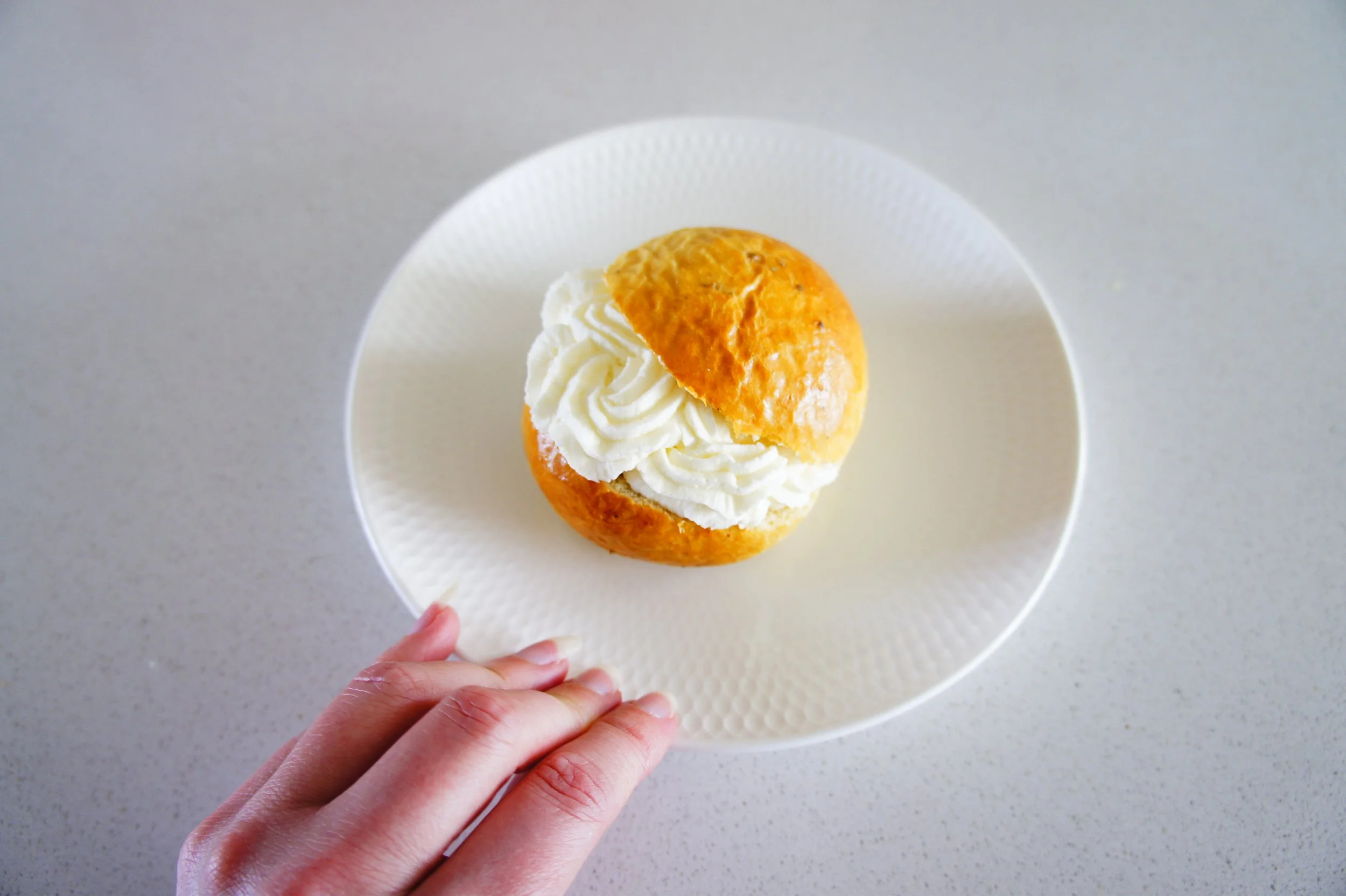
Not too sweet, soft texture, moist middle and very delicately flavoured.

Aside from the taste (one of my absolute favourites), I love that this cake keeps well in the fridge and I find it delightful served chilled. Due to this, it’s a great option to make ahead of time and conveniently store ready for later devouring, and is an absolute delight on a hot summer’s day.

The sponge relies on getting the eggs and sugar whisked up to ribbon stage, which takes a good 10 minutes on high speed - a stand mixer helps a lot here as you can get on with other tasks while it is labouring away. Otherwise, a handheld electric whisk will do the job equally well, but whatever you do, don’t get impatient and attempt to shorten this task. It really makes a difference to the lightness of the final sponge.

My recipe below is derived and modified from an original in the excellent guide to Swedish baking, Fika - The Swedish Way, published by Norstedts.


PORTION SIZE

Makes 12-14 moderate slices

TOOLS

  • a blender or food processor

  • a stand mixer or handheld electric whisk

  • a 30cmx40cm shallow roasting tin with sides, 3-4cm deep

INGREDIENTS

Cake

120g desiccated coconut

60g (3 tbsp) potato starch or potato flour

1 ½ tsp baking powder

3 large eggs (about 160g out of shells)

180g caster sugar

Caster sugar, for sprinkling

Custard buttercream

75g unsalted softened butter

100g caster sugar

150g ready-made custard or homemade crème pâtissière, at room temperature


OPTIONAL For the crème pâtissière

25g plain flour

25g cornflour

300ml whole milk

1 ½ tsp vanilla paste or seeds from 1 vanilla pod

2 large eggs

50g caster sugar


METHOD

OPTIONAL – For crème pâtissière

Make a paste - Weigh the two flours into a small bowl and weigh in about 50ml of the cold milk, working it all into a paste with the back of a spoon or a small whisk. Make sure there are no lumps; set aside.

Warm the milk - Weigh the rest of the milk and the vanilla into a small saucepan and place over a low-medium heat until scalded.

Mix eggs and sugar to ribbon stage - Weigh the eggs and sugar into a medium bowl (having the ingredients form some depth in a smaller bowl helps with the whisking) and use an electric whisk on high to mix until pale and fluffy – expect about 4-5 minutes to reach the volume. You are aiming for the ribbon stage, which it is very pale and fluffy, about 5 times the original volume, and the mixture leaves a trail (a ribbon) when the whisk is lifted.

Heat to thicken - Add the flour-milk paste and whisk to combine. Pour over the hot milk and whisk again. Pour everything back into the pan and cook over a low-medium heat until thickened.

I alternate between letting it sit on the heat to thicken, and stirring, switching between a balloon whisk and a spatula to work out the foamy bubbles on the top and the thicker sections as they form on the bottom. I find this whole process can take 10-15 minutes – don’t be tempted to crank the heat up.

You can choose how much to thicken it, but it is ready once it easily coats the back of a spoon and leaves an open trail if you run a finger across it. You can take it thicker if you wish, until it is decidedly thick like the consistency of extra thick double cream, which I think is better for this recipe.

Chill - Pour into a glass bowl and cover with the clingfilm touching the top. Chill fully.

For the roulade

Prep oven and baking sheet - Preheat the oven to 200°C fan, 220°C regular. Line the bottom of the roasting tin with reusable or greaseproof paper.

Mix eggs and sugar to ribbon stage - Weigh the eggs and sugar into a large bowl or the stand mixer. Whisk for at least 10 minutes on high speed – it really does take this long to get the right volume. You are aiming for the ribbon stage, which it is very pale and fluffy and about 5 times the original volume.

If you are using a stand mixer, you are free to continue with other tasks.

Combine & fold in dry ingredients - Weigh the desiccated coconut, potato starch and baking powder into a bowl and use a balloon whisk to combine these dry ingredients together evenly. Fold the dry ingredients into the egg-sugar mixture in a few goes. The mixture should be very light and fluffy, almost like a meringue.

Pour batter into baking tin - Pour the cake mixture into the tin, level the top and use a cranked spatula to encourage it into a rectangle but do not push it all the way to the edge of the paper – it will continue to spread a little during baking and you don’t want it too thin as it is delicate once baked and can easily tear. Tap once to release air bubbles.

Bake - Bake in the middle of the oven for 5-7 minutes. It is done when golden on the top, probably with some huge bubbles, and springy to touch. Bring out the oven and complete all the next steps immediately, with the cake still warm.

Sprinkle with sugar and remove from tin - First, use a spatula to loosen the edges and make sure you can lift the reusable paper all the way round the edge. Next sprinkle the top with caster sugar, then lay a sheet of greaseproof paper and then a sturdy clean tea towel over the top of the tin. For extra precaution, put two elastic bands around all this at each short end. In one quick and decisive motion, flip over so that the sugared sponge top drops onto the greaseproof. Hold the edges tightly – you don’t want this to slide out of the side.

Roll up and cool - Carefully peel off the reusable paper that was on the bottom, then roll up loosely with the greaseproof paper inside. Leave to cool on a wire rack.

*************** WAIT 1 HOUR **************

Finish the custard buttercream - Beat the sugar and caster sugar together until fluffy, then add the custard/crème pat in two or three sessions and beat to combine.

Fill and roll up - Once everything is cooled, gently unfurl the rolled cake and spread the buttercream right to the edges, then roll up fairly tightly, aiming for no gaps.

Chill - chill for at least 30 minutes before serving

*************** WAIT 30 MINUTES **************

SERVE!

Cut into slices 2-3cm wide.


STORAGE

Store in an air-tight container in the fridge; stored well for about 3-4 days.

I also really like this chilled, and served cold from the fridge.

An excellent candidate for freezing and fika, simply slice up and store in airtight bags in the freezer for up to 3 months. A slice only needs about 15 minutes to defrost.

Read More
Eat, Sweden, Spring Frances Lawrence Eat, Sweden, Spring Frances Lawrence

Swedish Semlor buns

Recipe for Lenten-Easter treat, Swedish Semlor buns. Adapted from a recipe by Estonian patisserie owner, Angeelika Kang.

This is perhaps my very favourite enriched doughs to make and to eat.

I first encountered a semla bun in Angeelika Kang’s wonderful baking book, ‘Ovenly Delights’, a book I bought for myself on a winter break in Tallinn, after visiting Angeelika’s delightful Levier patisserie in Kalamaja. Since coming home, her book is a staple in my recipe book library for excellent instruction on how to make the kind of treats you only find in patisseries.

Since discovering this recipe and first making them at home, we have taken two trips to Sweden - Sweden’s West Coast and a Stockholm workation - but never having been there in the Lenten or Easter period (which is when these tend to feature in Swedish bakeries), we have never had the chance to try these in their native land.

Oh well - just going to have to keep making them at home.

My recipe below is derived and modified from Angeelika’s original.


BATCH & BUN SIZE

My estimates are based on a 60-80g size bun per person. 

This recipe will make about 12 buns, give or take.

TOOLS

Other than the typical kitchen equipment, to make these, you need:

  • a pestle & mortar for grinding cardamom

  • a large glass mixing bowl for proving, one that cling film will ‘grip’ onto for a tight drum seal

  • a flat baking sheet for baking

INGREDIENTS

Dough

250ml full fat milk

24g active dry yeast (not fresh or instant)

100g caster sugar

½ tsp (2g) fine salt

500g strong white bread flour

100g softened unsalted butter

2 egg yolks (30-40g)

30 cardamom pods

Crème Chantilly Filling

600ml whipping cream

4 tbsp icing sugar


For brushing

Egg white + a dash of full fat milk

METHOD

Put the oven on. 50°C (fan or regular).

Remove the cardamom seeds from the pods. Lightly grind in a pestle and mortar. Don’t overdo it – you want to taste and bite into the cardamom seeds in the finished bun.

Warm the milk. Weigh milk into a small saucepan with a temperature probe – heat over medium to 37°C (will take about 4-5 mins). Do not let it exceed 43°C - this will kill the yeast.

Weigh out the remaining ingredients. While the milk is heating, weigh the flour, salt, sugar, yeast, egg yolk, butter and ground cardamom into a large mixing bowl. NOTE! If using dry yeast, weigh this into a separate bowl and hydrate with the warm milk before the next step.

Knead. Once the milk has reached 37°C, pour the warm milk into the stand mixer bowl. Turn the dough out onto the surface and knead for about 5 minutes until the dough is elastic and smooth – a dough scraper can be very helpful at the start of the process when it is quite sticky. You are aiming for a ball of soft pillowy dough that is just lightly tacky.

It may be a little sticky when you start but resist the temptation to add more flour to it. You'll find that with a little work, the dough will begin to lose its stickiness and become smoother and more elastic.

First Proof. Turn the dough out, ball off the dough and place into a large glass mixing bowl. Cover with cling film that is stretched drum-tight across the top. Place in the oven to prove for 45 mins to 1 hour, by which time it should have doubled in size and the cling film will have inflated to a dome. A light press on the dough and it will readily spring back.

******************** WAIT 45 MIN to 1 HOUR **********************

Divide the dough. Once proved, roll the dough into a rough sausage shape and use a sharp knife to cut as equal as you can before weighing each section - you want either 60g (small) or 80g (medium) per ball.

Shape the dough and space out. You are aiming for a domed ball shape with the seam of the dough on the underside. Using one finger, press the sides into the middle. Repeat this several times; you will probably notice the dough getting firmer as you do this. Flip over and using the two edges of your hands, cup under the dough to form a nicely rounded and smooth ball. Plqce onto a lined baking sheet, well-spaced apart, and repeat for the remaining buns.

Second Proof and heat oven. Leave to rise for another 15 minutes. Preheat the oven to 170°C fan, 190°C regular.

Alternatively, if you are prepping in advance, place the buns either in the fridge or the freezer at this point, for baking later. See further notes on storage below.

Egg wash. Wash the tops of each bun – either with a beaten whole egg, or - to avoid waste - some egg white beaten with a dash of cream or milk, whatever you have. Apply wash carefully and precisely, try not to miss any bits for the most professional glossy finish.

Bake. Bake in the middle of the oven:

  • 10-11 minutes for a small bun

  • 12-15 minutes for a medium bun – no more - until the tops are golden brown

Cool completely. Remove from the oven and cool completely before serving (otherwise, the cream will get melty)

******************** WAIT 45 MIN to 1 HOUR **********************

Fill with cream. Whip the cream with the icing sugar, slice off the top of the bun and, for the most professional finish, use a star nozzle to pipe in the cream before replacing the lid and lightly dusting with icing sugar.

STORAGE & FREEZING

Most enriched dough is best eaten on the day it is baked – though you can get away with up to about 48 hours if you keep it in an airtight container but by this time, it won’t be as special and will likely be a bit dry and a bit tough

To freeze before baking (freshest result)

Put into the freezer in an airtight container, just before the second proof.

When you want to bake them, take them out of the freezer and immediately place onto the lined baking sheet that you plan to bake them on. Leave in a warm place to thaw and rise - the time for this will vary depending on the temperature of the room though I typically find about 2-3 hours for these. You will need to check the dough regularly; it needs to be baked as soon as it has completed its defrosting (it should feel slightly puffy and your finger should leave an indentation if the dough is pressed lightly.) Now continue the recipe from the baking step.

To freeze after baking (most convenient)

Freeze on the day of baking immediately after they have cooled.

To serve, warm in the oven for 15 minutes at 160°C fan (no need to preheat – put straight in on a tray). After this time they should be fully defrosted, warm and slightly softened – almost as good as freshly baked.

Read More