
A Journal

A personal journal that invites readers to design their own journeys through the world - with travel, dress and taste.

Search Posts:

Jump to

Travel

Jump to

Wardrobe

Jump to

Eat

Wardrobe, Thought Frances Lawrence Wardrobe, Thought Frances Lawrence

Knowing your colours

One of the greatest things about knowing your colours is knowing the things like

'I can wear green, as long as it's not too yellow'

or

'I can wear pink but only in small touches like a button or a collar'...

Or even stuff like:

'My wardrobe needs red as a balancer to the rest of my usual palette'...

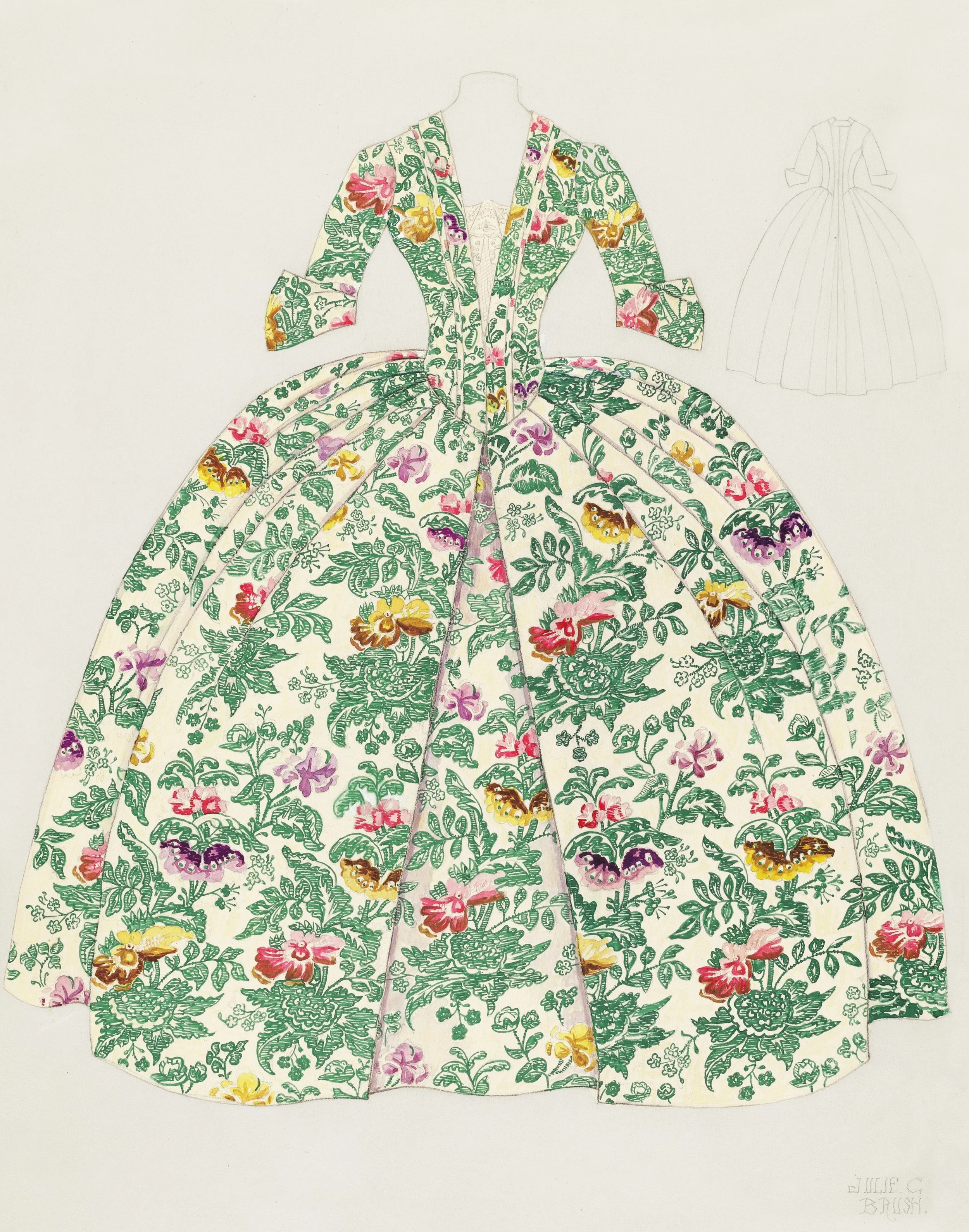
Knowing your colours is a multi-dimensional foundation of style and style refinement. Its more nuanced than just knowing which colours you favour or which colours flatter your skin tone.
Read More
Wardrobe, Thought Frances Lawrence Wardrobe, Thought Frances Lawrence

Wardrobe as storecupboard: Utility + Creativity

I think I have moved into a new phase with my wardrobe.

My overarching goal at the moment seems to be developing my wardrobe to be an incredibly useful storecupboard, that's ready for anything...like my kitchen stock cupboard is stocked with a very useful array of quality ingredients ready for making almost anything, so I am evolving my wardrobe towards the same function.

Still trying to keep all that creativity, but buying more according to where the usefulness gaps lie, not just where my creative nose wants to go... I am wanting my wardrobe to be ready for action, fully stocked, AND creative together, so that I myself am essentially always ready for what life's occasions, weather, whims and future goals, demand.

Read More
Wardrobe, Thought Frances Lawrence Wardrobe, Thought Frances Lawrence

Youthfulness in style

As we age, we may feel compelled to leave behind ‘youthfulness’ in our style, if we are no longer, on paper, young.

But I think much of the time, it's how you frame these things in your own mind right?

Hence, I have been thinking, what exactly is youthfulness? It's not just being physically young. It's a hopeful outlook, it's experimenting, it's not taking things super seriously... So as you transition your style, youthfulness can transmute into words like playfulness, unexpectedness and unpredictability, surprise and irreverence.

Read More
Wardrobe, Thought Frances Lawrence Wardrobe, Thought Frances Lawrence

The Age of The Small Adjustment

I have a new fashion theory – after the age of about 35, you enter, what I am now calling The Age of The Small Adjustment.

Wild changes of style direction no longer serve you, no longer interest you, frankly, are no longer possible. But you still want changes, updates, to feel like you're new and different from before, making style progress and not being stagnant.

This is where subtle changes on a known theme become REALLY important... Instead of drastic new choices, variations of detail like a different type of collar, a wider or slimmer sleeve, a visible decorative button or all buttons hidden under a placket, a darker shade than the last time etc. etc. become the way your style changes and keeps you feeling fresh and attentive.

Read More
Thought, Wardrobe Frances Lawrence Thought, Wardrobe Frances Lawrence

Trusting each other to decipher our code of dress

Getting dressed isn’t arbitary. There is code, language, meaning, symbols. We trust each other to be fluent in this hidden language.
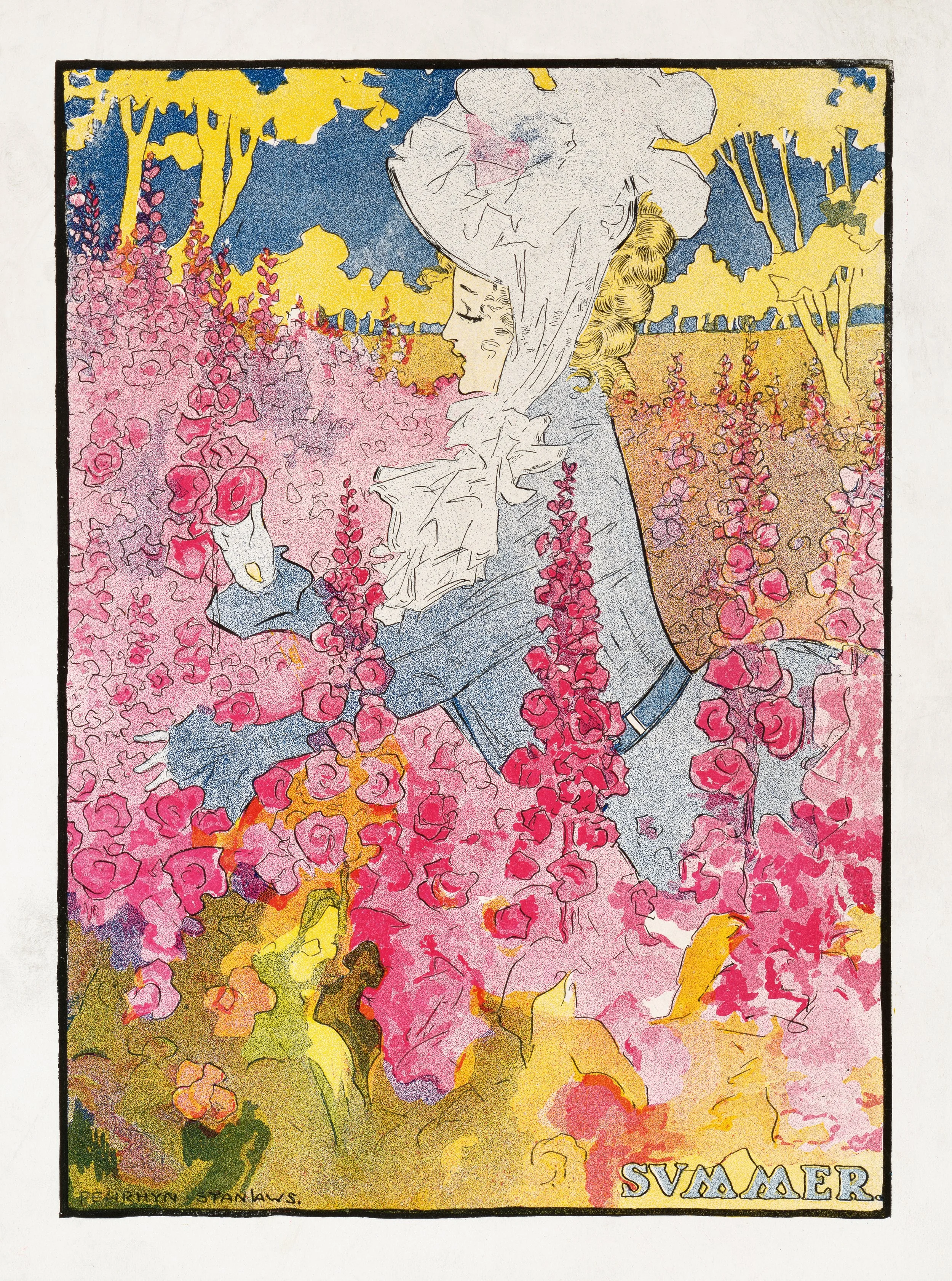
“Recognition, as individuals or as groups, and surface decoration has aided the swift division between those wishing to lead and those ready to be led while establishing unity between the like-minded.

…Humans compete and impress in order to propel or maintain their position, and embellishment can be a tool to bedazzle others for own gain.

The quality of the workmanship and preciousness of the textures communicates our status and intent so we trust in each others ability to decipher our code of dress.

…Changing how we dress can mean we are perceived differently. Subconsciously we scan each other looking for clues as to the potential viability of a new relationship, or to gauge the emotional state of a friend. We dress to impress, to further our ambitions to win money, power and love.”

- from How to Make a Dress, by Jenny Packham, published 2021


Reference

  • Packham, J. (2021). How to Make a Dress. London: Quadrille Publishing.

Read More
Thought, Wardrobe Frances Lawrence Thought, Wardrobe Frances Lawrence

Wearing colour well can become walking in art

Colour is foundational to the dressmaker’s art and the wearer’s style. Finding the right route, and a nuanced and depthful approach to colour takes time, but pays dividends.

“I enjoy women who wear colour well, those who can combine unexpected tones, artful prints and bold accessories. Those who take the time to indulge in self presentation and to consider how they wish to be received by the world, understanding both the power and pleasure it can transfer.

However it is a skill, and it takes time to find your colours, match up flattering hues and have the willingness to experiment.

But those who get it right become walking art…

…For me, to understand the nuances of each colour helps me to design, and to create styles that can both empower and inspire.

I design for women who want to become an unforgettable version of themselves and therefore the shade I choose will be intrinsic to the success of the style.”

- from How to Make a Dress, by Jenny Packham, published 2021


Reference

  • Packham, J. (2021). How to Make a Dress. London: Quadrille Publishing.

Read More
Travel, Summer, Europe, UK, Scotland Frances Lawrence Travel, Summer, Europe, UK, Scotland Frances Lawrence

Uist and Barra in the Outer Hebrides - riding with white sand views

A trip for leisure riding the Outer Hebrides, with a spot of the weaver’s craft thrown in.

Itinerary At A Glance

  • 5-night independent itinerary for the Uist islands and Barra in the Outer Hebrides, based on driving from Yorkshire and using ferries as needed, in early June.

  • Highlights include circular rides on North Uist and South Uist, with stops at ancient monuments and wild beaches, a fresh seafood platter, a tour of the machair habitat and time to stroll white sands with optional bracing Atlantic dip

  • Based on a couple travelling, with a focus on leisurely outdoor and cultural activities, interspersed with time to just relax and soak up the atmosphere


WHEN

Early June

This is shoulder season - before the main school holidays, so quieter roads and easier bookings. Book ferries and accommodation in advance, but less pressure than July/August.

Weather is mild (average highs 14–15°C), but highly changeable: expect sun, wind, and the odd shower.


LIGHT

Long days

Sunrise: 04:30am to 4:26am

Sunset: 10:15pm to 10:31pm

approx. 17-18 hours of daylight


TRAVEL MEANS

Car and ferry, own bikes for activities

Drive to Ullapool, ferry to Lochmaddy, then drive to your base.

Causeways connect North Uist, Bernerary, Benbecula, South Uist, and Eriskay; there is a short ferry connecting Eriskay to Barra, as well as to South Uist and to Oban on the mainland.

Road bikes or hybrids are ideal; all routes are on tarmac, with some optional gravel detours.


SCHEDULE


Day 1

Drive north, ferry to Lochmaddy on North Uist

Collect groceries in Lochmaddy

Settle in, short evening walk on the machair


Day 2

Morning bike ride: North Uist loop (Balranald Nature Reserve & beaches)

  • Round trip, 38km, 180m climbing

  • wildflowers, birdlife, white sand beaches, stone circle “Pobull Fhinn”, RSPB reserve

  • Lunch picnic at from The Dunes Cabin

Afternoon: visit Taigh Chearsabhagh Museum & Arts Centre in Lochmaddy or find a local event to visit though Uist.co

Dinner: order and collect a local seafood platter from Lochmaddy Bay Prawns


Day 3

Morning swim: head to the beach for a morning dip

Bike ride: South Ford Causeway – North Uist Causeway loop from Bayhead

  • Round trip, 78km, 280m climbing

  • chapel ruins, white sand beaches, causeway

Coffee & Cake: The Oyster Catcher Bakery

Afternoon & Dinner: relax back at base


Day 4

Tour: Learn about the machair habitat on South Uist with Long Island Retreats. 2hrs, 4x4

Collect more supplies from their croft shop before you go

Visit: Mill and wool centre at Uist Wool


Day 5

Brunch: The Scandinavian Bakery at the Grimsay Community Association

Bike ride: Eriskay & South Uist loop on the Hebridean Way

  • Round trip, 68km, 340m climbing

  • pristine beaches, coastal views

Dinner: local seafood at Langass Lodge


Day 6

Relaxed morning: beach stroll or swim

Drive home


RIDING IN UIST

Riding here is a joy for confident leisure cyclists.

The terrain is rarely flat, but climbs are short and the roads are quiet. Expect a mix of open moorland, coastal views, and the occasional punchy hill. Attractions are well spaced for half-day or full-day rides, and there’s always a beach or café for a break.

The wind is a constant companion - sometimes a help, sometimes a challenge. Bring layers and be ready for four seasons in a day.


Other Countryside Itineraries

Read More
Thought, Wardrobe Frances Lawrence Thought, Wardrobe Frances Lawrence

The amalgamation of good ideas generously donated by history with innovative creativity

Allowing ones work to be influenced by the work of others is smart, innovative and creates depth.

“Sometimes the onset of inspiration can't really be explained…after all, inspiration shouldn't be too obvious in the final product.

…Van Gogh collected prints by Japanese artists, notably those by Hokusai and Hiroshige….[and] used the inspiration within his own style, adding depth and balance amid his wild brushstrokes.

Nothing is truly original so the aim is to create the appearance of originality through the amalgamation of good ideas generously donated by history with innovative creativity. ”

- from How to Make a Dress, by Jenny Packham, published 2021


Reference

  • Packham, J. (2021). How to Make a Dress. London: Quadrille Publishing.

Read More
Thought, Wardrobe Frances Lawrence Thought, Wardrobe Frances Lawrence

Anni Albers on the weaving craft

Craft and art. Art and craft. Steps on the same spectrum.

“Like any craft [weaving] may end in producing useful objects, or it may rise to the level of art.”

- Anni Albers, German textile artist

Read More
Thought, Wardrobe Frances Lawrence Thought, Wardrobe Frances Lawrence

Recycling the past - and from them creating something that lives again

Creativity is not a synonym for originality. We can recycle the past to inspire future directions, and there ain’t nothing wrong in that.

“This small room was alive with women chatting and laughing, even dancing, all begging me for acknowledgment. This was a catacomb of women's lives to inspire me.

For years I had forbidden myself to ‘copy’ others, preferring to think in my youthful arrogance that my ideas would always be my own.

But suddenly, recycling the past - connecting with fantasy moments and from them creating something that lived again - seemed a magical prospect.

Ever since that day I've been inspired by vintage clothes – it’s like having my own fashion wormhole.

…When I try the vintage stores, I am looking for a beauty to recycle and make my own. I'm searching for a new colour, an extinct shape, the Golden Fleece of fashion.”

-[speaking about her experience perusing a vintage shop]

from How to Make a Dress, by Jenny Packham, published 2021


Reference

  • Packham, J. (2021). How to Make a Dress. London: Quadrille Publishing.

Read More
Thought, Wardrobe Frances Lawrence Thought, Wardrobe Frances Lawrence

The occasional lies behind the creative journey

A good reminder that making something great matters more than having the perfect explanation.

“I presume that she [the journalist] will ask me about the inspiration for particular styles, and my answers will be mostly accurate.

However, sometimes I'm forced to lie a little, because the truth behind the creative journey is not always as glamorous as others anticipate.

My intention is to inspire people with my own inspiration - and, like many artists, I am sometimes better at creating than describing my work. ”

- from How to Make a Dress, by Jenny Packham, published 2021


Reference

  • Packham, J. (2021). How to Make a Dress. London: Quadrille Publishing.

Read More
Wardrobe Frances Lawrence Wardrobe Frances Lawrence

I’m moving clothing tags from the neck

I have this new thing I am doing, making a difference to my wear enjoyment. I am taking tags from the neckline and moving them to the side seam. I can't tell you how much this has improved my wear experience of my clothes.

Done it on almost all knitwear already. Game changer.

Read More
Thought Frances Lawrence Thought Frances Lawrence

Hannah Arendt on totalitarian rule

“The ideal subject of totalitarian rule is not the convinced Nazi or the dedicated communist, but people for whom the distinction between fact and fiction … no longer exists.”

- Hannah Arendt, The Origins of Totalitarianism, 1951

Hannah Arendt (1906–1975) was a German-born American political theorist and philosopher, widely regarded as one of the most influential thinkers of the 20th century. She was Jewish and fled Nazi Germany in 1933, eventually settling in the United States in 1941.

What Arendt is saying

  • Totalitarianism thrives not on ideological conviction, but on confusion and disorientation.

  • The most susceptible individuals are those who can no longer tell what is true and what is false, or what is real and what is fabricated.

  • This erosion of the boundary between fact and fiction makes people vulnerable to propaganda, manipulation, and authoritarian control.

  • When truth becomes relative or irrelevant, people stop resisting lies, and power can reshape reality without opposition.

Why it matters

Arendt’s insight is especially relevant in contexts where:

  • Disinformation is widespread (e.g., through media, social platforms, or state propaganda).

  • Truth is politicized or undermined, leading to public distrust in institutions.

  • People disengage from critical thinking, preferring narratives that feel emotionally satisfying over those that are factually accurate.

Arendt’s Notable ideas & Major Works:

  • The Banality of Evil: Arendt argued that evil can be committed by ordinary people who accept the premises of their state and participate without critical thought.

  • Totalitarianism: She analyzed how modern regimes use ideology and terror to dominate every aspect of life.

  • Vita Activa vs. Vita Contemplativa: A distinction between active life (labor, work, action) and contemplative life (thinking, judging).

  • Natality: The concept that human beings are capable of new beginnings, central to her view of political action.

  • The Origins of Totalitarianism (1951) – a foundational analysis of Nazism and Stalinism.

  • The Human Condition (1958) – explores the nature of human activity and political life.

  • Eichmann in Jerusalem: A Report on the Banality of Evil (1963) – a controversial account of the trial of Nazi official Adolf Eichmann.

  • On Revolution (1963) and Between Past and Future (1961) – further explorations of political theory.

Read More
Thought, Wardrobe Frances Lawrence Thought, Wardrobe Frances Lawrence

Cutting is higher risk than sewing

A reminding quote that scissors in-hand is as much a part of successful garment construction as time at the machine. There are few ways to correct a faulty cut.

“Guilds regulated the various steps in garment production minutely. For instance, the statutes of the 13th century Parisian tailors’ guild reserved cutting cloth for established masters, leaving sewing to subordinate workers called valets cousturiers.

Cloth was so expensive that cutting it was a high-risk operation. A faulty stitch can be removed, but a faulty cut can ruin an entire piece of fabric.

Couturier, which comes from coudre, to sew, was thus enshrined as a lower-status occupation than tailleur, or tailor, which derives from tailler, to cut.”

- from Worn by Sofi Thanhauser, published 2022

Read More
Frances Lawrence Frances Lawrence

I lengthen the rise for better fit on trousers

Custom-fitting a pattern, in my view, is one of the most time consuming and worthwhile jobs in sewing.

What is the point of making clothes at all if they don’t fit like a glove?

I can easily buy a compromised fit ready-made, or, constrain myself to styles where the design is fully forgiving to my body shape being different from the block it was drafted to, so I refuse to accept a compromised fit when I spend upwards of 5 hours creating a garment.

Furthermore, my goal for sewing is to be skilled and confident enough to use - and wear - the highest quality fabrics, so not taking the time to perfect the fit makes this a meaningless expense.


Like everyone, there are places where I know my body routinely differs from the common block and standard proportions.

For a very long time, I believed that I had wider hips, and that my fit issues lay in needing more width in that location, but I came to realise that my fit differences were more pronounced in my fuller buttock and longer rise length, neither of which is fully addressed by adding width at the hips.

Lengthening the rise means adding vertical length between the waist and crotch line — usually by slashing the pattern horizontally and spreading it along a Lengthen or Shorten (LOS) line placed above the crotch curve.

It adds room for a longer torso or higher sitting waist. It helps if trousers feel too low in the rise or tight when sitting, that may feel fine when standing.

  • rise” = the more “vertical “ part of the crotch seam

  • crotch curve” = the curved portion of the crotch seam, that wraps under the body from front to back

  • crotch line” = the imaginary horizontal line that runs across the body at the base of the torso, where the legs begin. Often used as a reference point for rise measurements, it also happens to correspond with my hips at their widest point.

Nowadays, lengthening the rise is my go-to adjustment that often addresses fit issues across crotch length, buttocks and hips, and it is an easy one to do.

This is a vertical adjustment — it doesn’t change the shape, scoop or depth of the crotch curve, just its position. It’s like dropping the crotch point lower on the body, which can help with comfort. It doesn’t necessarily fix tightness across the seat - I may still need to make a full seat adjustment (e.g., scooping the back crotch curve or adding length and width to the back leg) - but I’ve learned I can place this bet on an easy first step, and it works nine times out of ten, saving me from a more involved adjustment.

Knowing this means I now typically re-draft the pattern before even attemping the first toile, or even without tissue fitting.

To make this work, I rely on taking a few key measurements from the pattern pieces - and I will redraft the pattern on the basis of these measurements alone. Then I make the first toile.

Most of the time, this works.

Lengthening the rise is a clean, efficient adjustment with very few downsides, especially when done within reasonable limits

Here’s how I do this.


How I fit and redraft trouser rise

When I encounter a new trouser pattern, I most commonly:

Select the closest size for my waist

For me, that is usually a Size 14 in a vintage pattern, perhaps a Size 12-14 in a new pattern.

Measure the full crotch length, seam line to seam line

Then I measure the crotch length, without seam allowances and compare it to my own - 28”. It almost always falls short, around 26 1/2”, maybe as short as 26” or 27” at the outside.

It is very common for me to lengthen the crotch seam usually around 1 1/4” to 1 1/2” total.

Divide the difference in two

I prefer to evenly split the difference between front and back.

Add a Lengthen-or-Shorten line

I draw an LOS line on both front and back, that is perfectly perpendicular to the grainline.

I try to avoid bissecting any darts or notches.

Trace the new pattern pieces

I overlay tracing paper and trace around the full leg up to the LOS line, including all notches and the grainline.

I also trace the LOS line, then draw another line above it at the distance I calculated earlier.

I shift the pattern underneath to match the LOS to the new line, ensuring the grainline stays aligned or parallel.

Then I trace the remaining upper part of the trouser leg, including darts, pleats, tucks, etc. A small amount of blending may be needed between original cut lines to smooth the side seam or inseam.

Adjust additional pieces

If the pattern includes a fly shield, fly facing, pocket bags, or pocket facings, I lengthen those too. I match any notches, draw an LOS line, and lengthen by the same amount as the rise adjustment.

Exceptions

The exception to this rule is if I am working to a very slim leg and fitted trouser, I prefer to redraft the back piece for a fuller seat, and a little at side for my wider hip.

Read More
Travel Frances Lawrence Travel Frances Lawrence

Don’t try to see all of a city in one visit

Avoid the temptation to cram everything into one city break - leave yourself room for multiple visits to extend the joy.

There’s a kind of rebellion in refusing to “do” a city in a weekend. Guidebooks and algorithms will try to convince you otherwise—offering lists that promise to compress centuries of current and historical culture into 48 hours. But cities are living systems, shaped by layered histories, and everyday life.

Every city has its own calendar—festivals, harvests, closures, migrations. The same street can feel entirely different in spring than in winter. A summer visit might reveal open-air concerts and rooftop gardens, while an autumn one might offer misty mornings and chestnut vendors.

Trying to see everything in one go, regardless of the season, flattens these rhythms. It turns a city into a checklist, rather than a conversation.

The soul of a city isn’t always in its landmarks or emblems either. It’s in the way locals queue (or don’t), the sun slicing through two streets, the graffiti, the different food stuffs on sale at different times of the year. These are things you notice when you slow down. When you return. When you walk the same street at different times of day.

Cultural awareness for me isn’t just about knowing the history, it’s also about noticing the now.

We’re not a template. We have our own distinct interests, our own story. What draws our attention might not be what’s trending—and that’s the point. A top-ten list can’t possibly reflect the full range of what we’re drawn to, so why let it set the agenda?

Choosing not to see everything is an act of independence. It’s a way of saying: I don’t need to consume this city. I want to leave space for curiosity, for return.

It’s also a way of resisting the pressure to “perform” travel—to prove you’ve been somewhere by ticking off its top ten. Instead, seek out alternative, current, left-of-centre experiences that speak to personal interests and feel novel to the senses.

So don’t try to see all of a city in one visit.

And if you return, you’ll find it has too.

Read More
Thought Frances Lawrence Thought Frances Lawrence

Fortune fares þer as ho fraynez

A mystery medieval author on how Lady Luck shows up.

Cotton Nero A. X, art.2, f.42, England [N.W. Midlands]; circa 1375-1400 [text]. circa 1400-1410 [miniatures], From the British Library archive

“Fortune fares þer as ho fraynez.”

- Pearl l. 129, [Composed ?c1380], unknown author

Written by an unknown author, in the 14th century, it’s part of his allegorical poem Pearl, which is believed to be about a father’s grief over loss of a daughter (‘Perle’)

In modern English, the line means: "Fortune goes where she asks." - or more interpretively - "Fortune follows where she inquires."

  • Fortune = personified as a female figure, as was common in medieval literature.

  • fares = travels, moves, proceeds.

  • þer as = where, in the place where.

  • ho fraynez = she asks, she questions.

Read More
Thought, Wardrobe Frances Lawrence Thought, Wardrobe Frances Lawrence

Just one emblem of the possibility of better clothes

“You yourself may make clothes.

Even if it becomes just one emblem of the possibility of better clothes, this one emblem can make dressing heartening.”

- from Worn by Sofi Thanhauser, published 2022

Read More
Thought, Wardrobe Frances Lawrence Thought, Wardrobe Frances Lawrence

How France became the home of fashion

“Beginning in 1660, the king [Louis XIV], alongside his finance minister Jean-Baptiste Colbert, took charge of the minute details of French clothing, just as he had of all else…

When Louis came to power [aged 5] in 1643, Spain, not France, dictated European fashion.

In the early 17th century; aristocratic style, with its starched ruffs, rigidity, and overwhelming use of black, was a Spanish export. Black gowns were very expensive, made from Mexican logwood, and displayed the extent of Spanish wealth and empire. Louis XIV made France the fashion capital of Europe; the king wielded clothing to enhance the prestige of the monarchy and the French court. Colbert, meanwhile, monetised the king's considerable genius as a fashion director by ensuring that the thirst for French fashion and lifestyle spread, with the profits benefiting local French artisans. The revenue gained from the burgeoning French luxury goods industries would then be reinvested in the military, funding Louis XIV's many wars….

Together, Louis XIV and Colbert reinvented the luxury goods industry. France's luxury industry was not yet capable of producing items of comparable quality to lace and mirrors in Venice, silk in Milan, or tapestries in Brussels, but heavy import duties were imposed on foreign items, while foreign cloth and trimmings were banned outright.

In another policy intended to support French artisans, Colbert mandated that new textiles appear seasonally, twice a year, so that on 1 November, the court was required to put aside lightweight silks and don velvet instead. Thus, the fashion season was born. Colbert's calendar provided a predictable cycle for the textile industry and laypeople alike. To ensure that people bought plenty of cloth, Colbert mandated that textile patterns change each year, so that it would be obvious if anyone was wearing last year's fabric. In 1668, Louis demanded by edict that his courtiers “remain fashionable”, and instituted a strict dress code.”

- from Worn by Sofi Thanhauser, published 2022

Read More
Thought, Wardrobe Frances Lawrence Thought, Wardrobe Frances Lawrence

Virginia Woolf on clothes and identity

We literally are what we wear.

“Vain trifles as they seem, clothes have, they say, more important offices than to merely keep us warm. They change our view of the world and the world’s view of us.”

- from her novel Orlando: A Biography, published in 1928

Orlando: A Biography is a semi-satirical, fantastical novel that spans over 300 years of English history. It follows Orlando, a nobleman who mysteriously transforms into a woman and lives through centuries without aging significantly.

This quote appears during a moment of reflection on how Orlando’s change in gender affects not only her internal experience but also how she is perceived by the world. Woolf uses clothing as a symbol of gender performance - highlighting how societal expectations are often tied to external appearances.

Even in 1928, Woolf challenges binary notions of gender, showing how identity can transcend physical form.

The novel critiques how society imposes roles and expectations based on superficial markers like clothing.

Orlando’s long life allows Woolf to explore how identity evolves across eras and cultures.

Read More