A Journal

A personal journal that invites readers to design their own journeys through the world - with travel, dress and taste.

Search Posts:

Jump to

Travel

Jump to

Wardrobe

Jump to

Eat

Wardrobe, Thought Frances Lawrence Wardrobe, Thought Frances Lawrence

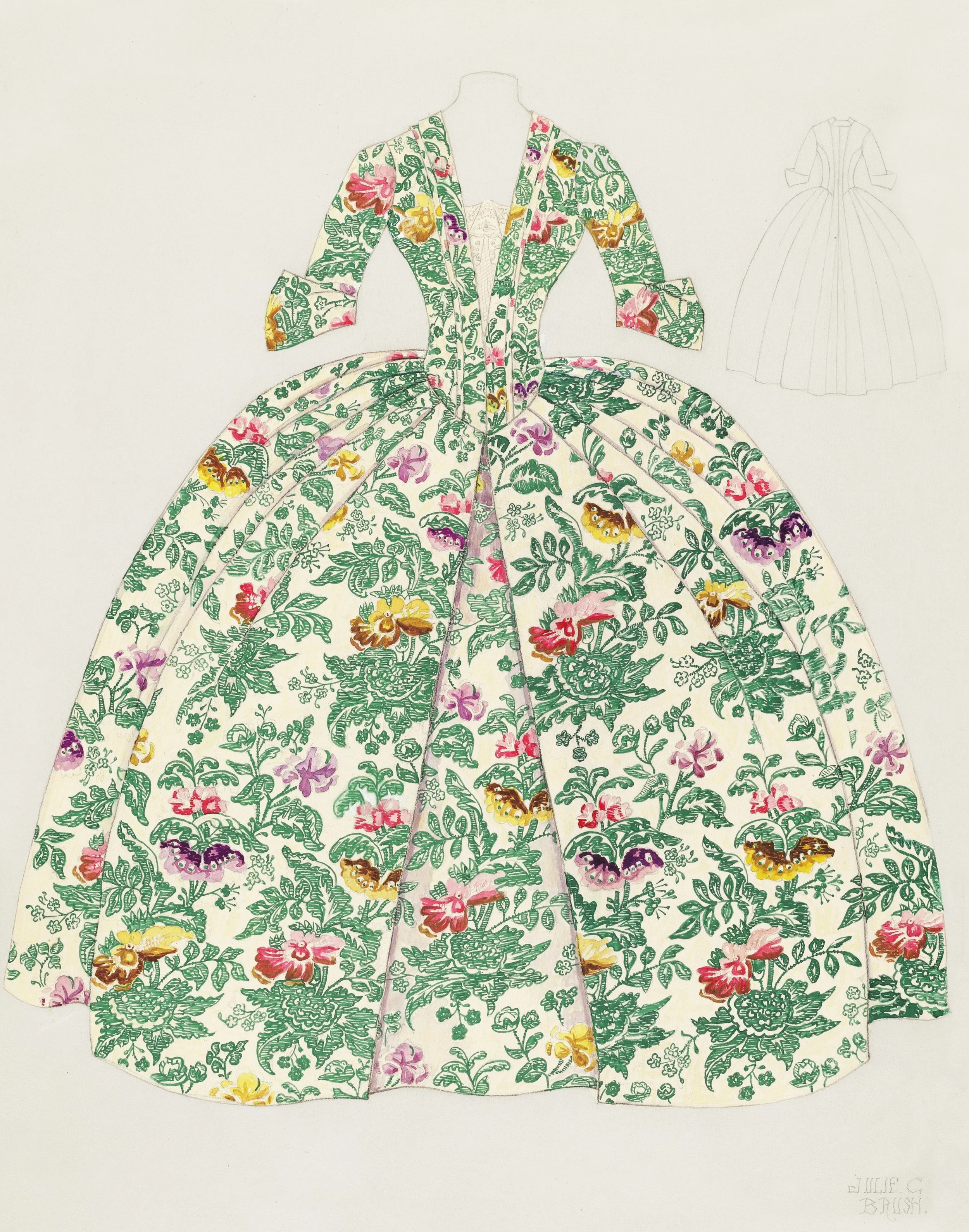
Knowing your colours

One of the greatest things about knowing your colours is knowing the things like

'I can wear green, as long as it's not too yellow'

or

'I can wear pink but only in small touches like a button or a collar'...

Or even stuff like:

'My wardrobe needs red as a balancer to the rest of my usual palette'...

Knowing your colours is a multi-dimensional foundation of style and style refinement. Its more nuanced than just knowing which colours you favour or which colours flatter your skin tone.
Read More
Wardrobe, Thought Frances Lawrence Wardrobe, Thought Frances Lawrence

Wardrobe as storecupboard: Utility + Creativity

I think I have moved into a new phase with my wardrobe.

My overarching goal at the moment seems to be developing my wardrobe to be an incredibly useful storecupboard, that's ready for anything...like my kitchen stock cupboard is stocked with a very useful array of quality ingredients ready for making almost anything, so I am evolving my wardrobe towards the same function.

Still trying to keep all that creativity, but buying more according to where the usefulness gaps lie, not just where my creative nose wants to go... I am wanting my wardrobe to be ready for action, fully stocked, AND creative together, so that I myself am essentially always ready for what life's occasions, weather, whims and future goals, demand.

Read More
Wardrobe, Thought Frances Lawrence Wardrobe, Thought Frances Lawrence

Youthfulness in style

As we age, we may feel compelled to leave behind ‘youthfulness’ in our style, if we are no longer, on paper, young.

But I think much of the time, it's how you frame these things in your own mind right?

Hence, I have been thinking, what exactly is youthfulness? It's not just being physically young. It's a hopeful outlook, it's experimenting, it's not taking things super seriously... So as you transition your style, youthfulness can transmute into words like playfulness, unexpectedness and unpredictability, surprise and irreverence.

Read More
Wardrobe, Thought Frances Lawrence Wardrobe, Thought Frances Lawrence

The Age of The Small Adjustment

I have a new fashion theory – after the age of about 35, you enter, what I am now calling The Age of The Small Adjustment.

Wild changes of style direction no longer serve you, no longer interest you, frankly, are no longer possible. But you still want changes, updates, to feel like you're new and different from before, making style progress and not being stagnant.

This is where subtle changes on a known theme become REALLY important... Instead of drastic new choices, variations of detail like a different type of collar, a wider or slimmer sleeve, a visible decorative button or all buttons hidden under a placket, a darker shade than the last time etc. etc. become the way your style changes and keeps you feeling fresh and attentive.

Read More
Thought, Wardrobe Frances Lawrence Thought, Wardrobe Frances Lawrence

Trusting each other to decipher our code of dress

Getting dressed isn’t arbitary. There is code, language, meaning, symbols. We trust each other to be fluent in this hidden language.
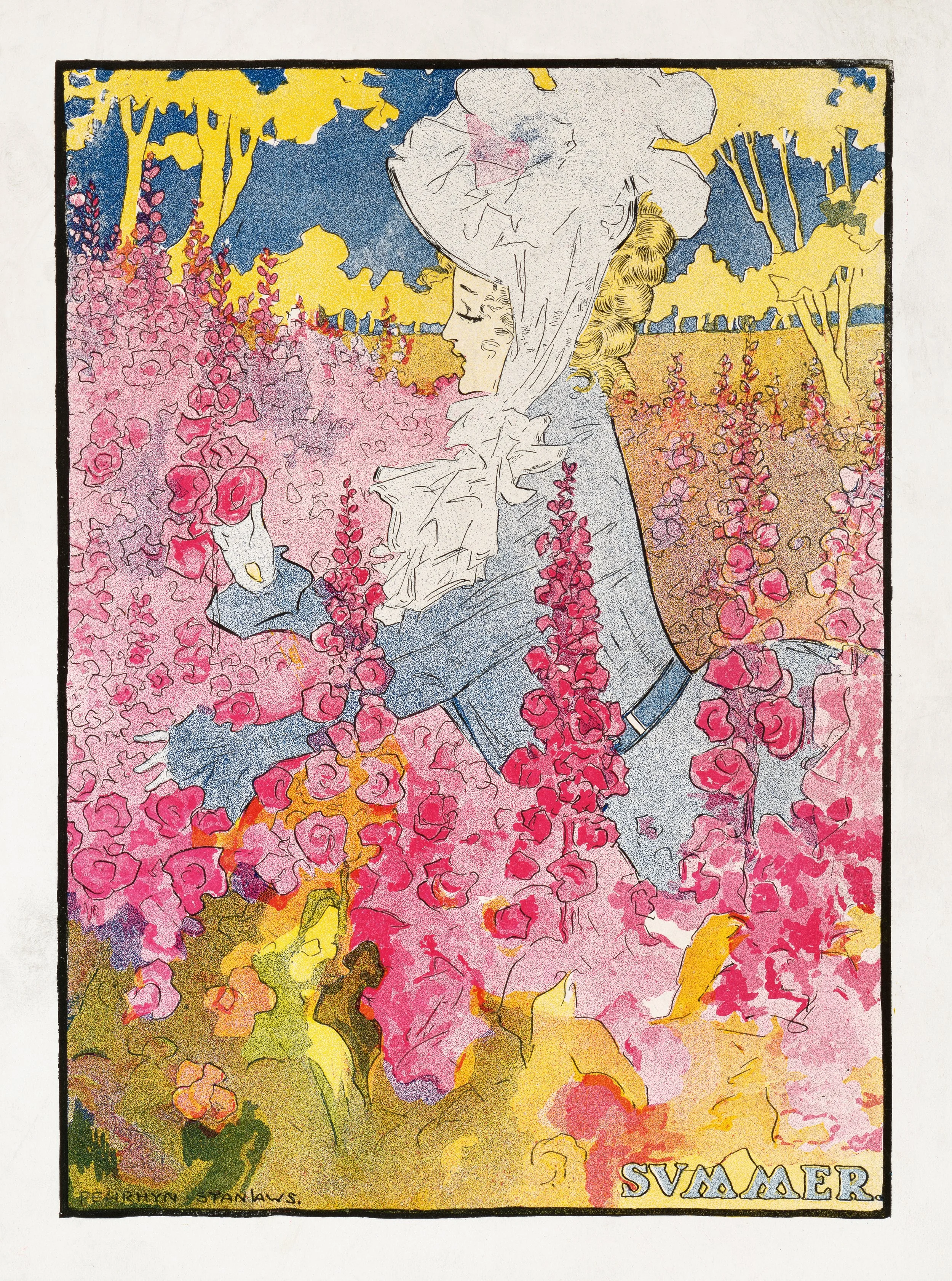
“Recognition, as individuals or as groups, and surface decoration has aided the swift division between those wishing to lead and those ready to be led while establishing unity between the like-minded.

…Humans compete and impress in order to propel or maintain their position, and embellishment can be a tool to bedazzle others for own gain.

The quality of the workmanship and preciousness of the textures communicates our status and intent so we trust in each others ability to decipher our code of dress.

…Changing how we dress can mean we are perceived differently. Subconsciously we scan each other looking for clues as to the potential viability of a new relationship, or to gauge the emotional state of a friend. We dress to impress, to further our ambitions to win money, power and love.”

- from How to Make a Dress, by Jenny Packham, published 2021


Reference

  • Packham, J. (2021). How to Make a Dress. London: Quadrille Publishing.

Read More
Thought, Wardrobe Frances Lawrence Thought, Wardrobe Frances Lawrence

Wearing colour well can become walking in art

Colour is foundational to the dressmaker’s art and the wearer’s style. Finding the right route, and a nuanced and depthful approach to colour takes time, but pays dividends.

“I enjoy women who wear colour well, those who can combine unexpected tones, artful prints and bold accessories. Those who take the time to indulge in self presentation and to consider how they wish to be received by the world, understanding both the power and pleasure it can transfer.

However it is a skill, and it takes time to find your colours, match up flattering hues and have the willingness to experiment.

But those who get it right become walking art…

…For me, to understand the nuances of each colour helps me to design, and to create styles that can both empower and inspire.

I design for women who want to become an unforgettable version of themselves and therefore the shade I choose will be intrinsic to the success of the style.”

- from How to Make a Dress, by Jenny Packham, published 2021


Reference

  • Packham, J. (2021). How to Make a Dress. London: Quadrille Publishing.

Read More
Thought, Wardrobe Frances Lawrence Thought, Wardrobe Frances Lawrence

The amalgamation of good ideas generously donated by history with innovative creativity

Allowing ones work to be influenced by the work of others is smart, innovative and creates depth.
“Sometimes the onset of inspiration can't really be explained…after all, inspiration shouldn't be too obvious in the final product.

…Van Gogh collected prints by Japanese artists, notably those by Hokusai and Hiroshige….[and] used the inspiration within his own style, adding depth and balance amid his wild brushstrokes.

Nothing is truly original so the aim is to create the appearance of originality through the amalgamation of good ideas generously donated by history with innovative creativity. ”

- from How to Make a Dress, by Jenny Packham, published 2021


Reference

  • Packham, J. (2021). How to Make a Dress. London: Quadrille Publishing.

Read More
Thought, Wardrobe Frances Lawrence Thought, Wardrobe Frances Lawrence

Anni Albers on the weaving craft

Craft and art. Art and craft. Steps on the same spectrum.

“Like any craft [weaving] may end in producing useful objects, or it may rise to the level of art.”

- Anni Albers, German textile artist

Read More
Thought, Wardrobe Frances Lawrence Thought, Wardrobe Frances Lawrence

Recycling the past - and from them creating something that lives again

Creativity is not a synonym for originality. We can recycle the past to inspire future directions, and there ain’t nothing wrong in that.

“This small room was alive with women chatting and laughing, even dancing, all begging me for acknowledgment. This was a catacomb of women's lives to inspire me.

For years I had forbidden myself to ‘copy’ others, preferring to think in my youthful arrogance that my ideas would always be my own.

But suddenly, recycling the past - connecting with fantasy moments and from them creating something that lived again - seemed a magical prospect.

Ever since that day I've been inspired by vintage clothes – it’s like having my own fashion wormhole.

…When I try the vintage stores, I am looking for a beauty to recycle and make my own. I'm searching for a new colour, an extinct shape, the Golden Fleece of fashion.”

-[speaking about her experience perusing a vintage shop]

from How to Make a Dress, by Jenny Packham, published 2021


Reference

  • Packham, J. (2021). How to Make a Dress. London: Quadrille Publishing.

Read More
Thought, Wardrobe Frances Lawrence Thought, Wardrobe Frances Lawrence

The occasional lies behind the creative journey

A good reminder that making something great matters more than having the perfect explanation.

“I presume that she [the journalist] will ask me about the inspiration for particular styles, and my answers will be mostly accurate.

However, sometimes I'm forced to lie a little, because the truth behind the creative journey is not always as glamorous as others anticipate.

My intention is to inspire people with my own inspiration - and, like many artists, I am sometimes better at creating than describing my work. ”

- from How to Make a Dress, by Jenny Packham, published 2021


Reference

  • Packham, J. (2021). How to Make a Dress. London: Quadrille Publishing.

Read More
Wardrobe Frances Lawrence Wardrobe Frances Lawrence

I’m moving clothing tags from the neck

I have this new thing I am doing, making a difference to my wear enjoyment. I am taking tags from the neckline and moving them to the side seam. I can't tell you how much this has improved my wear experience of my clothes.

Done it on almost all knitwear already. Game changer.

Read More
Thought, Wardrobe Frances Lawrence Thought, Wardrobe Frances Lawrence

Cutting is higher risk than sewing

A reminding quote that scissors in-hand is as much a part of successful garment construction as time at the machine. There are few ways to correct a faulty cut.

“Guilds regulated the various steps in garment production minutely. For instance, the statutes of the 13th century Parisian tailors’ guild reserved cutting cloth for established masters, leaving sewing to subordinate workers called valets cousturiers.

Cloth was so expensive that cutting it was a high-risk operation. A faulty stitch can be removed, but a faulty cut can ruin an entire piece of fabric.

Couturier, which comes from coudre, to sew, was thus enshrined as a lower-status occupation than tailleur, or tailor, which derives from tailler, to cut.”

- from Worn by Sofi Thanhauser, published 2022

Read More
Thought, Wardrobe Frances Lawrence Thought, Wardrobe Frances Lawrence

Just one emblem of the possibility of better clothes

“You yourself may make clothes.

Even if it becomes just one emblem of the possibility of better clothes, this one emblem can make dressing heartening.”

- from Worn by Sofi Thanhauser, published 2022

Read More
Thought, Wardrobe Frances Lawrence Thought, Wardrobe Frances Lawrence

How France became the home of fashion

“Beginning in 1660, the king [Louis XIV], alongside his finance minister Jean-Baptiste Colbert, took charge of the minute details of French clothing, just as he had of all else…

When Louis came to power [aged 5] in 1643, Spain, not France, dictated European fashion.

In the early 17th century; aristocratic style, with its starched ruffs, rigidity, and overwhelming use of black, was a Spanish export. Black gowns were very expensive, made from Mexican logwood, and displayed the extent of Spanish wealth and empire. Louis XIV made France the fashion capital of Europe; the king wielded clothing to enhance the prestige of the monarchy and the French court. Colbert, meanwhile, monetised the king's considerable genius as a fashion director by ensuring that the thirst for French fashion and lifestyle spread, with the profits benefiting local French artisans. The revenue gained from the burgeoning French luxury goods industries would then be reinvested in the military, funding Louis XIV's many wars….

Together, Louis XIV and Colbert reinvented the luxury goods industry. France's luxury industry was not yet capable of producing items of comparable quality to lace and mirrors in Venice, silk in Milan, or tapestries in Brussels, but heavy import duties were imposed on foreign items, while foreign cloth and trimmings were banned outright.

In another policy intended to support French artisans, Colbert mandated that new textiles appear seasonally, twice a year, so that on 1 November, the court was required to put aside lightweight silks and don velvet instead. Thus, the fashion season was born. Colbert's calendar provided a predictable cycle for the textile industry and laypeople alike. To ensure that people bought plenty of cloth, Colbert mandated that textile patterns change each year, so that it would be obvious if anyone was wearing last year's fabric. In 1668, Louis demanded by edict that his courtiers “remain fashionable”, and instituted a strict dress code.”

- from Worn by Sofi Thanhauser, published 2022

Read More
Thought, Wardrobe Frances Lawrence Thought, Wardrobe Frances Lawrence

Virginia Woolf on clothes and identity

We literally are what we wear.

“Vain trifles as they seem, clothes have, they say, more important offices than to merely keep us warm. They change our view of the world and the world’s view of us.”

- from her novel Orlando: A Biography, published in 1928

Orlando: A Biography is a semi-satirical, fantastical novel that spans over 300 years of English history. It follows Orlando, a nobleman who mysteriously transforms into a woman and lives through centuries without aging significantly.

This quote appears during a moment of reflection on how Orlando’s change in gender affects not only her internal experience but also how she is perceived by the world. Woolf uses clothing as a symbol of gender performance - highlighting how societal expectations are often tied to external appearances.

Even in 1928, Woolf challenges binary notions of gender, showing how identity can transcend physical form.

The novel critiques how society imposes roles and expectations based on superficial markers like clothing.

Orlando’s long life allows Woolf to explore how identity evolves across eras and cultures.

Read More
Wardrobe Frances Lawrence Wardrobe Frances Lawrence

Applying coloured lipstick to last

I looooove to wear coloured lipstick, but for a long time, suffered from either colour-bleed into the skin around my lips, or the colour simply wearing off within the space of about 30 minutes.

I recently travelled to Australia with Emirates and the (very beautiful) hostess team were almost all wearing red lipstick, and it lasted for like 10 hours. What?!?! What is this magic?!?!

Turns out, to get coloured lipstick to last, requires a few more steps than simple line and apply. Here’s a method that works for me, producing a finish that doesn’t bleed and lasts for several hours at least. Eating or drinking might knock this down a touch.

Before beginning, be sure to always purchase a lip liner that matches your colour as closely as possible - there is no point having a lipstick without the matching liner.

Prep

  • Exfoliate - Use a little sugar to gently scrub the lips and to remove dead skin. This creates a smooth canvas for lipstick, just like how you sand a wall before painting.

  • Balm - Apply a touch of lipbalm and let it absorb. Dry lips cause feathering.

Line twice

  • Line with clear - Outline the lips with a clear wax liner (these are a little tricky to find, but I get mine from Boots) This acts as a barrier to stop pigment from seeping into fine lines around the mouth.

  • Line and fill with coloured liner - Outline lips with a matching lip liner, then fill them in completely with the liner. This helps to anchour the colour.

Apply colour with brush

  • Apply several thin layers of colour - Using a lipstick brush, apply a thin coat, blot with tissue, then reapply. This creates a stain effect that lasts longer and the brish gives you better control.

Lock It In

  • Set with translucent powder - Place a tissue over your lips and dust powder through it. This absorbs oils and prevents bleeding. my absoloute favourite, used it for years, is the Dermophile Loose Powder by T.LeClerc in Banane. Useful for multiple applications, not just this one.

Finish

  • After applying, insert your finger into your mouth, close your lips around it, and pull it out. This removes excess from the inner lip area and mitigates the chances of lipstick on the teeth.

Read More
Wardrobe, Spring Frances Lawrence Wardrobe, Spring Frances Lawrence

Workings of a Garment: a 1950’s rose-print cotton gown

Study and analysis of how this summer gown was constructed.


Brand & Era

Selfridges (emulating Nina Ricci)

1950’s

Fabric type & weight

cotton, printed or possibly chintz

estimate 160-180gsm

NOTES FOR A DRESSMAKER

Fit - This is a close-fitting garment. Almost all fit is achieved through the princess seams, with only two darts at the side waist. Rather cleverly, given that this is a ready-made garment, the pleated section over the bust would disguise any less-than-perfect fit issues around the bust, making it wearable by different cup sizes without detracting from the finished look.

Panels - 8 total panels

Zip - metal teeth, cotton tape, lapped construction. Hook and thread-eye added across centre of zip to hold the lap down covering the zip, and at the top of the zip for ease of closure.

Seam allowance - very wide, around 1 inch/2.5cm. Much more common for this period, and allows for tailoring and adjustments by the owner for a better fit and longevity as the body changes shape. Also, since this is cotton, any let out seams should not have obvious pinholes if changed.

Interior seam finish - for the bodice, the seam allowance is turned-and-stitched. From the waist down, it is simply pinked. Note also the one clip at the waist to release the concave seam allowance. Considering this garment is around 70 years old, this simple and easy finish is clearly durable enough for this type of garment, in this type of fabric. No evidence of fraying (and I myself have worn this garment at least 8 times in the past few years).

Hem - evidence of original hem being very narrow 3mm double-fold hem, but a previous owner has hemmed again to shorten, fairly neatly but not as neat as the original.

Hand-finishing - thread loops would have been done by hand, and the pleated detail across the bust is also hand-tacked down in key places.

Notable absenses - no lining, no interfacing on any section, and no waist-stay (which I actually think would be very useful and protect the seams from any stress on such a fitted item.


Other Cotton Garments

Read More
Wardrobe, Thought Frances Lawrence Wardrobe, Thought Frances Lawrence

Outfit-making for new neural pathways

You know how they say that neurologically, we have these neural pathways which determine our behaviour? Once we have a neural pathway that's fixed in our brain, it's essentially an easy road to travel.

So when we faced with a situation we just keep on going back down that neural pathway. Thoughts, perspective, behaviours–all on repeat.

Well–I think the same can be said if you don't take the trouble to make outfits. When you're just faced with your wardrobe in the morning, you fall back on the same old tried and tested neural pathways, over and over again. You have to purposely create an outfit, make it come into being; in essence, form a new neural pathway. Outfit-making lets you break up some of those patterns and create new neural pathways. To not get stuck in style habits, one of the key tools in the box is outfit-making.

Read More
Wardrobe, Summer, Dressmaking Frances Lawrence Wardrobe, Summer, Dressmaking Frances Lawrence

Square neck tiered midi dress in Liberty Heidi cotton poplin

Perfected the fit, and finally making with an expensive fabric, Liberty’s cotton poplin. Detailed dressmaking closeups.

TOTAL TIME COMMITMENT: 17 hours

Toile (without zip, lining, interior seam finishing, basting stitch removal or hemming): none

Cut out & transfer all pattern markings: 3 hours

Main construction: 10 hours

Lining construction, attachment and hemming: none

Finishings (hem, enclose zip): 2.5 hours


Fabric type

Cotton poplin (Liberty)

Fabric weight

110gsm

ADDITIONAL SEAM FINISHING, CONSTRUCTION NOTES & EXTRAS

Cut out four of the sleeve frills, so that you see the print on both sides

Overlock each edge of skirt pattern piece before construction, press open

Overlock raw edges together at gathered tier seam

Overlock raw edges separately before construction on zip seam

Attach bodice facing to rest of garment using stitch-in-the-ditch

VERDICT & LESSONS LEARNT

A truly beautiful dress, perfectly fit at the bodice, bust and shoulder. I have worked so hard on this pattern, I now have two fit versions - one as a pinafore, fit to go over a top, and a closer fitting option (as here) to be worn alone.

The amendment to cut four of the sleeve frills really elevates the finish, where you see a printed face on the underside and upperside of the frill.

The only error is where I have managed to mis-align the top of the zip slightly, which I think is due to sewing the centred zip in one continuous line from neck edge, around bottom, to neck edge. In the future, I plan to sew each side from neck edge down to bottom of zip, sewing twice over the bottom for reinforcement.

Having made the garment multiple times has really paid off, and my technique is improving, which I can see here in this garment. Perhaps my proudest make ever, tied with the wool flannel shirt I made for my partner.

A beautiful addition to my summer wardrobe and one that I am extremely pleased and proud to wear.


Travel itineraries for Summerwear

Read More
Wardrobe, Spring Frances Lawrence Wardrobe, Spring Frances Lawrence

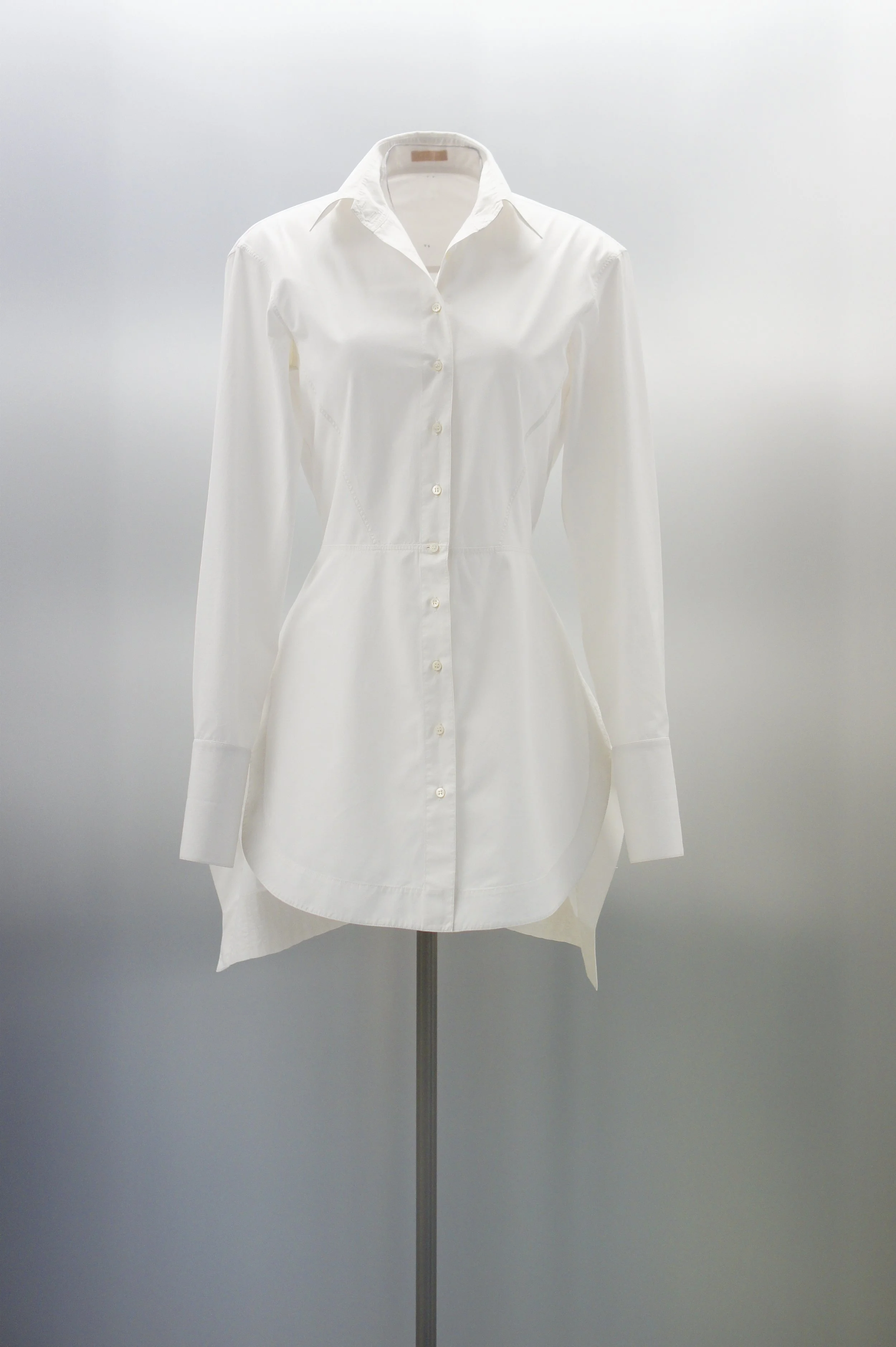
Workings of a Garment: a Y2K Acne oversized long-line shirt

Learnings and inspiration for improving my dressmaking up to designer ready-to-wear standards.


Brand & Era

Acne

Y2K, 2013

Fabric type & weight

cotton poplin

estimate 140gsm

STYLE NOTES FOR A PETITE

This is not flattering on my petite frame - too much volume across the dropped shoulder, too much volume at the lower front, too much length overall in both bodice and sleeve.

It is the correct size for me (36) but it just goes to show why oversized is such a difficult silhouette to buy ready-made for a petite, particularly in designerwear, which seems to be sized for a 5’ 8” woman. Trying garments like this makes me more determined to get better and better at making my own oversized or loose-fitting garments.

Oversized is still a fit! Darts need to be in the right place, the volume needs to be proportionate, and it should all be balanced with subtle details that hint or show the figure underneath - such as cut-in shoulders, a tightly fitted cuff, a waist cut-out, or a bare arm or leg.


Other Oversized or Loose-fitting Garments

Read More