The Swedish West Coast - a twin-centre itinerary with biking, hiking, sculpture and excellent baking
Travelling in early summer, how we enjoyed 12 nights on the West Coast of Sweden. Hiking, biking and outdoor dining all feature.
Why the Swedish West Coast?
The entirety of Sweden’s coastline is both vast and varied - there are rocky granite coasts, deep sand-dune backed beaches of fine golden sand, vast island archipelagos of islands, islets and skerries connected to the mainland by bridges or chain ferries, forests right up to the coast, high cliffs, even inland lakes the size of inland seas. Just off the coast there are deep forests and meandering lanes amid a patchwork of meadows and farms.
The West Coast of Sweden has Gothenburg (Sweden’s second largest city, and home of Volvo) as the major urban base, but outside of that there is plenty of nature, both wild and tamed, for outdoor exploring, either on two wheels or on two feet. This is the summer playground of many a-Swede but not often visited by folks from the UK, so naturally, I feel like a jammy bugger, excited to be discovering something so authentically Swedish.
We based ourselves in Halland, just south of Gothenburg. It’s beachy, breezy, and brilliant for bikes. Halmstad, the main town, kicks off Sweden’s first national cycle trail and has a laid-back, surfy vibe.
Head north and you hit Bohuslän, a dreamy stretch of smooth granite islands and tiny fishing villages. It’s all red cottages, salty air, and kayaks weaving through the islets. It feels like a postcard.
We spent 12 sun-soaked days here—27°C and blue skies the whole way. Apparently, that’s rare. But we’ll take it.
Itinerary At A Glance
12 night independent itinerary for Halmstad in Halland province and Orust island on Bohuslän coast
Based on flying from Leeds into Gothenburg, with a hop in Amsterdam
Highlights include DIY outdoor dining in one of the Edible Country tables, Bronze Age rock carvings, biking the famous Kattegattelden coastal trail, hiking and outdoor cooking in the forest on Midsummer’s Eve, and plenty of fresh baked goods at cafes with seaviews
Based on a couple travelling, with a focus on leisurely cultural activities and biking, interspersed with time to just relax and soak up the atmosphere
WHEN
Late June/early July
Driest, warmest and lightest months, plan for mixed weather.
Note also that, outside the major urban centres, many of the summer homes, tourist attractions, ferry routes and eateries are only operational May to September, so visiting outside of these times is a very different (and probably trickier) prospect.
TRAVEL MEANS
Leeds to Gothenburg with a hop in Amsterdam, flying with KLM
Car also be essential to move between locations, as well as road or hybrid bike hire for the entirety of the stay in Halmstad
ACCOMMODATION
Halmstad/Halland province
We stayed in this Cosy and luxurious villa on the outskirts of Halmstad.
Quiet. Large outdoor space including pool and cooking area. Proper family home with all the mod-cons. Recommended.
Bohuslän Coast
We stayed in this Gorgeous and modern coastal home with incredible views out to sea from the deck.
Recommended, especially if you particularly prize a peaceful and out-of-the-way location.
SCHEDULE
Halmstad in Halland province - Day 1 to 7
Day 1
Arrive: drove to Halmstad from Gothenburg
Collect Bike Rental from Rent-A-Bike Halmstad
Day 2
Bike: Pick a section of the Kattegattelden cycle trail using this extremely handy and comprehensive website to the trail, with an option to download the GPX files.
Cafe: Stopped at neighbourhood cafe Borjes Harplige Konditori for a pitstop and has my very first try of a chokoladbollar. Flipping marvellous and a wide selection for such a small village bakery.
Dinner: at the house
Day 3
Lund: This was one of our only rainy days, on which we headed out to Lund, the ‘Oxford of Sweden’, 1h 30m drive to the south.
Wandered the town, and stopped for coffee and baked goods before heading home - specifically Ramklints Konditorei for traditional Swedish patisserie and Lund Gateau Saluhallen
Day 4
Hike: Went on this Gourmet Hike tour with Anders. Cooked outdoors and checked constantly for ticks…..found some as a matter of fact…
Day 5
Bike: Pick a section of the Kattegattelden cycle trail which includes Falkenberg and explore the town as part of the route
Dinner: Booked in at Köketin Falkenberg, recommended by the White Guide - an excellent choice. The food and the service was superb, proudly Scandi, and just on the right side of ‘fine dining’. Not so progressive that it felt ‘try hard’ but still special enough to have felt like a proper treat. This wasn’t food I can make at home.
Day 6
Relax: enjoyed the hot weather in the garden
Dinner: BBQ outside
Day 7
Fika: Anders (our tour guide) and his wife, Viktoria, invited us for fika at their home in Halmstad. Viktoria baked a variety of teeny little bakes, from chokoladbiskvier to slices of Prinsesstårta. We sat outside in the shade of a tree with coffee and delicious baked goods and told each other some stories.
Deeply grateful for their invite to join us at their home. A highlight of our trip, for sure.
-
Spend an evening at Rotundan in Norre Katts Park in central Halmstad, with street food options with a musical performance from their cultural program
Take a guided tour of Tjolöholms Slott (Tjoloholm’s Castle)
Visit the Bath House at Varberg (Kalbadhuset Varberg) for a sauna and fika
Take a wander around Helsingborg
Take a trip out to Varberg to dine at Spiseriet (for tables of less than 6 people, it is drop-ins only)
Spend an afternoon in Halmstad, using this self-guided history walk as my rough guide - its only in Swedish but nice to have a paper copy for a bit of slow-ways pathfinding
Stop in for lunch or fika at Söderfamiljen in central Halmstad for a view over the river
Visit the Halland Art Museum or Mjellby Art Museum, to get to know a little more about artists in the region
Book in to ÄNG restaurant on the Ästad Vingård in Halland County. Recently awarded both 1 Michelin Star and a Michelin Green Star - first introduced in 2020, the Michelin Green Star is an annual award which highlights restaurants at the forefront of the industry when it comes to their sustainable practices
Do a local beer tasting on Friday or Saturday nights at Halmstad Brygghus
Day 8 - drive between Halmstad & Bohuslän
Made a pitstop at the café town of Alingsås, the Swedish Capital of Fika, for a wander around the town and its many cafes. Cute, not astounding.
About 300km, 3hrs 30mins driving
Bohuslän Coast - Day 8 to 13
Day 8
Settle in, buy supplies
Day 9
Sculpture Park: Went to the Pilane outdoor sculpture park on Tjorn, open May to September from 9am to 7pm. Gorgeous.
Lunch: Dined in the courtyard under the blazing sun, at Margareta's Koko Skafferi, Sunsby Sateri. Set in a historic manor estate, the café blends old-world charm with cozy vibes. You can sit indoors among vintage furnishings or outside surrounded by gardens.
Walk: there are walking trails at Sundsby Sateri. We took to one after lunch, to work off the kladdkaka…….which was utterly excellent - a crisp shell with a gooey interior - but also extremely indulgent.
Dinner: at the house
Day 10
Museum: Visited Nordic Watercolour Museum on Tjorn Island
Lunch: Lottas Bak & Farm (Lotta’s Sourdough Bakery & Cafe). Open Wed-Fri 9am to 5pm, Sat 8am to 3pm, Sun 10am to 3pm. A delighful neighbourhood cafe with a back terrace that looks out over a teensy little inlet. Tranquil and relaxed, with great food and an on-site bakery. An ideal spot for a sit-down.
Day 11
Visited the Vitklycke Museum and rock carvings in Tanum, member part of the World Heritage list as an outstanding example of Bronze Age art. Visitors can either join a guided tour or follow the well-marked six kilometre path for an exploration of the many rock carvings at this site. Open 10am to 5pm June to August (more limited opening times April, May, Sept, Oct and Nov).
We chose the independent option.
Pretty breathtaking. The carvings are highly visible, having been repainted to really stand out, and its rather mindbending the quantity that there on the site.One in particualr is a huge depiction of a man, way bigger than human size.
Highly highly recommended.
Day 12
Forgaging & outdoor dining: Booked on one of the Edible Country tables at Ramsvik. Stunning stunning location, perched on a cliff looking out over The Skagerrak—a strait that connects the North Sea to the Kattegat and separates Sweden from Norway and Denmark.
The foraging though, was very very difficult, having only been provided with a stylised line drawing
Day 13
Have one final breakfast of coffee and kanelbulle (cinnamon bun)
Try to leave in the afternoon
-
Wander around Marstrand on Kungälv island
Make day trips to visit a couple of the prize spots on the island of Orust - Gullholmen and Mollösund
Hike Dyron Island boardwalk trail, ending with a stop at the public sauna
Dinner at Brygghuset, Fiskebäckskil- multiple winner of the Whiskey Restaurant of the Year Award, and reputedly knowledgeable in all things seafood
Sewing and Wearing
Other Active Holiday Itineraries
Bergen - an active itinerary for Spring
My imagined travel itinerary for 4-5 days in Bergen and the surrounding fjords. Biking, hiking and nordic dining
Why Bergen?
Its been on my list for a while - a second city renowned for being one of those ‘outdoorsy’ types. Might up our street.
I originally imagined this trip in December - picturing a snowy and cosy wonderland……..but this article disabused me of this idea. Apparently, the oceanic climate and presence of the sea and the mountains together cause plentiful rainfall but also gives Bergen a more temperate climate than its latitude might suggest. This is all further moderated by the Gulf Stream which means any snowfall melts quickly. Instead, I think a trip in May will be the most pleasurable, making the most of long days and (slightly) drier skies.
Bergen gained wealth and prominence as a major trade port and served as Norway's capital in the 13th century; nowadays it is Norway’s second-largest city, though small by many city standards at around 270,000 inhabitants which compares with Newcastle or Greater Norwich in the UK. Bergen is now a major cruise ship port and gateway to the Norwegian outdoors, most notably, the fjords. The outdoors, particularly the nearby mountains and waterways, characterise the city and the things it has to offer to tourists, with much in the way of hiking, biking and countryside-escaping opportunities.
Itinerary At A Glance
4 night independent itinerary for Bergen, on the southwest coast of Norway
Based on flying in and out of Bergen from Leeds with a hop in Amsterdam.
Highlights include a combined rail-and-boat trip along the fjords, hiking the mountains that surround Bergen, hanging out at the UNESCO heritage Hanseatic Harbour
Based on a couple travelling, with a focus on leisurely cultural activities and hiking, interspersed with time to just relax and soak up the atmosphere
WHEN
May - the driest month on average with long daylight hours
Note though, the weather in this city is known to be very wet and changeable, so go with no expectations of great weather and don’t let the rain stop you, whatever you have planned
TRAVEL MEANS
KLM, from Leeds, changing in Amsterdam
Probably won’t need a car for this trip
ACCOMMODATION
My first choice would be to stay in a traditional white clapboard house, so iconic to this part of the world, though a great view of the city and its waterways could trump that. Below is my shortlist of viable contenders, with lovely Scandi design elements and a little outdoor space.
SCHEDULE
Day 1
Arrive: Try to arrive in the morning; settle in and collect a few groceries
Walking Tour: This Walking tour of Bergen looks to cover the more authentic aspects of the city, such as what it is like to live there and the issues facing Bergen in this present moment.
Day 2
Hike: Book this guided hike between two of Bergen’s most famous mountains - Floyen and Ulriken.
Dinner: Book at Bryggeloftet for a traditional dining experience, and I’ve been reliably advised that a window seat should be requested.
Day 3
Flåm railway: Combine a cruise along Sognefjord (Norway's longest and deepest fjord) with the famous Flåm Railway and Bergen Railway on this excursion. Alternatively, this private tour takes you biking, RIB riding and a trip on the Flåm railway.
Day 4
Relax
Dinner in the Mountains: Book the Ulriken by Night tour with FjordTours which is a combo tour with a the cable car to the top of Mount Ulriken (the highest of Bergen’s Seven Mountains), and dinner in the restaurant Skyskraperen.
Day 5
Travel home: try to depart in the morning
-
In this city, better to plan that whatever you are doing, you are doing come rain or shine, as rain is very common. For absolute last resort indoor activities:
Permanent indoor Fish Market (where there are several fish restaurants also)
KODE Art, Craft & Design museum - among Scandinavia’s largest art museums
Dinner at Lysverket
Bergenhus Fortress Museum and walk the fortress trail for a look at the history and nature in the area. Visit on special national holidays to watch the dramatic gun salutes.
Bergenhus Bryggeri to try some of the many microbrews available.
FOOD & DRINK - SPECIALITIES & FOOD CUSTOMS
Not known for being a cheese producing nation but apparently in the World Cheese awards in Bergen in 2018, the overall winner was fanaost from the producer Ostegården, just south of Bergen. I’d try and have a taste.
Fiskesuppe is a staple of Norwegian traditional grub - not to try it would be rude.
Raspeballer - boiled potato dumplings. In Bergen, they are often served with Vossa sausage from the neighbouring village of Voss.
Other Active Itineraries
Rye, East Sussex - biking, castles and wine in high Summer
From Leeds to Rye, East Sussex, on the south coast of England, my itinerary journal of our summer staycation.
Why Rye?
Rye’s distinction lies in being a medieval coastal merchant town that got rich through its being a member of the confederation of Cinque Ports from the 12th to the 15th century.
This group of towns across nowadays Kent and East Sussex were granted the local profits of justice in return for providing and maintaining ships ready for English Crown to use in case of need, principally in defence of invasion or attack by Danish or French forces. This role of maintaining defence contingents for the realm of England came with some benefits; namely some tax exemptions and a level of self-government and self-jurisdiction. In addition, their being ports meant trade and mercantile activities, which typically lead to wealth generation.
While all of that is long in the past, Rye has maintained much of its quaint and meandering medieval architecture and has reinvented itself as a tourist destination.
The area itself is also just at the edge of the High Weald National Landscape, a beautiful area of green and rolling hills, medieval manors and English winemaking.
Itinerary At A Glance
4 night independent itinerary for Rye, East Sussex - on the south coast of England, right on the border with Kent
Based on driving from Yorkshire in July
Highlights include a visit to Bodiam Castle, cycling the gorgeous green-and-rolling countryside through pretty and historic towns and villages, and tour with tasting at an English vineyard
Based on a couple travelling, with a focus on leisurely outdoor and cultural activities, interspersed with time to just relax and soak up the atmosphere
Honest verdict
Did the place live up to hype or expectations?
This area of the UK doesn’t seem to get any attention as a possible holiday region but I can truly attest that this is a gorgeous part of the country, ideally suited to a long break with all the makings of a great spot for a holiday. We found idyllic countryside, history-aplenty, unique architecture, some marvellous eateries, and well-surfaced and quiet roads (and many singletrack lanes) that were ideal for cycling. It felt peaceful, affluent, with plenty to do and not at all thronged with tourists.
Now, despite the hype on social media about Rye, Rye is worth maximum, one day of your time. A few hours will easily do it. What I would recommend is choosing to stay somewhere in the countryside around Rye because it is just so darn lovely.
Did the itinerary work for the trip?
Yes - 4 days is an ideal length of time to explore the area, for a relaxed mix of biking, history, food and relaxation.
I have said it before and I will say it again - 4 nights, Monday to Friday is a superb option for a staycation - feels like a full week off work, long enough to truly escape the daily routine and relax, but short enough that it doesn’t feel like overmuch in a place that is still essentially home.
Would I make another visit?
I could see us returning, not exactly to this location, but to the wider region of Kent and East Sussex for another summer staycation.
TRAVEL MEANS
Driving from Yorkshire took 5hr 45mins
It is a long distance, but that really contributed to the feeling of ‘going on holiday’ for me
ACCOMMODATION
Oast House - buildings designed and used for for kilning (drying) hops as part of the brewing process. They can be found in most hop-growing (and former hop-growing) areas and many have now been converted to houses - they are very distinctive and all over this region and not found much in other parts of the UK.
a delightful little self-contained annex
perfectly proportioned for a couple
very much ‘of its place’
a chance to stay in something quite traditional (low ceilings, stone walls, exposed beams, walled garden etc.) without having to hire out a large property - which is usually the case for this type of accom
just outside of Rye
National Cycle Network Route 2 just behind the house.
Day 1
Drive in the morning, collect groceries, arrive and settle in
For supplies, we shopped at both Jempsons and Rye Deli - both great examples of local food retailers offering great produce
Day 2
Visited Bodiam Castle: 30 min drive or 1hr 15m cycle from Rye, an archetypal 14th century moated castle with ruined interior - a glimpse of medieval splendour
Cycled around Bedgebury National Pinetum & Forest: 8 mile red singletrack route
Drinks & Dinner in Rye: Had some excellent bottled Belgian beers at The Outside Inn in central Rye. Dined at Tatners Street Kitchen in Rye - very modern casual dinery serving up the current on-trend American-style goodies like slow-cooked meats in buns, dirty fries, hotdogs and the like. Easy, tasty and atmospheric
Day 3
Breakfast: at Tibbs ‘Pick Your Own’ Farm - just up the road, a pick-your-own soft fruits farm and cafe with a superb view over the valley below. Fruits were in season when we were there. Highly recommended for a snacky breakfast or coffee and cake.
Long bike ride: Took in the sights on the bikes, following (most of) the Sustrans route: 20-mile Rye and Winchelsea Circular. A fairly challenging route on a mountain bike, with plenty of ups and downs for a physical challenge, and predominantly done on single-track country lanes. Very do-able on a hybrid or road bike also
Day 4
Relaxed & wandered around Rye: made breakfast, spend the morning chilling out then spent the morning having a wander around Rye
Late Afternoon Vineyard Tour, Wine Testing & Dinner: at Tillingham (20 min drive from Rye), a young and lively bio-dynamic vineyard just outside of Rye. Along with dinner at their superb restaurant, this was one of the highlights of our trip. I am no wine connoisseur, but still fascinating to attend their tasting event and learn more about their wines, English wines, the winemaking process and how they are attempting some radical practices in the pursuit of making great wine.
Day 5
Drove home
-
Have breakfast, lunch, or dinner at The Figin Central Rye
Sissinghurst Castle Garden- a world-renowned garden
Walking tour of Rye's Huguenot history using theGeotourist app.
Cycle around Bewel Water (13 miles) - round reservoir route is open to cyclists, horses and walkers and is made up of forest paths, surfaced trails, country lanes and meadows
Visit Farley’s House & Gallery - former home of Lee Miller and Roland Penrose; Pablo Picasso stayed in 1950, and Max Ernst, Joan Miró, Man Ray, Leonora Carrington and Dorothea Tanning visited from overseas whilst Eileen Agar, Kenneth Armitage, William Turnbull, John Craxton and Richard Hamilton formed the British contingent. Works by many of these artists are displayed in the house in a selection that regularly changes as items are loaned to exhibitions in galleries around the world
Picnic on Camber Sands – a stretch of pale sand with a backdrop of massive dunes.
VisitGreat Dixter House – home of gardening writer and general place of pilgrimage for anyone interested in horticulture
Take a steam train through the Weald aboard the Kent & East Sussex Railway, travelling in the style of the steam train era. There are normally two steam hauled departures per Saturday & Sunday:
The morning departure leaves Tenterden at 10:40am and arrives at Bodiam at 11:30am. It then departs Bodiam at approximately 11:45am, arriving back in Tenterden at 12:32pm.
The afternoon departure leaves Tenterden at 1:15pm, arrives at Bodiam at 2:00pm, before departing at approximately 2:15pm, arriving back in Tenterden at 3:07pm.
For a more established vineyard, visitChapel Down
Tastes of the British Isles
Southern Germany - a 12 night Summer road trip.
A hot summer road trip through Germany’s southern states. Castles, cakes, pretzels, bikes, hikes, lakes and beer all make an appearance. There’s nothing this place doesn’t have.
Itinerary At A Glance
12 night independent touring itinerary for Southern Germany, across the two southern states of Baden-Württemberg and Bavaria.
Based on flying into Stuttgart from Manchester, and back in from Munich into Manchester, in July
Highlights include an invigorating walk around the hills of Heidelberg, a leisurely stroll around spa-town Baden-Baden, rest-stop coffee on the Lake Constance lakeside in Lindau, biking in the Black Forest and around Chiemsee Lake, a visit to The Eagles Nest in Berchtesgaden, a tour around the Eisriesenwelt Ice Caves over the border in Austria, Black Forest Gateau in its home in the Black Forest, and daily pretzel indulgence.
Based on a couple travelling, with a focus on leisurely outdoor and cultural activities, interspersed with time to just relax and soak up the atmosphere
Honest verdict
Did the place live up to expectations?
I would say this trip exceeded expectations and doesn’t get the attention it deserves.
I think the common belief is that Germany is a land of industry and/or grungy alternativeness; Brits go to Germany for Oktoberfest or a kooky bohemian-alternative city break in Berlin or Munich, but no-one seems to consider it a place to summer so that of course made it even more appealing.
I always like to think I’m choosing ‘off-the-beaten-track’ options and I got it into my head that Germany might make a fantastic summer destination - I imagined floral meadows, rolling hills, dancing waterfalls and outdoor beer gardens - I wasn’t far wrong really, but add in castles, excellent baked goods and some World War II historical sites.
The regions we visited honoured history and tradition, in and amongst the gorgeous rolling green countryside. There is a magnificence about it, with what felt to me like a commitment to aesthetics and beauty. It was clean, welcoming, green, varied and with much to see and do as a tourist.
We absolutely LOVED this trip, and have fallen a little bit in love with Germany as a result.
Did the itinerary work for the trip?
Logistically, Germany is both very easy to get to from the UK, with only a short flying distance and multiple arrival/departure points, and very easy to move around with an excellent road system - for this reason, the independent touring holiday, spending 3 nights, 4 nights and 5 nights in different locations across the southern states of Baden-Württemberg and Bavaria, worked perfectly.
I settled on starting off with a city break in Heidelberg, a university city on the River Neckar with glorious Baroque architecture; moving on to stay in Triberg in the Black Forest, the birthplace of the Black Forest Gateau; finishing up at the biggest lake in the Bavarian Lake District, Lake Chiemsee.
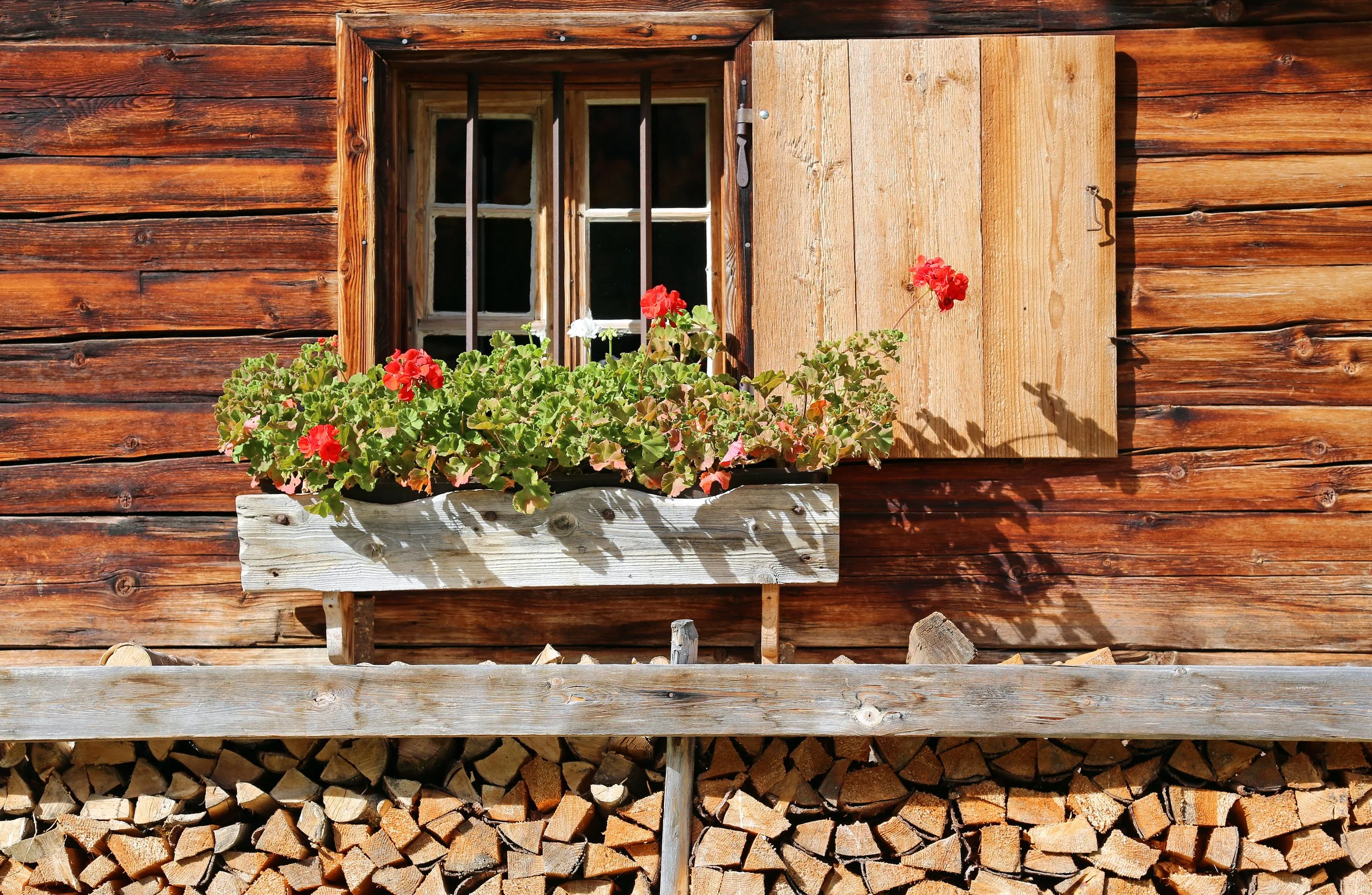
This almost felt like 6 holidays in one owing to the contrasts we experienced throughout the trip - we had 35°C weather and a visit to an ice cave where it was below freezing; we found Freiburg im Bresigau a vibrant and youthful place contrasted with the strong traditional feeling in the Bavarian Lake District; we had all of city, town, village, river, mountain, lake and forest. Some of the tiny memorable details of being in Germany were the colourful floral window boxes decorating most houses - we saw this everywhere - and the pretzels, the freshness and taste of which isn’t well replicated in pretzels you buy in the UK.
The weather is more changeable than you can expect in southern Europe, but it was very hot on at least half of our 12 days, with much opportunity to enjoy outdoor activity as a result and I would say generally hotter than the UK.
Don’t fall into the anglophone assumption that everywhere you go will speak English - they may not, so brush up on some German phrasing to help you through simple activities you know you are going to do regularly.
Would I make another visit?
I would definitely consider another summer holiday in Germany and I have considered a similar touring holiday crisscrossing the French-German-Swiss borders with stops in Freiburg, Colmar/Mulhouse, and Neuchatel. My advice for others would be to choose Freiburg im Breisgau as the base in the Black Forest. This little university city was absolutely buzzing, with delightfully unique little canals running through its streets. It would be an easy location to enjoy both the food and culture of a city and outdoor activities in the surrounding countryside.
FLIGHTS & OTHER TRAVEL MEANS
Fly with Lufthansa from Manchester, into Stuttgart, and out of Munich
We also hired a car for the entirety of this trip (it would be impossible without it) as well as bikes for parts of the trip
ROUTE & STOPS
Fly Manchester into Stuttgart; drive to Heidelberg for a 3 night stay
Drive from Heidelberg to the Black Forest (Triberg) for a 4 night stay; stop off at Baden-Baden along the way
Drive from The Black Forest to the Bavarian Lake District (Lake Chiemsee) for a 5 night stay; stop off at Lindau along the way
Drive from Lake Chiemsee to Munich; fly Munich to Manchester
ACCOMMODATION
Heidelberg
Hotel Chester on the outskirts of Heidelberg.
While the hotel itself was lovely, and we couldn’t complain about anything really - it was modern, clean, quiet, with good service and a very good breakfast - it was too far out to make the most of the 2.5 days we had in Heidelberg. This was a lesson learnt for me.
Black Forest
Inselklause in Triberg.
Hotel and service was lovely, but it was the wrong choice of location for us - it wasn’t central to anything we wanted to visit so everything became quite a drive away.
Lake Chiemsee
Hotel Bonnschloessl in Bernau am Chiemsee.
Traditional and classic - nothing to write home about for us, but clean, tidy and friendly.
SCHEDULE
Heidelberg - Day 1 to 4
Visited Schwetzingen Palace (Schloss Schwetzingen) on the outskirts of Heidelberg. Glorious. The gardens in particular make an ideal place for a summer wander
Walked the Philosophenweg (Philosophers Way) on the western banks of the River Necker and accessible starting from the city centre. It is a nice physical challenge and offers excellent views of the city as well as interesting sites like the Heidelberg Thingstatte which is a Nazi-built open-air amphitheatre where thousands of people could gather for propaganda presentations. Eerie.
Visited the Technik Museum Speyer - an automotive and aviation museum on the outskirts of Heidelberg
Lunched at Strohauers Cafe in central Heidelberg. Classic and authentic with an outdoor seating area perfect for people-watching.
Had top-class coffee and cake at Bäckerei Utz on our day trip out to Schloss Schwetzingen.
Drive between Heidelberg & Black Forest - Day 4
About 180km, 2hr 15 mins driving
On our way through to the Black Forest, we stopped at Baden-Baden, a glorious little spa town at the start of the Black Forest for a little coffee and a peruse around this pretty affluent town.
Black Forest - Day 4 to 8
Walked the route alongside and over the Triberg Waterfalls - the highest in Germany
Had Black Forest Gateau at Cafe Schaefer in Triberg
The hotel we were staying in, Inselklause, also had a lovely restaurant and a river running just behind it meaning some of the dishes included caught-that-day river trout from their own back yard. Really good
Had absolutely gorgeous chocolate and baking confections at Gmeiner on our day trip out to Freiburg im Breisgau
Took a day trip out to Freiburg im Breisgau - a highlight of our trip. The city is funky, outdoorsy and with the most unusual little miniature canal system running through its streets. We actually parked at the top of the mountain outside Freiburg to take a trip on the Schauinslandbahn - a cable car connecting an upper station near the summit of the Schauinsland mountain with a lower station in the municipality of Horben, near the city of Freiburg im Breisgau. Then it was a short and simple tram ride from the lower station into the city and it was worth it for the peaceful views of the Black Forest as we made the descent
Drive between Black Forest & Bavarian Lake District - Day 8
About 420km, 4hr 45 mins driving
On our way through to Lake Chiemsee and to break up the long 5 hour drive, we stopped at Lindau on the banks of Lake Constance (Bodensee in German) and wow - this little lakeside town is just gorgeous - all little streets, pastel-coloured buildings, floral window boxes and loads of outdoor cafes and cobbled squares. It is actually a teeny island in the lake itself, reached by crossing a small bridge and it is definitely worth a stop here. Especially lovely are the food establishments that face out onto the lake itself.
Lake Chiemsee - Day 8 to 12
Dined at Schlosswirtschaft at Wildenwart. A lovely, traditional countryside restaurant near Chiemsee - authentic German food in a gorgeous rural setting.
Had delicious pretzels from Cafe Obermaier in Bernau
E-biked all around the Lake Chiemsee. A full-day 58km loop with scenic stops - a great way to explore the area.
Day trip out to Eisriesenwelt Ice Caves (Austria). I can’t do justice to just how otherworldly and spectacular these are, and it’s an uncanny experience to be in 25°C on the outside, dropping almost immediately to below freezing once you enter, even in July. Once inside, its a rather spellbinding vision of nature’s own ‘ice sculpture’ with huge mystical caverns of icicles, ice falls and ice shelves
Herrenchiemsee. Took the ferry to the island to visit King Ludwig’s residence - regal, whimsical, and beautifully set on the lake.
Took a day trip out to The Eagles Nest (Kehlsteinhaus in German) in Berchtesgaden. This site was a symbol of power of the Nazi regime; decisions were made at the Eagle’s Nest and I believe it was a retreat option for Nazi leadership where they could hole up as it was very hard to access. The building stands perched over a sheer rock wall and to facilitate construction, a road was cut into the mountain through previously impassable terrain. We really enjoyed the visit, and there is a challenging scramble around the mountain at the top. We felt the controversial historical significance was handled humbly and with due remorse and chagrin for what it represents. To quote their website:
“Today however it still offers a magnificent and unique view of the surrounding countryside and also the opportunity to remember and learn about the inhuman dictatorship it served.”
FOOD AND DRINK - SPECIALITIES & CUSTOMS
I would sum up the best of German food culture as Cakes, Bakes and Beer. It is no lie to say that we had pretzels every single day of our trip, and I don’t think we had a bad one. They are sold in every bakery, in every town and village, and I have never tasted any better. Cakes generally were also some of the best I have ever had - easily rivalling more famous baking destinations like Paris or Copenhagen. Beer choices and quality were also superlative. These are the tastes of Germany for us, and it is well worth going to experience them.
Generally speaking, while we had good food during our trip, hot meals served for lunch or dinner tended towards hearty traditional grub made up of a potato option, some meat, and a sauce. Not necessarily the wildest or most inspiring of options, but tasty, filling and comforting nonetheless
Lessons Learnt for me
Prioritise location when choosing accommodation. On this trip, staying too far from the places we wanted to visit meant spending excessive time driving each day. I’ve realised that for city breaks especially, being within walking distance of the centre adds huge value — it allows for spontaneous outings, easy access to meals, and a more relaxed, immersive experience.
Touring with stops of 3–5 nights work well for an active pace; going longer or adding more stops can feel too hectic. Next time, I’ll plan fewer moves and choose accommodation that allows us to stay put for a few days — ideally within walking distance of key sights or no more than a 20-minute drive. That way, we can park the car and enjoy a more relaxed rhythm, with time to explore spontaneously and soak up the local atmosphere.
Other July itineraries
Central Cornwall - an active mid-week stay in Spring
Itinerary journal of my springtime holiday in Cornwall. Where we ate, what we saw and how we enjoyed biking around the countryside.
Itinerary At A Glance
4 day independent itinerary for Central-Eastern Cornwall, based on driving from Leeds, in April
Highlights include Charlestown, Tintagel castle, dinner at Rick Stein’s, biking the Camel Trail and of course, eating famous Cornish treats like the pasty and cream tea
Based on a couple travelling, with a focus on leisurely outdoor and cultural activities, interspersed with time to just relax and soak up the atmosphere
Honest verdict
Does the place live up to expectations?
The only reason I booked this was that the pandemic forced me to consider staycation options. I myself have never paid attention to Cornwall, resistant mainly because it felt like too ‘obvious’ a choice, and since novel and unfamiliar cultural experiences is one of the main reasons I enjoy travel, holidaying on UK soil is usually very low down the list of options. Needs must in this case. Research turned up interesting historical sites, strong food culture and a countryside ideal for exploration by bike which is all the typical hallmarks of a destination we enjoy, so I booked.
Despite this, I still felt a bit bratty about it before we went; like I was being punished and not being allowed to travel abroad so this was like a version of being grounded…………..but having been and come back, I have completely amended my viewpoint.
Cornwall is not famous for nothing! I think its reputation a holiday destination is well-deserved - the countryside is attractive, there is plenty to see and do wherever you are in the peninsula and the food is great. I found the North Coast less attractive than the South Coast. It also felt like an island to me when we were there; the sea is almost always in view, which adds to the illusion of being ‘away’.
Turns out, staying in the UK can be just as enjoyable a holiday as going abroad, especially if the purpose is to just relax and enjoy some simple pleasures.
Did the itinerary work for the trip?
Cornwall is a very very long way from Yorkshire, so travelling such a distance means a weekend is really out of the question.
4 nights felt spot on for us - this was my Mum’s suggestion and one I will use again - 7 full nights would probably feel like too much for us in the UK.
She also recommended we stay Monday to Friday which was genius; you get the weekend before and after which both gives you time to organise yourself and also sort of ‘elongates’ the holiday into still feeling like a full week off work.
Side bonus is that Mon-Thu rates are oftentimes a touch cheaper than the weekends.
We had a mixture of activity, culture and history; and there wasy plenty more to do besides where we got to.
Would I make another visit?
In short, despite my reservations, I would, and probably will, go back.
WHEN
April
Very end of Spring
LIGHT & WEATHER
Long days, likely warm (not hot)
Sunrise: 06:56am to 05:57am
Sunset: 19:52pm to 20:38pm
14-15 hours of daylight
TRAVEL MEANS
Car & Bike
Driving from Yorkshire to Cornwall, with an overnight rest-stop in Bristol on the way down. About 6.5 hours each way.
Bike for activities whilst there.
ACCOMMODATION
We stayed in this Airbnb
This place was marvellous - very rurally located, luxury and modern, extremely well suited for a couple, with a fabulous little Japanese-style deep-seated bath and outdoor barbeque. Highly highly recommended.
SCHEDULE
DAY 1
Drive to Bristol; overnight in a Travelodge
DAY 2
Drive from Bristol, settle in
Biked The Camel Trail: a disused railway line that has been converted into an easy, mostly flat, bike trail
Cream tea at Tim’s Place in Wadebridge: very enjoyable and very attentive service (particularly for a cafe - felt more like proper restaurant waitress service)
Dined on the outdoor roof terrace at Rick Stein’s The Seafood Restaurant - this was when outdoor eating was the only option and admittedly, it was a bit too chilly to really fully enjoy it but we were so thrilled just to be in a restaurant, we still had a good time. Food, service and setting were all lovely.
DAY 3
Biked from Charlestown to The Lost Gardens of Heligan along Route 3 of the National Cycle Network - about 1hr each way. Enjoyed a leisurely afternoon wandering the ground and gardens before returning to Charlestown
DAY 4
Visited English Heritage site, Tintagel Castle. It is deservedly famous this place - a very large and imposing ruin of a castle perched on the north coast and spread over a large area. We spent a good few hours walking around imagining what it would have been like hundreds and hundreds of years ago. Recommended, especially as an off-weather day (which we had) - the blustery overcast and changeable weather just added to the atmosphere.
DAY 5
Had breakfast at St Kew Farmshop: this was KNOCKOUT!! Its a place for locals, so well off the tourist trail and you need a car to reach it, but it is worth it. Cafe and Farmshop combined, we had a delicious and healthy breakfast of pimped-up mushrooms on toast and a sausage-cheese English Muffin, and purchased local beef steak and asparagus for a barbecue at our accommodation later in the stay. They also have a lovely outdoor seating area looking over a small garden. Highly highly recommended
Wandered around Fowey (pronounced ‘foy’): a delightful little town on the south coast filled with independent shops and outlets. Just meandered the steep and narrow streets, drank coffee, soaked up the vibe, perused the little shops and admired the street art. If I was to recommend a place to stay in Cornwall, this would be it - the nicest town we visited on our stay
Ate freshly baked Cornish pasties from both Malcolm Barnecutts in Wadebridge, and Sarah’s Pasty Shop in Looe - both excellent. Controversially, the Cheese & Onion was my favourite
DAY 6
Drive home
Ideas for another visit
-
Stay in Falmouth for a bit of an arty ‘city break’
Stay in Penzance for close proximity to Lands End and access to the Scilly Isles - itinerary here
-
Stay in this converted Engine House for a uniquely Cornish accommodation
-
Visit the Museum of Global Communications in Porthcurno - apparently, in 1870, the first international telegraph cable was brought ashore at Porthcurno, connecting Britain to India and later other parts of the British Empire. By the start of World War II, Porthcurno was a critical hub for allied communications with 14 cables coming ashore, carrying some 70% of all communications. Looks fascinating
Book in to see a performance at The Minack Theatre - an open air theatre on the cliffside overlooking the sea
Visit Tremenheere Sculpture Gardens near Penzance
Go to The Eden Project - on everyone’s list really, but unfortunately closed when we visited
-
Visit Nancarrow Farm for one of their famed Feasts or Sunday Lunch with home-reared organic meat
Summer Sewing projects for a UK staycation
Warsaw - an off-season city break
My plan for 3 wintry nights in Warsaw.
Itinerary At A Glance
3 night independent itinerary for Warsaw in central Poland
Based on flying in and out of Warsaw from Leeds with a hop in Amsterdam.
Highlights include touring the city in a Communist-era Fiat 126p, experiencing the annual Royal Garden of Light exhibition at the ‘Polish Versailles’ Wilanow Palace, enjoying Warsaw’s new and revived baking culture, and some cross-country skiing in one of the parks outside of Warsaw.
Based on a couple travelling, with a focus on leisurely cultural activities and active pursuits, interspersed with time to just relax and soak up the atmosphere
Why here?
Warsaw came onto my radar through a mix of unexpected recommendations. Paul Hollywood mentioned it in one of his baking books as a great spot for baked goods — oddly specific, but it stuck. Then I read a Telegraph piece about Warsaw’s emerging food scene, and Lonely Planet flagged Białowieża Forest as a winter destination, with Warsaw as the nearest airport. Add Poland’s reputation for good value, and the idea started to take shape.
I did some digging and found plenty to justify a city break: interesting eateries in a cuisine I barely knew, museums and tours covering Poland’s layered history - from royalty to Communism to Judaism - plus a modern cultural scene, all at reasonable prices. It’s also less obvious than Kraków for British travellers, which made it feel like a more original choice.
Annual Royal Garden of Light exhibition at Royal Palace at Wilanów
WHEN
January
January is, on average, the coldest month with harshly cold weather and the highest likelihood for snow, so I have made the itinerary with this in mind, focusing on indoor activities and those which can be done come rain, snow or shine.
This is an unusual time to visit but will see the city at its winteriest, see the Royal Garden of Light in the winter dark and better experience the warming effects of Polish vodka.
TRAVEL MEANS
KLM, from Leeds Bradford to Warsaw, changing in Amsterdam
ACCOMMODATION
H15 Boutique Hotel, in the Suite or Prestige Suite - this kind of quality is usually outside of my budget but not in Poland!
Smack-bang in Warsaw’s Old Town, a beautiful and very highly recommended duplex in a Gothic building
Petite and perfectly-formed little apartment for 2
Luxe and highly-modern apartment in the business district
SCHEDULE
Polin Museum
Day 1
Try to arrive in the morning
Visit the Polin Museum - documents the history of Polish Jews
Do a food tour with Warsaw Behind the Scenes - travelling in a vintage minibus
Day 2
Attend a cookery class with Polish Your Cooking - The classes take place every Wednesday and Saturday at 10.30 am and every Friday at 6.00 pm
Get to know more about the history of Warsaw and what it was like under the communist regime with a self-drive tour in a Communist-era Fiat 126p (being an all-round car enthusiast, my boyfriend would love this) with WPT1313 Tours
Have dinner at Hala Koszyki Market - Located in an Art Nouveau market hall, it combines a day food market, a night street food market, a and event space all under one roof. Supposedly a hit with locals and is open every weekend from 8am until 1am.
See some live music at the bar underneath the National Opera of Poland’s Grand Theatre
A winter dawn view from the Vistula River
Day 3
Try cross-country skiing in Powsin Park. You can rent equipment in many places. Read more here.
Visit the Royal Palace at Wilanów, in particular, to see the Royal Garden of Lights at night
Book a table for dinner at Rozbrat20, as recommended by the Michelin Travel Guide
Day 4
For breakfast, get real bread from Piwonski Bakery at the Restaurant Femina , Al. Jana Pawła II 38 (Opening hours Mon - Fri: 7.00 - 20.00, Sat: 7.30-15.00)
Wander around Śródmieście - both Old and New Town
Leave in the afternoon
ABOUT WARSAW’S NEIGHBOURHOODS
Warsaw is a rough oval, bissected north-to-south by the Vistula river. The main neighbourhoods are as follows:
Śródmieście - beside the Vistula River, the heart and centre, both Old and New Town. The most central district in Warsaw, Śródmieście is the financial, commercial and cultural centre of the city and boasts the tallest buildings, the most important museums, galleries, restaurants, and theatres. On the west bank of the river runs the Vistulan Boulevard, a contemporary promenade dotted with waterside bars and cafes - not to be missed for a stroll and a bite to eat as you people-watch
Wola - highly urbanized commercial area with lots of skyscrapers. It used to be an industrial district and today is where many multinational corporations have decided to base their offices - as such, many residential buildings have popped up alongside in the form of modern flats. Highly accessible place to stay as an alternative to Śródmieście
Mokotów, Żoliborz and Ochota - all three of these are green, tranquil, and quite fashionable residential districts in easy reach of the city centre, some of the most desirable places to actually live in the city. Not loads and loads to see for a tourist, but one option is Królikarnia in the Mokotów district - a palace and a park for a stroll (and a picnic or icecream in warm weather)
Praga Północ (Praga North) and Praga Południe (Praga South) - Located on the east bank of the Vistula River, the Praga district is the only location in Warsaw where the buildings have remained untouched by the war. This part of the city still has a very bad reputation among many Varsovians because in the past this was a very dangerous and poor area of the city (its nickname was The Bermuda Triangle). Nowadays, especially on its southern side, this district is becoming the home to its alternative, avantgarde culture, a trendy hotspot in Warsaw, with art galleries, artists’ ateliers, cool restaurants, and pubs. However charming and vibrant, this is still the district with the highest unemployment rate and the poorest population, so at least a little care should be taken.
Wilanów - A district far outside the centre of Warsaw, it is famous for its baroque palace, the Wilanów Palace, which is sometimes referred to as the Polish Versailles. Other than this, it features large, wild, underdeveloped areas which allows for outdoor activities such as biking, golf, and kayaking along the Vistula.
Other Winter Itineraries
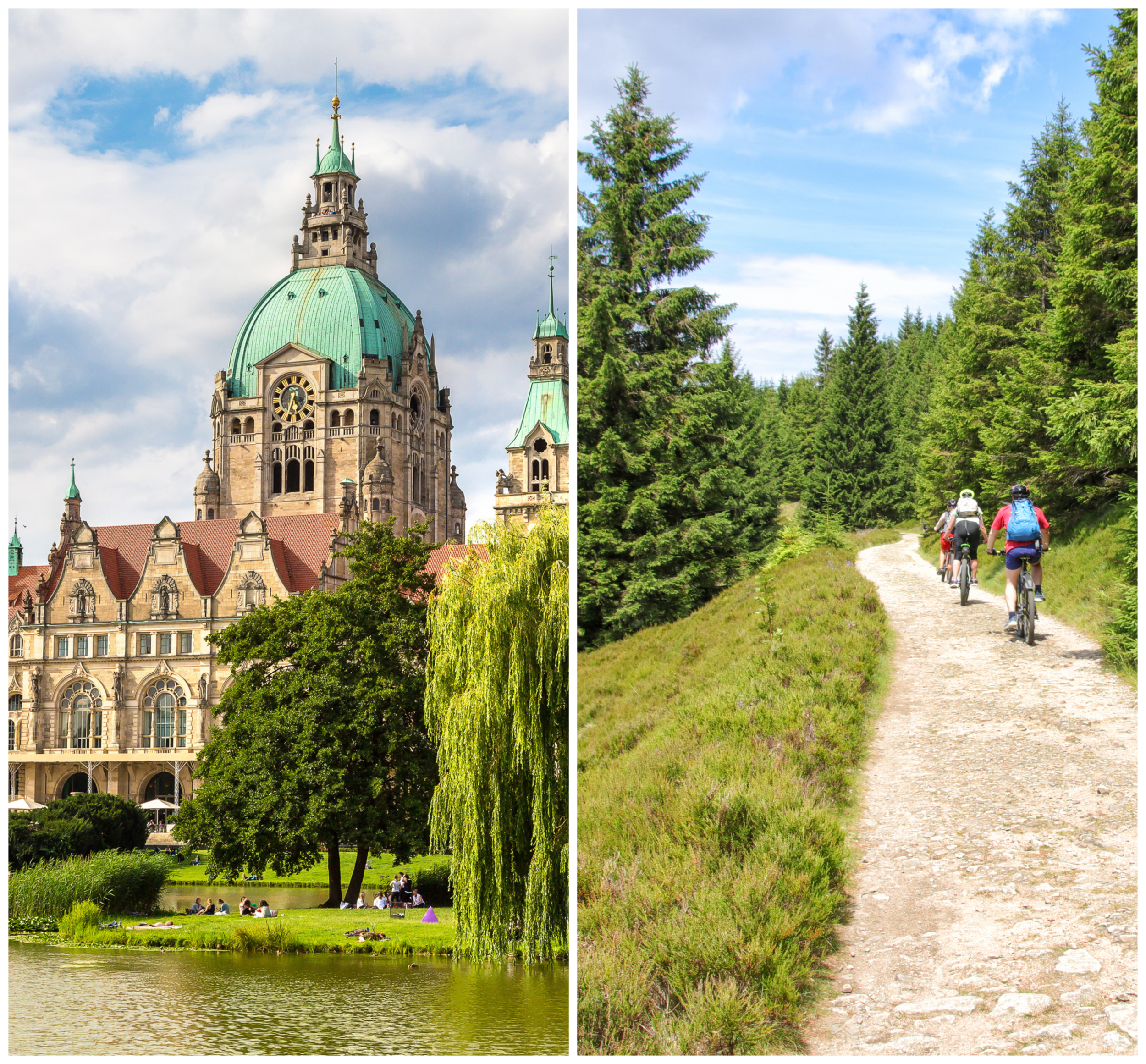
Hanover and The Harz Mountains - a Spring travel plan for mountain biking and city break
Travelling in spring, departing from Leeds, my imagined itinerary for 7 nights of exploring in Lower Saxony.
Why Hanover & The Harz Mountains?
The start of my research into The Harz Mountains was inspired by this article from Culture Trip; I did a bit more digging and found what looks to be a perfect region to explore on a bike.
The main focus of the trip will be the Harz Mountains and I’ve plumbed for one of the most obvious towns as the base - Quedlinburg. This little city is a UNESCO World Heritage site owing to it being the burial site for the first German King, and it was Germany's first capital and an important city during the Middle Ages. Now, it is a well-known tourist destination and is usually the favoured spot for a visit to the region. Looks to be a great base for a bit of biking around the Harz, while also offering up options for historical activities and dining.
Hanover (spelt Hannover in German) is very simply the nearest city and the most obvious airport - so I decided to make it a part of the itinerary. Much of their visitor marketing is geared towards the city as a business destination but reading between the lines, I found more than enough history, culture and uniquely Hanoverian experiences for us to enjoy a few days getting to know this city. The Aldstadt (German for ‘Old Town’) is full of those gorgeous half-timbered structures and it is home to the Eilenriede, Europe's largest municipal forest. It is very bike friendly, both in the city and its surrounds, with hundreds of kilometres of signposted routes and city bike lanes. Its reputation as a business hub also makes it incredibly easily logistics-wise, so superb for the independent traveller. Most unique of all is that the city has an international firework competition each year………weird, and cool. In short, many many reasons for a visit.
I have visited Germany once before - Bavaria and Baden-Wuttemburg - and ever since, I’ve been telling anyone who will listen that the best baked goods are in Germany - not in France, not in Italy - Germany. So add superb cake and daily pretzels to the list of attractions.
Itinerary At A Glance
7 day independent itinerary; 4 nights in Quedlinburg, then 3 nights in Hanover, travelling in Spring - April, May or June.
Based on flying in and out of Hanover from Leeds with a hop in Amsterdam.
Highlights include a two-wheeled day trip to Marienburg Castle, international firework competition displays, enjoying modern German fine dining in a 2-star Michelin restaurant, understanding more of Germany’s medieval history, and biking around the Harz Mountains.
Based on a couple travelling, with a focus on leisurely cultural activities and biking, interspersed with time to just relax and soak up the atmosphere.
WHEN
Spring - April or May
The weather is very similar to the UK so highly unpredictable, though I’m of the opinion that Spring is the absolute best time to visit Northern Europe. That being said, I’ll still expect a variety of warm, cool, wet and generally changeable weather for this trip.
TRAVEL MEANS
KLM, from Leeds into Hanover, with a 2hr change in Amsterdam
I will also hire a car for the entirety of the trip, and a mountain bike for the stay in the Harz Mountains
Note the following:
the city centre is an environmental zone - access is only permitted for cars with a green sticker
there are over 360 kilometres of cycle paths alongside the city’s roads and 170 kilometres of cycle paths through Hannover's green spaces
you can take your bike on the tram or S-Bahn (Stadtbahn), sometimes at no extra charge
ACCOMMODATION
Quedlinburg (in order of preference):
This delightful little Airbnb feels very inkeeping with the town and its vibe
Similarly adorable is this little 2 bed apartment
Hanover (in order of preference):
GORGEOUS and atmospherically designed apartment smack bang in the centre
A very funky and modern design hotel, Me and All - I’d go superior double for the extra space and the view
Arthotel ANA Prestige - I’d plum for a Junior Suite
Funky and quintessentially German loft apartment right up in the eaves
SCHEDULE
Quedlinburg - Day 1 to 4
Take a guided mountain bike tour in the Solling-Vogler Nature Park & Mountain Biking network
Visit Volksbank Arena Harz mountain bike trail centre with a choice of 74 routes
Visit Bikepark Bodetal
Take any of these off-road routes to take in the scenery around the Bodetal
Eat some traditional German ‘pub-grub’ washed down with German beer at Brauerei Ludde Quedlinburg
Get some coffee and cake at Cafe Zum Roland
Hanover - Day 5 to 7
Visit the Sprengel Museum, to see their collection of 20th century cubist art
Book into a brewery tour at Herrenhauser Brauerei
Attend Velo City Night - at Velo City Night, thousands of cyclists conquer the streets of Hannover, forming a huge collective tour of the city. Similarly, at Skate by Night, around 4,000 inline skaters cruise around the city. Both initiatives are designed to promote alternative travel options and encourage the creation of the infrastructure needed
Attend one of the international firework competition displays at the Herrenhausen Gardens
Day trip to Marienburg Castle - 1 hr 30 m each way on a bike. Perhaps book for one of the guided tours or simply stop in at the restaurant
Hanover has a 2-star Michelin restaurant, Jante. I’d book in here for a treat
Stop by Lindenblatt Burger-Bar. All the ingredients are from the Hannover region, with the steaks coming from ecologically reared animals.
Stadtmauer Hannover - modern restaurant with a view of the Leine river
Have breakfast at Fraulein Schlicht (closed Monday & Tuesday)
ABOUT HANOVER’S NEIGHBOURHOODS
Aldstadt (Old Town) - the central historic hub. This is where all the major sites can be found and the half-timbered architecture
List - the cultured and refined residential district. To the northeast of the Aldstadt, it is just north of the Eilenreide Forest also, so very well located for both culture and the urban outdoors
Calenburger Neustadt - the student district. Bound on all sides by water - River Leine to the east and north, River Ihme to the west
Südstadt - the up-and-coming district for young professionals. This neighbourhood is quiet, residential and is considered a bit of a haven for outdoor activity (with both the Eilenreide and Machensee Lake in close proximity) and is home to a lot of design-focused modern boutiques and a variety of modern restaurants. It is also home to the Sprengel Art Gallery.
Linden - the edgy, funky alternative district. It only became part of Hanover in 1920 and often considers itself having a separate identity
FOOD AND DRINK - SPECIALITIES & CUSTOMS
In Lower Saxony (German: Niedersachsen), the cuisine is features many of the ingredients common to Northern Europe - buckwheat, apples, butter, potatoes, cherries, pears, plums, asparagus, cabbage, dill, beer and rye. Some of the more unusual specialities include:
Apple Soup made from cooked apples and raisins and seasoned with a generous helping of cinnamon and vanilla
During the spring season, asparagus served with schnitzel, potatoes and brown butter
Welf Pudding is a traditional dessert from Hanover, which is a two-layer posset-like concoction made from egg, milk, vanilla, sugar, cornstarch, dry white wine and lemon
Pinkel is Lower Saxony's national sausage
Sour milk cheeses such as Harzer, Gelbkäse and Bauernhandkäse
They also love Arme Ritter (French Toast) and Buckwheat pancakes
Other 7-10 night Itineraries
Turin and Monferrato, Piedmont - a twin-centre autumnal trip
An autumn itinerary with Arbarth factory tours, martinis, and day rides in the Monferrato hills.
Itinerary At A Glance
Twin-centre independent itinerary for Piedmont; 3 nights in Turin, 7 nights in the Monferrato Hills in Alessandria province.
Based on travelling in late summer or early autumn, flying in and out of Milan from Leeds with a hop in Amsterdam.
Highlights include a tour of the Abarth Factory, a cocktail experience at the home of Martini, indulging in the famed white truffle, staying in a high-spec design accommodation, day bike tours around the rolling green hills of the Monferrato, and an exciting gourmet experience at one of the regions many Michelin-starred restaurants.
Based on a couple travelling, with a focus on leisurely cultural activities and biking, interspersed with time to just relax and soak up the atmosphere.
Why here?
Piedmont (Piemonte in Italian) is in the north-western corner of Italy and both the Italian and French name for the region roughly translates as ‘foot of the mountain’ which is very apt, as the region’s physical background and border along its western edge, is the Alps.
Piedmont is known for its lakes, hills, rivers and its food: white truffle, gianduja, Gavi, Barolo, and Asti. It’s also well set up for independent cycling, with mapped routes for everything from road touring to proper downhill trail centres.
This itinerary started with a visit to the Fiat Lingotto Factory and the Abarth Works Museum in Turin (my boyfriend’s a serious petrolhead). Turin itself has a reputation for royalty, industry, and grand café culture. It was the first capital of unified Italy, home to the kings of Savoy, Fiat, and Juventus. We’re expecting a quietly confident city with boulevards, motorsport, and a splash of Martini — vermouth was invented here.
Rather than heading to the lakes, we’re staying rural in the Monferrato Hills near Casale Monferrato. The accommodation felt fresher, better value, and less over-touristed. This part of the trip is for relaxing and cycling through vineyard country.
WHEN
Early Autumn - either September or October.
A little unexpectedly, October is actually high season in the Monferrato-Langhe due to the harvest and the importance of gastrotourism to this area.
It is a relatively wet place all year round so I’ll be expecting mixed weather. Averages indicate that it is at its driest in the Winter.
TRAVEL MEANS
Flights into Turin are possible, though I found them much more expensive than flights into Milan, which is just a 2hr drive from Turin. Flight options are either of the below:
KLM, from Leeds into Milan, with a 2hr change in Amsterdam
Easyjet, from Manchester direct into Milan
I will hire a car for the entirety of the trip, and a bike for the second part of the trip in the Monferrato Hills
ACCOMMODATION
Turin
I found lots and lots of ‘oldy worldy’ accommodation in Turin, which isn’t really my bag, but something else I noticed in abundant availability were modern conversions of big old industrial spaces. These would be my pick in priority order:
Edit Lofts - this is a former Fiat factory made into funky loft apartments. They also have a restaurant on site recommended by the Michelin Green Travel Guide. Only downside is that it is a 40 minute walk from the centre
Funky loft space smack-bang in the centre
Modern, minimalist and space-maximising design loft a little outside of the historical centre
Monferrato Hills in Alessandria/Asti province
I found many many beautiful places to stay in this whole region, but once I found this Glass House in Terruggia, about 6km from the small historical river city of Casale Monferrato, I knew we had to stay here. The rest of my trip is designed around staying here
SCHEDULE
Turin - Day 1 to 3
Take a guided tour of the Abarth Factory Workshop
Visit the FCA Heritage Hub which opens soon in the Fiat Mirafiori industrial complex, with an exhibition of Fiat, Abarth, Lancia and Alfa Romeo
Go have a look around La Venaria Reale, one of Turin’s famous Savoy residences and one that stood out to me
Visit Castello di Rivoli contemporary art museum
Have coffee and cake at Caffe Mulassano - a grand and traditional cafe
Do as the locals do, with a pre-dinner aperitif and snack at La Drogheria in Piazza Vittorio square.
I’d book into any one of these restaurant recommendations from the Michelin Green Travel Guide
Take an an aperitivo ‘crawl’ in San Salvario - Enò | Via Galliari, 1, Affine | Via Belfiore, 16, Gorilla | Via Galliari, 20, Crumb | Piazza Madama Cristina, 2, Eria San Salvario | Via S. Pio V, 11, La Cuite | Via Baretti, 11
Take a 40 min drive outside the centre to get to know more about vermouth and Martini on this Ultimate Martini Experience at Casa Martini, the historical home of the well-known alcohol producer
Day 4 - driving between Turin & Casale Monferrato
About 75-100km (depending on the route), 1 hr 15 mins driving
Monferrato hills in Alessandria/Asti province - Day 4 to 10
The majority of our time will be spent on the bike, and the following routes and destinations strike my fancy:
Take this circular route from Casale Monferrato to Valenza, the famed City of Gold, which boasts the highest concentration of gold and artisan jewellery businesses in the country - I think we’ll pay a visit to the Museo del Gioello (jewellery museum) while we’re there too (65km route - an all day excursion. Start point is 25 min bike ride from Terruggia)
Take this route or this route for a tour around the Infernot Hills and a stop in Treville for a view of the Alps. (25km route - about 2-3 hours. Start point is 25 min bike ride from Terruggia)
Take this short multi-looping route in and around San Salvatore Monferrato (25km route - about 2-3 hours. Start point is 1 hour bike ride from Terruggia)
Cycle this loop in the lands of San Giovanni Bosco (62km route - an all day excursion)
Drive or bike out to Asti (4 hr bike ride round trip from Terruggia) just for a little wander around the city and a sip of the famous sparkling wine Asti Spumante
Cycle out to the walled medieval miniature city of Moncalvo (2.5 hr round trip from Terruggia) to walk the ramparts, visit the Marc Chagall paintings held in the Civic Museum of Moncalvo and have dinner at sunset
Drive or bike out to Montegrosso d’Asti (4-5 hour round trip from Terruggia)
For a wide variety of cycle routes across the whole of Piedmont that can be downloaded as GPX files, I found PiemontEscape to be superb
Book for dinner at Il Cavallo Scosso in Asti - a young and modern restaurant as recommended by the Michelin Green Guide
Faletto 1881 - a modern restaurant in a farmhouse-come-hotel-and-venue just outside of Casale Monferrato
Accademia Ristorante in Casale Monferrato - local and seasonal Piemontese cuisine, as recommended by the Michelin Green Guide
FOOD AND DRINK - SPECIALITIES & CUSTOMS
Piedmont is extraordinarily rich in food and drink both grown and invented here:
drinks wise, there is Barolo and Gavi wine, bicerin (a coffee mixed with cream), and vermouth.
pasta-wise, there is agnolotti, plin and tajerin.
cheese-wise, there is stracchino (creamy, soft white cheese), toma (a light, semi-hard cow’s milk cheese), robiola (delicate and sweet, often preserved in oil), raschera (made with a combination of cow, goat and sheep’s milk coming from the high pastures of the Monferrato).
other food items include gianduja (chocolate-hazelnut spread), truffles (most famous ones come from Alba), bagna cauda, bonèt pudding, baci di dama, Savoy biscuits, grissini breadsticks and panna cotta.
Traditionally, aperitivo is meant to whet the appetite before dinner and is accompanied by a variety of appetizers (stuzzichini) such as cold cuts, cheeses, salads, olives, bite-sized pizzas and other savouries. However, such is the popularity of this time honoured tradition, a new concept of apericena has been introduced in recent years that closes the gap between aperitivo and dinner and acts as a less formal alternative to eating out in a restaurant. Now, sumptuous buffet tables in bars and cafes all over Turin groan with a mix of the traditional bites plus pasta and rice dishes, grilled and freshly chopped vegetables, couscous and quinoa salads, cakes and more. The buffets usually start at around 7pm and can go on until 9pm/10pm
Tastes of Italy
Tallinn, Estonia - a long wintry break
My journal and itinerary of a winter city break in the Baltics, departing from Manchester. Where we ate, what we saw and how we enjoyed the young-meets-old cosy capital of Estonia.
Itinerary at a glance
5 day itinerary for Tallinn, based on flying in and out of Manchester, in November or December
Highlights include outdoor animal spotting in the snow-covered forest, strolling around Tallinn’s historic locations, eating very very well in Tallinn’s modern restaurants and cafes, and sauna lounging at the apartment.
Based on a couple travelling, with a focus on leisurely outdoor and cultural activities, interspersed with time to just relax and soak up the atmosphere
Honest verdict
Does the place live up to expectations?
I’m not at all sure Estonia has any expectations.
What we found was a city that is both highly modern, youthful and vibrant, as well as ancient. There was a calm confidence and a future-looking atmosphere to the whole place yet with an honour and respect for the past, which includes medieval architecture, strong maritime and seafaring industry, and Soviet occupation.
The food, the vibe, even the harsh harsh weather all made for a unique and memorable city break for us. Since we have come home, we have regularly reminisced about the food spots and the sauna in the apartment. I imagine many future city breaks, especially winter ones, will be compared with this one. An ideal and original spot for a couple’s winter city break.
Did the itinerary work for the trip?
The city itself is quite small, absolutely perfect to feel like we really ‘did’ it in a long weekend and could access virtually everywhere on foot. This city also does winter very very well. Cold and dark, yes, but cosy with it. Open fires, twinkling lights and basement locales make for welcoming, easeful and intimate places to cuddle up with hot drinks and excellent food.
Stayed for one day too long – 3 full days, 4 nights would have been enough to get a good flavour of the city for the first time. Staying one mile from the city centre in Kalamaja is perfect.
Would I make another visit?
We’d like to return in summer as I’m sure the city has an entirely different vibe.
WHEN
Late November, early December
We had freezing cold, short days, frequently -10C. Fairly strong, biting winds.
TRAVEL MEANS
Lufthansa, from Manchester, changing in Frankfurt
Even though we had to change, the flight times were so good that the journey didn’t end up feeling all that arduous. The airport in Tallinn is very close to the city centre and we took a very easy train ride there and back. Note that changing in Frankfurt is also a breeze - genuinely my favourite airport in Europe to transit through.
Throughout the city, we relied on walking and a little of the tram.
ACCOMMODATION
We stayed in this Airbnb, entitled ‘ARTDEPOO in Kalamaja’
This place was incredible - perfectly located on the edge of town in a trendy area, luxury and modern, extremely well suited for a couple, and with its’ own sauna and fireplace, both of which were extremely welcome for a winter trip. Highly highly recommended.
SCHEDULE
Day 1
Travel, settle in
Day 2
Full day Moose-watching tour with Eleri Lopp-Valdma, info@estonianwildlifetours.com. This was essentially the highlight of our trip - not the reason we went to Estonia, but one of the best memories from our stay. Eleri is an experienced wildlife guide and tracker, collected us (very early in the morning!) from our apartment in Tallinn and took us out to the woods outside the city to track moose. We didn't end up seeing any, but the day was still superb (this activity was booked in advance).
Day 3
Explore Tallinn Old Town
Dinner at Uulits - about 5 minutes’ walk from the flat. Burgers are their thing and hands down the best burgers we have ever had. Perhaps most innovative was that the chips were served first as a starter.
Day 4
Wander around Telliskivi, a restored industrial quarter now filled with independent shops and outlets. Just drank coffee, soaked up the vibe, perused the little shops and admired the street art.
Coffee and cake at Faehlmanni Kohvik in Kadriog, on the other side of town. This was in a lovely residential district and we just stumbled onto it and this felt like a properly authentic Estonian experience, far from the usual tourist trail. The place was abuzz with friend groups of all ages and the cake and service were excellent.
Dinner at Ülo - about 10 minutes’ walk from the flat. This place described itself as a ‘vegetarian restaurant that offers some meat options’......this was confusing at first.............but as it turns out, it’s the most genius idea! Mostly plants, but a smattering of meat which essentially turns the traditional idea of restaurant dining upside down by prioritising veg, and I think it’s the future. It was also absolutely delicious.
Day 5
Coffee and cake at Café Levier, and oooooohhh my. Seriously good cakes, bakes and patisserie to rival what you would expect in a high-end patisserie in Paris, but with a fabulous Nordic theme – it’s on Vana-Kalamaja 21 round the corner from the flat.
Seaplane Harbour Lennusadam, a very new and modern museum about Tallinn’s maritime history. My boyfriend was in heaven.
Dinner at Balti Jaama Turg - a market which is very close to the station and about 10 mins walk from the flat. It’s one of those restored market halls where they have introduced funky and new concepts like street food vendors and pop-up events, really good.
NEIGHBOURHOODS AND WHERE TO WANDER
Vanalinn (Estonian for "Old Town") – the historic centre
One of Tallinn’s main claims to fame is that it is one of the best preserved medieval cities in all of Europe. The buildings, streets and outer walls transport you to a fairytale past, and hidden walkways, crooked and historic houses, small alleys, courtyards, and winding side streets all make for a lovely meandering exploration.
My impression was that alongside the evident history, Vanalinn felt achingly cool and independent.
Sit down for something to eat, away from the main streets and squares. The city is small enough that you should not fear getting lost at all, so seek out the smaller streets away from the very main ones that hide many good places for a bite to eat. Estonian’s also do cosy as well as the Danes, and for a winter pitstop, I’m sure you will happen on any number of cafes that welcome you in from the cold with twinkly fairy lights, open fires and warm treats.
Kalamaja – the coolest area with a renovated-industrial vibe
Kalamaja consists of two sides: the industrial heritage left behind by the 20th century which has been repurposed, and quaint wooden housing which used to be for the workers. Today many young families have made this area their home, so walking around Kalamaja gives you a good look at what is some of the most desirable housing in Tallinn.
Our accommodation was here, and it is so well located - about 15 minutes’ walk into the Old Town.
Kadriorg - the greenest and grandest area
In Kadriorg, you will find Peter the Great's gorgeous summer palace, that is now Kadriorg Art Museum, and Kadriorg Palace, with its surrounding park which is the biggest green open space in Tallinn.
The rest of this area is high-end residential. Unless you have a free day to just wander about (as we did), or you specifically want to see the above museum or park, I wouldn’t necessary recommend making a specific detour to this part of town - I just don’t think there is enough here for visitors to make a special trip.
-
Traditional smoke sauna experience with Rangi Saun. Email, tere@estoniansaunas.com (this activity must be booked in advance).
Hotel Viru KGB Spy museum tour – Tallinn was quite the spy hub during the Soviet Era, due to it’s strategic location right next to Russia and also close to Europe.
Free walking tours Show up in front of the Tallinn Tourist Information at Niguliste 2, Tours depart all year round every day at 12:00.
Chocolate-making workshop with Kalev (just outside Old Town in Sadama) Information and registration from Sweets Mastery - rotermann@kalev.eu
Leif have a beer and food pairing menu — including suggestions on what beers to pair with dessert. Uus 31, Tallinn 10111, open Monday – Sunday 12pm to 11pm
Umami (outside of Tallinn city centre in Mustamae) - inside an old house on the edge of a park in the Mustamae district and with its mid-century furniture and local artists’ paintings on the wall, Umami apparently has cool, open, family-friendly vibe which supposedly makes it feel more like you’re going to someone’s for dinner than out to a restaurant.
Other Winter Itineraries
Andalusia by Wheel
Travelling in winter, journal and itinerary of our 7 night stay in Andalusia - starting with a Seville city break followed by biking around Vejer de la Frontera in Cadiz province.
Andalusia by Wheel
Exploring Seville and Vejer by bike and cuisine - off the main tourist track, in the hush of late winter when the crowds crowds fade to a murmur and orange blossom scents the air.
Itinerary At A Glance
7 day independent itinerary for Andalusia, 3 nights in Seville and 4 nights in Vejer de la Frontera
Based on flying from Leeds into Malaga, in March
Highlights include authentic tapas walking tour and live flamenco show in a very small theatre, meandering through the tiny lanes of Seville’s barrios, hiring scooters for an independent scoot around the city, and e-biking around Cadiz province.
Based on a couple travelling, with a focus on leisurely cultural activities and biking, interspersed with time to just relax and soak up the atmosphere
Honest verdict
Does the place live up to expectations?
Yes, yes, yes and yes.
Seville is probably on the hitlist of many a traveller and now that I have been, I’d say it deserves such a coveting. Probably the most architecturally beautiful and sensorially-stimulating city I have ever been to - the buildings were a visual delight, it smelled of orange blossom and it is literally filled with the lingering sounds of flamenco guitar.
We found history and culture aplenty, with marvellous food (as long as you stay away from the tourist spots) and great drink.
Vejer de la Frontera is one of the white hilltop towns (Pueblos Blancos in Spanish) of the Serranía de Ronda region. The most famous of these towns is Ronda, but there are many to choose from and I chose Vejer for it being one of the slightly lesser-known ones while still being one of the more sizeable and visitor-orientated. We found it to be beautiful, welcoming, and an ideal base for e-biking its surrounds. The biggest surprise was how verdant the area around Vejer was; we expected arid and instead was rewarded with scenes not dissimilar to the green and rolling hills of the Yorkshire Dales so it is a surprise that this isn’t a more known cycling destination. It’s an ideal location for being on two wheels. My boyfriend stated that Vejer was the best place we have ever been cycling – and it was absolutely superb. For anyone vaguely interested in cycling while on holiday, leisurely or hardcore, there is much to enjoy hereabouts.
Did the itinerary work for the trip?
Definitely. This city does winter very very well - mild and sunny with blue skies, pleasant but not hot. Don’t make the mistake of thinking you should go in shorts and flip flops - you’ll not only look like a tourist, you’ll also be shivering in the shade.
An ideal spot for a March city break with minimal crowds and beautifully sunny and mild skies; the ideal counterpoint to the cold and grey of Northern England at this time.
3+4 also worked extremely well, with the right amount of time in each location and an opportunity to extend a city break into a week long trip with the second, more countryside location. As a framework, I will look to replicate this again.
Two points of note: Doing two tours in Seville meant the guides repeated similar historical anecdotes and facts – probably best to do just one tour otherwise it can start sounding repetitious. Duplex Asilah wasn’t the ideal type of accom for bikes as it was tiny so we had to ask the reception to store them for us. Not at all the fault of the accom, but rather something I need to consider when booking a place to stay when we need room to store bikes.
Would I make another visit?
Rare is the place that touches me so much that I want to visit again, to get deeper under its skin; Cadiz province is one of those rare places. We had the most fantastic trip from start to finish.
If we went to Seville again, we’d stay in Triana for a slightly more authentic experience, though we felt we got a good flavour of the city in our 2.5 days so I suspect a revisit is a while away.
I very much want to return to Cadiz province to see and experience some more of its loveliness. Sanlúcar de Barrameda, Tarifa, Cádiz, Castellar de la Frontera in the Alcornocales, and Jerez de la Frontera are now on my hitlist.
WHEN
Early March
Shoulder season with mild weather, fewer crowds, orange blossom in Seville
We got blue skies, still winds, sunny. Warm in the sunshine, but you needed coats, long sleeves, socks and covered toes for the cooler mornings, evenings and shade.
LIGHT
Moderate Days
Sunrise: 7:45am to 7:20am
Sunset: 7:10pm to 7:17pm
Approx. 11–12 hours of daylight
TRAVEL MEANS
Direct flight from Leeds into Malaga, with Jet 2
We hired a car for the entirety of our trip, and it would be difficult, (though not impossible) to do without it.
Seville is a 2.5 hour drive from Malaga airport; Vejer is about a 1h 40m drive from Seville, then Malaga airport is about 2h 15m from Vejer.
We hired an e-bike for the entirety of our stay in Vejer from Bicicletas Francisco who also handily provided us with some local maps and biking routes.
ACCOMMODATION
Seville - Suites Murillo Alcazar (in Barrio Santa Cruz)
superb location right next door to the Alcazar
ideally walkable for pretty much everything
comfy bed
plenty of space for two people
felt a teensy bit rundown and the breakfast was ‘meh’.
Vejer de la Frontera - La Casa del Califa in the self-catering Duplex Asilah
a collection of real townhouses that have been brought together to make a hotel
gorgeous location with fab service
an excellent restaurant
lacked any soundproofing so we found it was a bit noisy into the evening and in the early morning.
SCHEDULE
Alcázar entrance
Seville - Day 1 to 4
Day 1
Fly: into Malaga airport (convenient flight schedule, running all year from most UK airports, even regional ones)
Collect hire car
Drive: to Seville, 2h 11m driving, 210km
Check-in, settle in, collect a few groceries
Day 2
Stroll: through Barrio Santa Cruz
Lunch: Torres y Garcia, Calle Harinas, 2, 41001 Sevilla
Very modern and hip café right in central Seville but not a single tourist in it. Surprisingly large, and the food was both healthy and cooked with care.
Tour: Sunset City bike tour with Sevilla Bike Tours
Very authentic tour around the city including the outer neighbourhoods that you would be unlikely to see on a short city break. Sunset felt like a good choice as the Spaniards seem to come alive in the early evening and the streets were buzzing. Excellent and passionate guide too.
Note that Seville is almost pancake flat, so this is easy for anyone to do.
Dinner with Drinks: Taberna Alvaro Peregil, Mateos Gago, 22, 41004 Sevilla
Teensy little tapas bar on a street of restaurants made for tourists. Ignore the rest and go here for a taste of that classic Seville experience. Menu is classic, simple, straightforward and tasty.
Day 3
Lunch: Crustum Panem, Calle Puente y Pellón, 24, 41004 Sevilla.
Properly good bakery selling all manner of authentic baked goods. We had empanadas and bread. Top marks for a lunchtime snack.
Evening: Tapas y Flamenco tour with MIMO.
This was superb and probably the best thing we did during our stay in Seville. We visited a small flamenco school in Triana for an authentic and intimate flamenco 45 minute performance of two dancers, one singer and one guitarist. I have chills even now, months after the trip, just thinking about how the performance made me feel.
This was no tourist thing; this felt like the real deal.
These performers exhibited their craft and training with feeling and passion, and the audience was a mixture of locals and tourists in the know. We were then taken off to 3 tapas establishments in Triana and our knowledgeable guide ordered for us - food and drink. Everything was delicious and we left a bit tipsy and fully full like a full thing on full day. 11 out of 10 for this tour.
Day 4
Tour: Alcazar tour with Feel the City tours.
Good tour of the Alcazar, that filled in the historical detail and importance of the building that we would miss if we just went in solo (which you can do if you want to). The only thing about this is that it was very ‘classically touristy’ and the guide’s script sounded memorised and a bit rote. Good, just not outstanding.
Lunch: Gocho Neo Charcuteria, Calle Puente y Pellón, 19, 41004 Sevilla
Teeny little shop for a fresh ham sandwich, with the jamon sliced right in front of you. We had one with a bag of crisps and it was delish.
Drive to Vejer: 160km, 1h 45m driving
Afternoon: Arrive and settle into accommodation, explore Vejer’s cobbled streets and craft shops.
Views from La Breña y Marismas del Barbate Natural Park
Vejer de la frontera & surrounds - Day 4 to 8
Day 5
Ride: Vejer to Barbate loop, 40km
Combined on-road and off-road circular cycle route, Vejer to Barbate, about 40km round trip. Out to the coast, with a stop for coffee in Barbate, this took in one of the smallest nature parks in Andalusia - the Breña y Marismas del Barbate Nature Park. It contains five different ecosystems: marine, cliff, pine grove, marshland and dunes. Only suitable for off-road bikes.
Dinner: Restaurante El Califa
Restaurant within our hotel and about 6 steps from our door.
This place has quite the reputation, and deservedly so. We ate here on two out of four evenings; the menu selection was superb, the service outstanding, the setting elegant and the food sublime. The best food we ate on the whole trip. You can also book in to eat here even if you aren’t a resident of the hotel.
Day 6
Ride & Lunch: Vejer to Medina-Sidonia, about 70km round trip
Combined on-road and off-road circular cycle route, Vejer to Medina-Sidonia, about 70km round trip which even on an e-bike was a full day journey for the round trip. Medina-Sidonia is another one of the white hilltop towns; the journey to and from it was a beautiful rolling sojourn and the climb into town a punisher. We stopped for lunch in Medina before heading back.
Dinner: El Campero, Avda. de la Constitución local 5C, 11160 Barbate.
Restaurant specialising in the red tuna fished right off shore. The service and the food here was excellent. Most importantly, the waiters were all very knowledgeable and make recommendations about the menu which is useful as many of the tuna cuts and dish descriptions will seem entirely foreign
Day 7
Ride: Vejer to El Palmar de Vejer, about 30km round trip
Combined on-road and off-road circular cycle route, Vejer to El Palmar de Vejer, about 30km round trip. Most leisurely of the three routes
Drinks on the beach: El Palmar
the day was a stunner so we hung out at one of the surfer-type bars that line the beach at El Palmar. The place was absolutely buzzing with all kinds of folk - motorcyclists, families, surfers, groups of friends, groups of families. We had a few bevvies and soaked up the sunshine. Bliss.
Dinner: Restaurante El Califa
Day 8
Drive: to Malaga, 2h 30m driving, 200km
Fly home
Other Twin Centre Itineraries
Morbihan, Brittany - a twin-centre trip with road biking and city break
Travelling in early summer, my plan for 10-11 nights in Nantes and the Gulf of Morbihan. An itinerary for biking, art trails, a bit of Jules Verne, eating crepes, visiting medieval towns and castles, and admiring the sunset in pretty port towns.
Why Brittany?
With it’s own language and gastronomy that is heavily influenced by Celtic culture (indeed Brittany counts as one of the six Celtic nations along with Cornwall, Wales, Isle of Man, Ireland and Scotland), visitors are principally drawn to Brittany’s for coastal views, well-preserved historical towns and sites, food treats like salted caramel and crepes, and its unique cultural tradition that is quite distinct from the rest of France.
Tourism is well-established here with a wealth of online information to inform my independent itinerary. Its definitely a region geared up to receive visitors; many of them British, but also many of them French so it looks to have retained authenticity in its touristic offering. It is also well-serviced with transport options from the UK. This is not necessarily the place to discover that feels like I’m the only one to have done so, but I can take advantage of the expansive tourism infrastructure and online resources to get to some of the lesser-known places and design myself a unique itinerary quite easily.
Across the whole region, there seems to be a number of locales that strike my fancy and meet my brief of culturally rich, a little under the mainstream UK travel radar, and with opportunities for biking - Nantes, Quimper and Bénodet, St Malo, the Cote Eméraude, Noirmoutier-en-Île, Dinan, ruins at Carnac…this looks to be the kind of place that I will need several different holidays to see everything I’d like to see.
For this itinerary, I have settled on a design for southern Brittany, starting with a city break in Nantes, followed up with enjoying the coast in the Gulf of Morbihan, in easy reach of medieval town Vannes.
Nantes is the former “City of Dukes”, and was once the administrative capital of Brittany but is now part of the Pays de la Loire. This city looks to be a beauty - art features heavily, history is everywhere, and it looks to be a classy kind of place that isn’t too big to really see on a city break. There is also industry and an important port, and as per the Copenhagenize Index 2017, was marked as the 16th most “bicycle-friendly” city in the world.
The Gulf of Morbihan is a natural harbour; indeed ‘mor bihan’ in Breton means ‘little sea’. It is scattered with little islands, isles and islets; the mainland is lined with pretty little coastal villages; and being on the west coast, it is a beautiful theatre for incredible sunsets. The whole area looks perfect for exploring on a bike; quiet rural roads, excellent views, and for the historical and cultural hit, several castles and the medieval city of Vannes are within easy distance for day trips on two wheels.
Itinerary At A Glance
10 day independent itinerary for Brittany & the Loire Valley in Northwestern France: 3 nights in Nantes, and 7 nights in the Gulf of Morbihan near Vannes
Based on travelling in summer, flying in and out of Nantes from Leeds with a hop in Amsterdam. Car will also be essential to move between locations
Highlights include getting to know more about Jules Verne, biking around Nantes, taking a brunch tour on the River Erdre, indulging in buttery crepes, hanging out in the vibrant fortified medieval city of Vannes, and e-biking around the craggy coast of the Gulf of Morbihan.
Based on a couple travelling, with a focus on leisurely cultural activities and biking, interspersed with time to just relax and soak up the atmosphere
WHEN
Late June or early July.
Brittany has an extremely pleasant summer from June through to September with mid-20s temperature and fairly low rain during this time also. I will expect changeable weather even in the summer, though typically a few degrees warmer than the UK. The rest of the year is cool (not really very cold) but can be very wet (wetter than Northern England)
TRAVEL MEANS
KLM, from Leeds Bradford to Nantes, with a 2hr stop in Amsterdam
Hire a car to collect from the airport for the entirety of the trip and a road bike.
ACCOMMODATION
Gulf of Morbihan (in my order of preference)
La Villa du Guern - I’d like any one of those suites overlooking the water
I’m not sure I have ever encountered a more original place to stay than this house on the water
La Ferm’h - elegantly furnished eco-gites in Baden
Right outside of Vannes, but with views overlooking the Gulf of Morbihan - great looking Airbnb
Nantes (in my order of preference)
Maisons du Monde Hotel & Suites - my pick would be the Copenhague apartment
Luxurious 2 bed apartment with a grand and opulent personality
Stunner of a split-level duplex
Tasteful & modern 2 bed apartment with welcoming decor and nicely laid out space, about 1 mile from the centre of Nantes
SCHEDULE
Nantes - Day 1 to 4
Visit Chateaux des Ducs – 15th century castle tracing the history of Nantes
Take brunch cruise, a lunch cruise or a dinner cruise aboard the Bateaux Nantais up the River Erdre
This city is so bicycle friendly – I’d try some of these bike routes suggested by France Vélo Tourisme for in and around Nantes
Reputedly, the Quai des Antilles on the western side of the Ile de Nantes is the place to be for an early evening aperitif or beer. The riverside is supposedly lined with bars and cafés, and it bursts into action after sunset.
-
See an art exhibition at the industrial shed unit that is HAB Galérie, located on Île de Nantes
Book a performance at Le Lieu Unique - The last remaining vestiges of the LU biscuit factory established here in 1885 by Louis Lefèvre-Utile have been rehabilitated in 2000 by the architect Patrick Bouchain to give rise to this national centre for drama, dance and music. There is also a Turkish bath, a restaurant and a DJ in the bar on weekends
Follow the Green line through the city past nearly forty public art works and check out the Nymphea artwork at night drifting over the River Erdre
History of printworks at the Printing Museum
Jules Verne Museum, to learn about the city’s most famous artistic son
Wander by the Machines de l’Ile and the Great Elephant – this Jules Verne creation is the emblem of Nantes
Drive to Noirmoutier-en-Île - a flat island littered with cycling trails just off the Atlantic coast and about 1.5 hours from Nantes
Vannes & surrounds - Day 4 to 10
Spend at least half a day walking around half-timbered, fortified medieval town of Vannes. Eat in its cafes, admire it’s marina and walk the ramparts
Take an oyster mini-cruise to Ile aux Moines, to taste the oysters and learn more about their farming and the fragile ecosystem
Take a trip to Quiberon to visit the confectioner’s shop of Henri la Roux, inventor of the famous salted caramel
Bike out to the Fortresse de Largoët, the highest keep in France (2hr bike ride round trip from Vannes)
Bike out to the Chateau de Tredion for a walk around their sculpted gardens and sculpture park (3hr bike ride round trip from Vannes)
Cycle out to Auray-Saint-Goustan for a wander around this pretty port town (2hr bike ride round trip from Vannes)
Cycle out to see Rochefort-en-Terre and the Moulin Neuf for a walk around this reputedly beautiful floral village (4 to 5 hr bike ride round trip from Vannes)
Cycle out to Carnac to see the ancient standing stones
FOOD AND DRINK - SPECIALITIES & CUSTOMS
Oysters, cider, white wine, galettes/crepes and buttery Breton biscuits are just a few of the famed local treats.
Fish in a beurre blanc sauce, also known as beurre Nantais is a classic dish for Nantes.
Muscadet is a dry, crisp white wine, the most common wine produced in the Loire region.
Nantes Tourisme gives lots of recommendations for restaurants, creperies and wineries in Nantes. There are even some recipes on there for the classic foods of Nantes
Michelin Travel guide offers up several good food options in and around Vannes, Aubay and Baden - I’d probably book a couple of these in advance. There are even a couple of places with a Michelin star
Other Twin Centre Itineraries
Noto Valley, Sicily - a Spring trip
Travelling in spring, journal and itinerary of my 10 night Sicilian stay in the Noto Valley.
Itinerary At A Glance
10 day independent itinerary for Southeastern Sicily (the region is often referred to as the Noto Valley) staying in hilltop town Scicli
Based on flying in and out of Manchester into Catania on Sicily’s east coast, in April or May
Highlights include taking a tour up Mount Etna, strolling around Sicily’s historic hilltop towns, and seeing ancient Greek architecture at the Valley of the Temples.
Based on a couple travelling, with a focus on leisurely outdoor and cultural activities, interspersed with time to just relax and soak up the atmosphere
Honest verdict
Does the place live up to hype or expectations?
Not for me, no. Unfortunately, not one of our better trips and not somewhere we would necessarily recommend or visit again. Main complaints for us were issues with the accommodation but also (controversial opinion I’m sure) we didn’t find the island landscape beautiful really; it is marred with flytipping and endless endless fields of polytunnels for tomatoes. The towns we visited were pretty in the main streets, but the outskirts aren’t.
Does the itinerary work for the trip?
No.
10 nights was much too long for us, with not enough of what we like to do to occupy us for this length of time, particularly where we stayed in Scicli - many of the activities we enjoyed were actually quite far from our base. This has taught me to start finding an itinerary of activities first, and then find accommodation to suit that, not the other way round.
Would I make another visit?
I wouldn’t return Scicli or the Noto Valley, and couldn’t recommend it. In hindsight, I think a better base for us in Southeastern Sicily could have been Syracuse/Ortigia island, though Sicily is not on the top of my list after this trip.
WHEN
May
We experienced warm pleasant, sunny weather. I wouldn’t call it hot - we needed trousers and long sleeves, plus a jacket or cardigan most of the time. Despite how hot Sicily will get in the summer, it wasn’t that hot at this point.
TRAVEL MEANS
Manchester direct into Catania, with Easyjet
We hired a car for the entirety of our trip, and it would be impossible to do without it.
Scicli is a 2 hour drive from Catania airport
ACCOMMODATION
Villa Saracena, Contrada Croce, 97018 Scicli, +39 349 648 3018
I cannot recommend this accommodation - we couldn’t stay there the first night (some issue which I can’t remember) so we stayed in one of their sister accommodations. Then part way through the trip we lost all power and water for two full days. This, unfortunately, became a memorable downer on the trip as it became quite stressful not to have those basic amenities. The staff were trying hard, but really, it just felt unacceptable and sort of ruined the stay.
I think I might have taken it on the chin a bit better if the accommodation had been extremely reasonably priced, but it wasn’t - it was comparable with any luxury accommodation in any European destination - so it just felt like they had failed to match their service with the kind that would be expected for that price.
FOOD
It’s hard to have bad food in Italy, and this was certainly the case for our trip, but neither did we have food that was so outstanding I feel compelled to recommend here. If you do go, be absolutely certain you buy yourself some fresh ricotta, and eat it simply on fresh bread, topped with proscuitto and olive oil. This is sublime and you can’t replicate these flavours at home in the UK. A lasting memory of the trip and the island.
ACTIVITIES
Mount Etna 4x4 & Cable Car tour - this was a superb part of the trip, but it is a very long drive from where we stayed in Scicli, at least 2.5 hours each way. Two things to point out - one, be sure to book in advance, and two, you really do need to dress for extremely cold weather for reaching the top. Jeans and a jacket will not cut it, no matter how warm and mild it is at the base of the volcano. This may sound like an very obvious thing to say, but the tour company did not give us any instruction on this point, and while we were much more appropriately dressed than the majority of our fellow tour-goers, we were underdressed for the wickedly strong winds and snow at the summit and it impacted on our ability to enjoy it.
MTB & Sea Kayak Tour Sampieri coast - this would have been great……if my boyfriend didn’t get severely seasick about 20 minutes into the trip. Francesco, our guide, was superb about the whole thing.
Valle dei Templi (Valley of the Temples) in Agrigento - Declared a UNESCO World Heritage Site in 1997, the Valley of the Temples contains one of the largest archaeological sites in the Mediterranean and is one of the most extensive, representative and best preserved archaeological sites of classical Greek civilisation who were settled in Sicily and the southern part of the Italian peninsula. The Romans called the area of Sicily and the foot of the boot of Italy Magna Graecia (Latin, "Greater Greece"), since it was so densely inhabited by Greeks. This was an absolutely fantastic way to spend the day, and is humbling to wander around the magnificent and ancient structures.
DAY TRIPS & WHERE TO WANDER
Noto - One of the Baroque gems of Sicily and rebuilt from scratch after the 1693 earthquake. We spent a pleasurable half-day wandering around this town and had lunch outside on the pretty main street.
Modica - In the 15th Century, when Modica was under Spanish control, chocolate (xocolatl) was brought from the Aztec areas of South America and they still make chocolate using the ancient recipe. Like Noto, we spent a few hours just wandering around, tried the chocolate and had a coffee. I’d give it 3 out of 5 - not necessarily as awesome as so much online content makes out and I wouldn’t recommend making this your destination - better to stop off here as a way to break up a longer journey to some other place.
Ideas for another visit
Stay in Syracuse/Ortigia island
Riverwalk in Cassibile Gorge - with AirBnB experiences. Just south of Syracuse, a vast, 10 kilometre-long, 300m deep gorge has been bisected by the emerald green Cassibile River, through which a series of fresh water pools and waterfalls tumble. Spend a day hiking, clambering and (if you’re brave enough) taking a dip in the ice-cold water. There are beautiful wildflowers, butterflies and several interesting archaeological ruins here too.
See the troglodytic (cave dwelling) culture of Cava d’Ispica - If you have the time and energy, you can follow the gorge all the way to Ispica town (12km / 3-4 hours), supposedly a lovely walk in springtime.
Vendicari Nature Reserve - A mixture of salt lagoons (pantano), sand dunes, rocky coastlines, and sandy beaches, and thousands of migrating birds pass a few days here on their way to or from Africa with flamingos, herons, storks and cormorants regulars during autumn. It’s reputedly a wonderful environment for a good seaside walk and a picnic. There are no lidos or bars, so it is essential to take what you need with you – water, something to eat, swimsuit and towels. There are three entrances to the park, all off the main Noto-Pachino road. The middle entrance, signposted Torre di Vendicari, gives you the opportunity of heading north or south. Wherever you decide to enter, you will have to park you car and walk some way, though this is a generally thought of as a pleasurable experience.
Sewing projects for a Spring trip
Avignon, France - a travel itinerary for Spring
Using historic Avignon as a base for exploring the Luberon and the Alpilles, my journal and itinerary with time for biking, river kayaking and soaking up the Provencal atmosphere. Our experience and verdict.
Itinerary At A Glance
7 day itinerary for Avignon in either April or May
based on flying from Leeds Bradford to Marseille, and hiring a car upon arrival
Highlights include outdoor adventures on river kayaks and bikes, strolling around Provence’s historic locations in the warm spring sunshine, and cooking at home with local Provençal produce
Based on a couple travelling, with a focus on leisurely outdoor and cultural activities, interspersed with time to just relax and soak up the atmosphere
Honest verdict
Does the place live up to expectations?
I love river cities full of the grandeur and confidence of a long and important history.
Capital of the Vaucluse and the Côtes du Rhône, seat of the Popes and city of art and culture, Avignon is a small city that has everything a big one has, with more beauty and grace than you can shake a stick at. The centre is walled, filled with medieval meandering streets, private mansions from the Renaissance, tiny squares, and modern cafe culture. One side of the city borders the Rhone and the countryside is not far, with beautiful regions such as the Luberon, Carmargue and Les Alpilles all within a 1 hour drive.
Top marks for location - there might not be a bad spot in the whole of Provence, but I feel like no-one talks about Avignon so it felt a bit like we were discovering a place that other Brits know nothing about. The city itself is truly beautiful - clean, historic, vibrant, atmospheric - and the surrounding countryside equally so - verdant, relaxed, elegant. This place matches the photos, the hype and the general popularity.
We found this to be a superb base for sampling both Provence’s historical sites and outdoor beauty.
Does the itinerary work for the trip?
Yes - I wouldn’t usually spend 7 days in a city, but this one worked. Avignon is only a small city, and makes an ideal base for day trips in the provencal surrounds. Coming back to Avignon each evening meant we could take advantage of the excellent selection of bistros and restaurants in the city for dinner, and also enjoyed several breakfasts on a cafe terrace, watching Avignon’s gentle hustle and bustle thrum by.
However - the decision to fly from Leeds via Heathrow was not a good one. We had such a long wait in Heathrow and arrived in Avignon quite late. It would have been much better to go direct from Manchester.
We also took the bike with us on the flight but in retrospect, it wasn’t worth it for staying in the city itself - being inside a medium-sized city meant there was a fair amount of traffic so it was only used the one day. If we had chosen a more town or rural location as our base, I think the bike would have seen a lot more use.
Would I make another visit?
I would absolutely visit Provence again, though feel we wouldn’t necessarily need to return to Avignon. I would however, very much recommend it to anyone.
TRAVEL MEANS
British Airways, from Leeds to Marseille via Heathrow
We also hired a car for the entirety of the trip, which is necessary for getting around the region for day trips
ACCOMMODATION
This Airbnb
well-located apartment right in the middle of the city.
very ‘French’ in style
high-quality kitchen and bathroom.
Included a parking space about a 5 minute walk away (parking in the city is incredibly difficult so this was vital)
ACTIVITIES
Toured around a provencal market with a local - booked in advance with Airbnb Experiences. This was wonderful – a knowledgeable insider taking you round a food market in a place with such produce can’t be beaten.
River-kayaking along the Sorgue – booked in advance with Airbnb Experiences. Crystal clear, freezing cold and verdantly beautiful, this was a fabulously easy outdoor activity that offered a chance to see some of the nature of Provence. We saw kingfishers, beavers, navigated some little ‘steps’ in the river and just relaxed in the kayak – we travelled with the current so there was very little paddling involved!
Cycled up Mont Ventoux - well, my boyfriend did! Famous Tour-de-France stage, bit too serious for my tastes - I’m more of a leisure cyclist than a serious road biker. Reports from him though were that this was well worth the trip. We took his bike especially for this reason.
FOOD
We bought lots of fresh produce from Les Halles Food Market and ate at home
The reason we ate at home so much was not due to a lack of places to eat, but rather how exciting it felt to shop in Les Halles! ‘Les Halles’ in French literally means ‘covered market’ and you will find a ‘Les Halles’ in the vast majority of major French cities or towns. The one in Avignon is deserving of a superb reputation (which it has!) This market is composed of about 40 stall holders selling both fresh produce and ready-to-eats - Maison Violette bread and pastries stall to the left as you go in is superb.
Opening times: Les Halles is open every morning except Mondays. It’s especially lively Sunday mornings.
As well as Les Halles, the streets in the city are full to bursting with cafes, bistros, restaurants, traditional and international alike, and we sampled some of these also.
DAY TRIPS
Drive to Les Baux-de-Provence and take the audio tour around the Chateux de Les Baux
Located on a rocky plateau in the heart of the Alpilles, the town of Les Baux-de-Provence provides a breathtaking panoramic view down over Arles and the Camargue and the drive to get there is delightfully atmospheric. The town has been patiently restored and now boasts a historical and architecture heritage consisting of 22 listed buildings. In addition, the monumental “Carrières de Lumières” host extraordinary multimedia shows.
Arles
A major Roman centre, and famous for its amphitheatre and association with Van Gogh. We had a little stroll through the narrow streets of the centre and while it was sweet, I couldn’t honestly say it was a real highlight of the trip and wouldn’t recommend going out of your way for a visit here.
Wander Avignon itself
Historical, grand, and a bit of that fabulous ‘shabby chic’ the French do so well. Don’t take a map or use your phone - just wander without a plan. Its small enough for you to not worry at all about getting lost and you will surely stumble on some adorable little cafe as you walk, where you can sit out with a coffee and a viennoiserie, while you watch people go about their business. We spent at least two blissful half-days doing this.
Road-trip through the Luberon to visit the hilltop and valley villages
The Luberon is a beautiful region of rolling green hills and home to quintessential French villages, many having remained unchanged in centuries and boasting fantastic views across the area. An absolutely brilliant day-trip option with the villages about 30-45 min from one another, you can easily hit three locations in the day with time to stop and wander around. Our favourite stop of the day was in Lourmarin, though Gordes was also lovely. We did a day trip around here in the car but the region could be a week’s destination unto itself, and a great spot for some road biking and relaxing. Whatever it is, the way you tell your story online can make all the difference.
-
Take a tour around the Carmargue to see the flamingo and wild horses
Visit Aix-en-Provence - the city of water and the city of markets. Some kind of market — for fish, flowers, clothes, pottery, spices, jewellery, vegetables, cheese, fruit and more — is open seven mornings a week. Reputedly a beautiful city for an exploring and wandering visit on foot.
Stay for a full week in The Luberon - staying either in Lourmarin or Gordes